High-Stakes Diplomacy: Secretary Rubio's Upcoming India Visit Poised to Deepen Trade and Bolster Quad Alliance
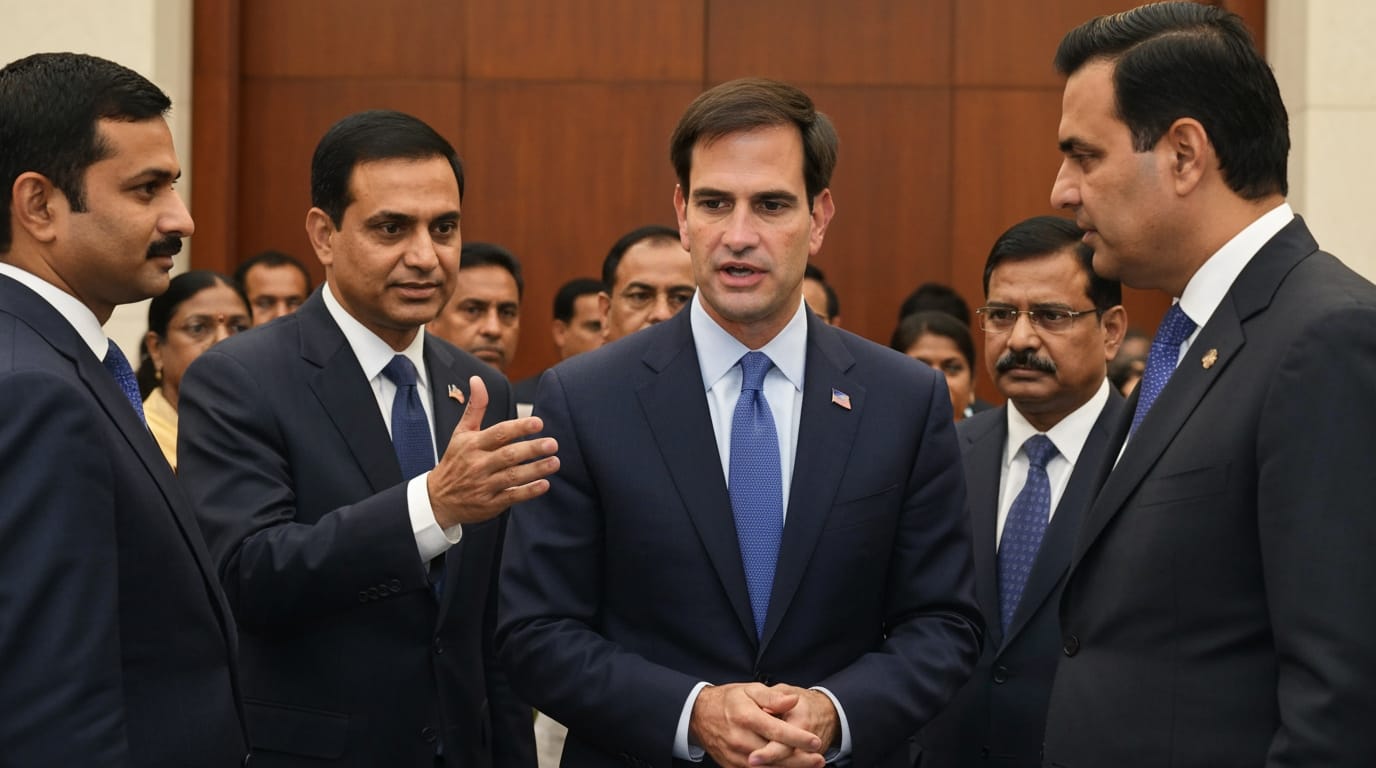
New Delhi is preparing to host U.S. Secretary of State Marco Rubio next month, a visit anticipated to significantly advance the burgeoning strategic partnership between the United States and India. The high-level diplomatic engagement follows recent productive discussions in Washington between Secretary Rubio and Indian Foreign Secretary Vikram Misri, underscoring a mutual commitment to strengthening cooperation across critical sectors, including trade, critical minerals, defense, and the Quadrilateral Security Dialogue (Quad). This upcoming visit signals a concerted effort by both nations to navigate complex geopolitical currents and solidify their roles as key players in the Indo-Pacific region.
Reinforcing a Comprehensive Global Strategic Partnership
Secretary Rubio's impending visit to India comes at a pivotal moment, reflecting the expanding scope and depth of the U.S.-India Comprehensive Global Strategic Partnership. The recent meeting in Washington served as a crucial precursor, allowing both sides to review progress and chart a course for future collaboration. Key areas of focus identified during these preliminary talks, and expected to top the agenda in New Delhi, include deepening bilateral trade ties, enhancing defense cooperation, exploring partnerships in critical minerals and emerging technologies, and coordinating strategies within the Quad framework. U.S. Ambassador to India, Sergio Gor, highlighted the productivity of these discussions, emphasizing the importance both nations place on strengthening their collaborative efforts on multiple fronts.
The U.S. views India as an indispensable partner in the Indo-Pacific, a democratic counterweight to growing regional challenges, and a crucial ally in maintaining a free and open international order. Secretary Rubio has consistently underscored India's strategic importance, noting that the "story of the 21st century is going to be written in the Indo-Pacific," with New Delhi positioned near the center of this narrative. This perspective is a cornerstone of U.S. foreign policy, recognizing India's rising global stature and its potential to contribute significantly to regional stability and prosperity.
Forging Deeper Economic Links: A $500 Billion Ambition
Economic collaboration remains a cornerstone of the U.S.-India relationship, with trade discussions central to Secretary Rubio's agenda. The two nations are actively working towards an ambitious goal of $500 billion in bilateral trade by 2030, a significant jump from the estimated $212.3 billion in goods and services traded in 2024. Recent efforts have focused on establishing a framework agreement to boost trade, improve market access, and secure supply chains, supported by initiatives like the India-US Trade Facilitation Portal.
Discussions are anticipated to cover a wide array of sectors. India is poised to reduce tariffs on U.S. industrial and agricultural goods, including products like dried distillers' grains, tree nuts, fruits, soybean oil, wine, and spirits. Concurrently, the U.S. has indicated it will apply a reciprocal tariff rate of 18 percent on certain Indian goods, including textiles, apparel, leather, and footwear, while removing tariffs on items like generic pharmaceuticals, gems, diamonds, and aircraft parts. India has also committed to purchasing over $500 billion of U.S. energy products, aircraft and aircraft parts, precious metals, and technology products over the next five years.
Despite the positive trajectory, certain trade complexities persist. India's energy security needs, particularly its historical purchases of Russian oil, have been a point of discussion. While Secretary Rubio acknowledges India's substantial energy requirements and the economic realities driving these purchases, such as sanctioned and cheaper Russian oil, the U.S. continues to press for diversification. Experts note that transitioning away from existing oil procurement strategies would present logistical and contractual challenges for India, which has not formally committed to an abrupt shift. The emphasis, however, is on enhancing overall economic security and supply chain resilience, with both nations seeking to address non-market policies of third parties and cooperating on investment reviews and export controls.
Strengthening the Quad: A Bulwark for Indo-Pacific Stability
A critical component of Secretary Rubio's visit will be further discussions on the Quadrilateral Security Dialogue (Quad), an informal strategic forum comprising the United States, India, Japan, and Australia. The Quad's primary objective is to support a free, open, prosperous, and inclusive Indo-Pacific region, upholding a rules-based international order and ensuring freedom of navigation. While not a formal military alliance, the Quad acts as a crucial platform for cooperation on maritime security, counterterrorism, humanitarian assistance, disaster relief, climate change, cybersecurity, critical and emerging technologies, and health security.
India's role within the Quad is unique. As the only member not formally allied with the U.S., India has adopted a "multi-aligned strategy," carefully balancing its interests while engaging with various global powers. This approach allows India to participate in the Quad's security initiatives, particularly in maritime domain awareness and information sharing, without committing to a traditional military alliance. The Quad's focus on "public goods" rather than solely hard power aligns with India's interests in establishing itself as a leading provider of public services in the Indo-Pacific, especially in the Indian Ocean region. The group regularly conducts joint military drills, such as the Malabar naval exercise, which have become a de-facto Quad gathering since Australia's re-entry in 2020.
The U.S. Indo-Pacific Strategy, central to deterring Chinese coercion and keeping sea lanes open, heavily relies on minilateral groupings like the Quad. Secretary Rubio's engagement is expected to reinforce this shared vision, addressing concerns over China's growing economic and military footprint in the Indo-Pacific. The Quad represents approximately 24% of the world's population and 35% of global GDP, highlighting its collective influence in shaping regional dynamics.
Beyond Trade and Security: A Broader Diplomatic Canvas
Beyond the immediate discussions on trade and the Quad, Secretary Rubio's visit is expected to touch upon a wider range of bilateral and global issues. These include cooperation in critical technologies like artificial intelligence and semiconductors, defense industrial collaboration, and shared assessments on regional security developments, particularly in West Asia. The visit builds upon a series of high-level engagements, such as the 5th annual 2+2 ministerial dialogue in November 2023 and Prime Minister Modi's visit to the U.S. in September 2024, demonstrating a consistent diplomatic momentum.
The comprehensive nature of these interactions underscores a mutual desire to strengthen democratic resilience and uphold universal values in a rapidly evolving world order. As the U.S. and India continue to deepen their ties across defense, technology, trade, and education, the upcoming visit by Secretary Rubio stands as a testament to the enduring significance of their partnership and its critical role in shaping the future of the Indo-Pacific. It signifies a shared commitment to addressing both immediate and long-term challenges, fostering greater prosperity and stability for both nations and the broader international community.