Historic Alliance: German Troops Bolster Polish Defenses on NATO's Eastern Border
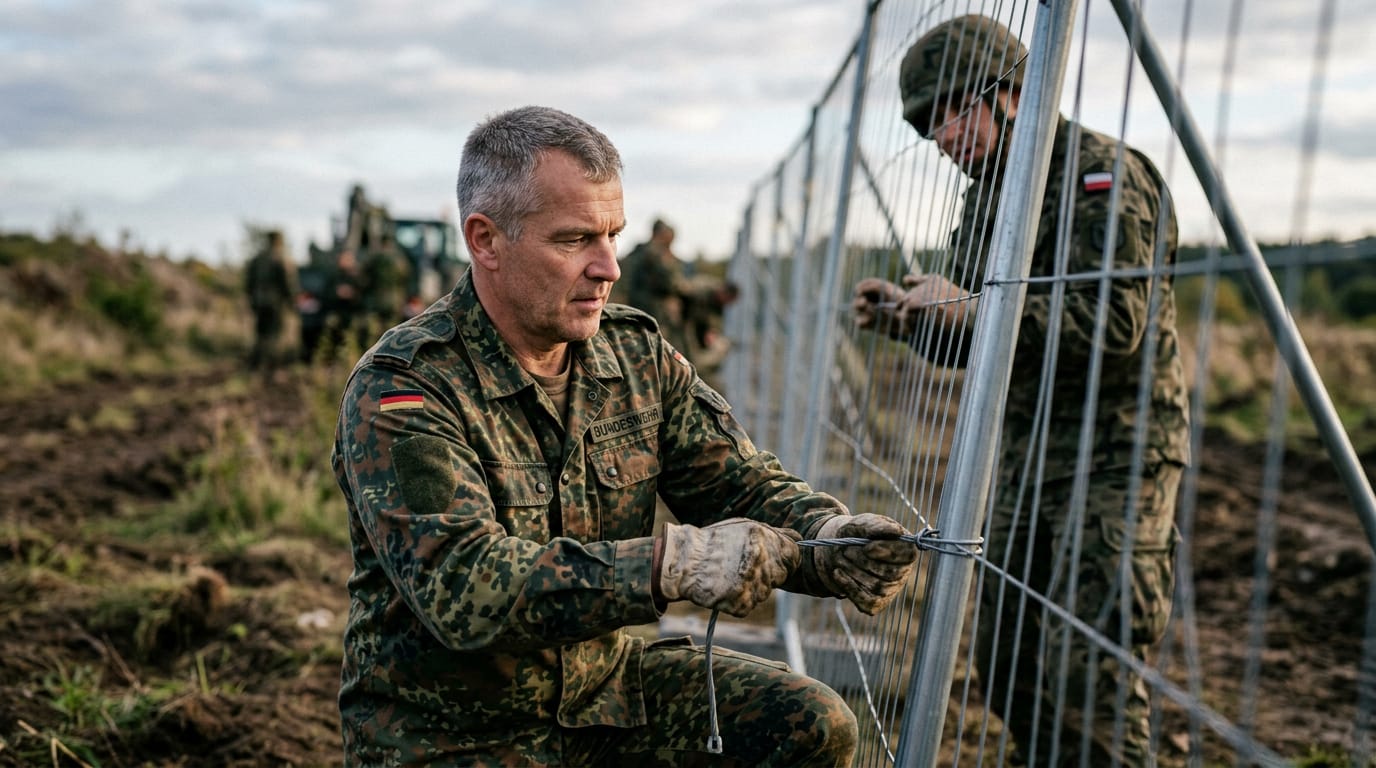
In a significant display of allied solidarity, German military personnel are actively assisting Poland in constructing a robust defensive barrier along its borders with Russia's Kaliningrad exclave and Belarus. This joint effort, part of Poland's ambitious "East Shield" operation, marks a pivotal moment in European security, reinforcing NATO's eastern flank against perceived threats emanating from Moscow and Minsk. The deployment underscores a profound shift in German-Polish relations, transcending historical complexities to forge a united front in the face of evolving geopolitical realities.
A United Front: German Engineers Aid Poland's Defensive Stance
Since June 2026, specialized German Bundeswehr engineering forces, comprising around 40 to 50 troops, have been working alongside their Polish counterparts to enhance defensive infrastructure in Poland's northeastern regions. This deployment, initially slated to continue until the end of October 2026 with a broader German commitment extending into 2027, is a direct response to the heightened security concerns across Eastern Europe. Polish Prime Minister Donald Tusk indicated the deployment is focused on the Russian border, specifically the 210-kilometer frontier with the Kaliningrad exclave, while German public broadcaster Deutsche Welle highlighted activities in the strategically critical Suwałki Gap. This initiative is primarily defensive, focusing on engineering tasks to delay potential military advances and act as a credible deterrent.
The collaboration holds deep symbolic weight given the often-strained historical ties between Germany and Poland. However, both nations now emphasize a shared vision for regional security. The Polish Armed Forces General Staff declared, "United, we will prevail," highlighting the practical application of allied cooperation in boosting military readiness and strengthening NATO's defensive capabilities. German Defense Minister Boris Pistorius previously emphasized that the two countries now stand "shoulder to shoulder, as equals," a sentiment reinforced by a recently signed defense cooperation agreement. This agreement aims to increase cooperation in areas including military mobility, logistics infrastructure, maritime security in the Baltic Sea, and cybersecurity, reflecting a comprehensive approach to regional defense.
Poland's "East Shield": A Multi-Billion Dollar Defense Initiative
The German military's involvement is a crucial component of Poland's larger "East Shield" (Tarcza Wschód) project, a multi-year, multi-billion-dollar initiative launched in May 2024 to fortify approximately 250 to 700 kilometers of its eastern and northern borders. Valued at over 10 billion Polish Zloty (approximately $2.7 billion), the project aims to establish a layered defense system against potential aggression from Russia and Belarus. Beyond traditional fortifications, "East Shield" encompasses the installation of border barriers, upgrading roads for military mobility, creating storage sites for counter-mobility equipment, and integrating advanced surveillance and anti-drone capabilities.
Poland views "East Shield" not merely as a national security endeavor but as a vital contribution to NATO's collective defense. It is designed to deter potential aggressors, impede their mobility, and provide protection for both soldiers and civilians in the event of an attack. The European Union is also contributing funds to this critical infrastructure project through its SAFE defense program, recognizing its broader significance for EU border security. Furthermore, Poland has been consulting with fellow Eastern Flank nations—Lithuania, Latvia, Estonia, and Finland—to share experiences and coordinate efforts in securing their respective borders, underscoring a regional, collective approach to defense.
Geopolitical Pressures and Strategic Imperatives
The intensified efforts to secure Poland's eastern frontier are a direct consequence of Russia's full-scale invasion of Ukraine in 2022 and the subsequent escalation of hybrid warfare tactics employed by both Russia and its close ally, Belarus. These tactics include weaponized migration, drone incursions into NATO airspace, and increased military posturing. The concentration of Russian nuclear-capable Iskander short-range missiles in Kaliningrad further amplifies the strategic importance of this border region.
A particularly sensitive area is the Suwałki Gap, a narrow stretch of land separating Kaliningrad from Belarus. Often described as one of NATO's most vulnerable geographic points, a Russian movement into this corridor could effectively cut off the Baltic states from the rest of the alliance. The defensive measures being implemented, including those with German assistance, are crucial for strengthening deterrence and ensuring the rapid response capabilities of NATO forces in this critical choke point. Germany's broader commitment to Eastern European security is also evident in its permanent deployment of an armored brigade to Lithuania, aimed at defending the Baltic states from potential Russian aggression.
Engineering a Modern Deterrent
The practical work undertaken by the joint German and Polish engineering teams involves the construction of various defensive structures. This includes digging extensive anti-tank ditches, laying barbed wire obstacles, and deploying thousands of concrete anti-tank barriers, colloquially known as "hedgehogs" or tetrapods. These obstacles are designed to slow or halt armored vehicles, buying crucial time for defending forces. German military personnel, recognized for their expertise in making terrain impassable to enemy forces, are contributing specialized knowledge and equipment to this effort.
The scale of the undertaking is significant. Poland expects to have 300,000 concrete barriers in place by mid-October 2026, requiring more than 10,000 transport operations between storage facilities and the border. These fortifications are not envisioned as an impenetrable wall but rather as a means to delay and disrupt any potential incursion, providing valuable time for Polish and NATO allied forces to mobilize and react. The work also includes the construction of field fortifications and firing positions, creating a more resilient defensive posture.
Bolstering NATO's Resolve
The joint German-Polish effort to fortify Poland's eastern border represents a powerful statement of NATO's unity and resolve in safeguarding its collective security. It demonstrates a shared commitment to deterring aggression and enhancing defensive capabilities along the alliance's most exposed flank. This cooperation, once considered challenging due to historical legacies, now stands as a testament to the evolving dynamics of European security, where collective defense takes precedence.
As Poland continues to rapidly expand and modernize its armed forces, including the creation of a new Border Protection Component within its Territorial Defense Forces, the assistance from allies like Germany is instrumental. The ongoing construction of this defensive barrier, coupled with broader NATO initiatives and the permanent presence of allied forces, sends a clear message: the eastern borders of the alliance are secure, and any threat to its territory will be met with a unified and robust response. This collaborative spirit, rooted in mutual trust and a common understanding of the threats, is set to define the future of European defense for years to come.