Hungary Pivots Westward: Orbán's Ouster Heralds New Chapter in EU Relations
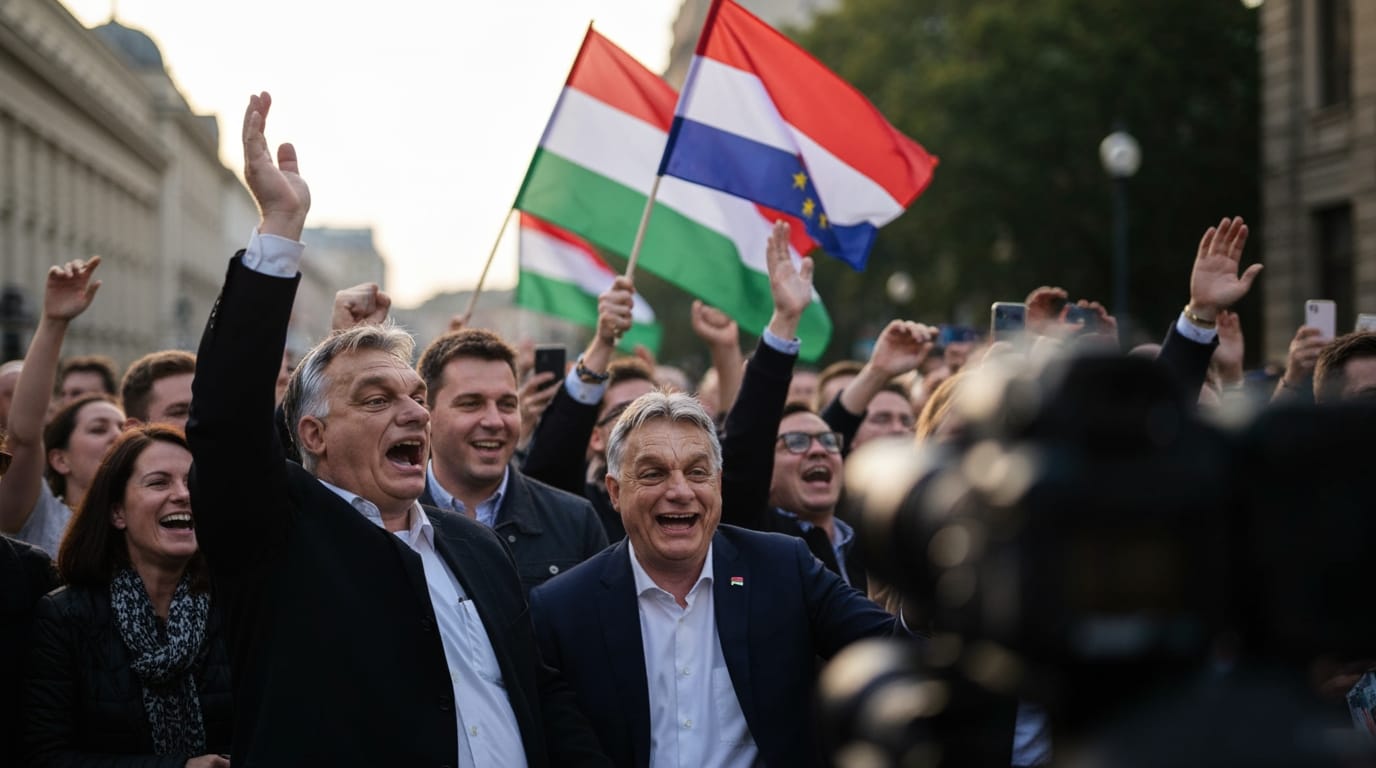
BUDAPEST – After 16 years marked by deepening rifts with the European Union, Hungarian Prime Minister Viktor Orbán conceded defeat in a parliamentary election on April 12, 2026, marking a significant political earthquake with profound implications for the nation's standing within Europe and beyond. The historic victory of Péter Magyar and his center-right Tisza Party, which secured a two-thirds supermajority, signals an emphatic shift towards re-engagement with democratic norms and a potential thaw in long-strained ties with Brussels.
An Era Concludes: Orbán's Divisive Legacy
Viktor Orbán's tenure, spanning over a decade and a half, saw Hungary charting a distinctive, often confrontational, course within the European Union. Championing an "illiberal democracy" model, his government systematically centralized power, curtailed judicial independence, exerted control over media, and cracked down on minority rights, drawing consistent condemnation from EU institutions and human rights watchdogs. These actions led the EU to classify Hungary as an "electoral autocracy" rather than a full democracy, triggering ongoing disputes over the rule of law and the freezing of billions in EU funds earmarked for the country.
Under Orbán, Hungary's relationship with the EU deteriorated across multiple fronts. His government's stance on migration, its perceived backsliding on democratic values, and its frequent use of veto power to obstruct unanimous EU decisions, particularly concerning support for Ukraine against Russian aggression, created deep frustration among member states. Orbán cultivated close alliances with figures like former U.S. President Donald Trump and Russian President Vladimir Putin, further isolating Hungary from mainstream European foreign policy and eliciting concern from Western allies. By late 2025, Hungary had lost entitlement to billions of euros in EU aid due to breaches of the rule of law, with substantial funds remaining frozen as a result of its failure to implement required reforms.
The Ascent of a Challenger: Péter Magyar's Promise of Change
The unexpected and rapid rise of Péter Magyar, a former insider within Orbán's Fidesz party who broke ranks in 2024, transformed Hungary's political landscape. Leading the center-right Tisza Party, Magyar galvanized a diverse electorate frustrated with Orbán's protracted rule and the country's domestic trajectory. His campaign resonated with concerns over a stagnating economy, perceived rampant government corruption, and a healthcare system in disarray.
The election on April 12, 2026, witnessed a record turnout, underscoring the public's desire for change. Magyar's landslide victory, securing an overwhelming two-thirds majority in the 199-seat parliament, hands his party a formidable mandate to implement sweeping reforms. Following Orbán's concession, Magyar proclaimed, "Hungary and several million people made history again," echoing a renewed commitment to European values.
A Path to Reconciliation: Hopes for a Thaw in EU Relations
The change in leadership has been met with palpable relief and optimism from Brussels and other European capitals. European Commission President Ursula von der Leyen welcomed the outcome, stating that "Europe's heart is beating stronger in Hungary tonight" and that "Hungary has chosen Europe," signaling an immediate shift in perception.
A central promise of the new Tisza government is to actively repair Hungary's relationship with the European Union. Péter Magyar has pledged to re-establish Hungary as a strong EU and NATO ally, committing to rebuild ties strained by years of conflict. Crucially, his agenda includes measures directly addressing the rule of law concerns that have plagued Hungary's relationship with the bloc. Magyar has vowed to restore the system of checks and balances, join the European Public Prosecutor's Office (EPPO), and guarantee the democratic functioning of the country. These steps are viewed as fundamental to realigning Hungary with core EU principles and could pave the way for a more cooperative future.
Unlocking Potential: Economic and Foreign Policy Shifts
One of the most immediate and tangible benefits anticipated from improved EU relations is the unlocking of substantial European Union funds. Billions of euros, withheld due to Orbán's government's failure to meet rule of law conditions, are now potentially within reach. Analysts suggest that the release of these funds could significantly bolster Hungary's economy, potentially helping to reduce its budget deficit and stabilize public debt, which has been the highest in the EU outside the eurozone. The new government's ability to quickly rebuild relations with the EU and secure these disbursements will be crucial for the sustained positive market reaction observed after the election.
In terms of foreign policy, Magyar's administration is expected to steer Hungary away from Orbán's often isolationist and Russia-friendly stance. While Orbán had consistently dissented from EU support for Ukraine, Magyar has criticized these positions, indicating a potential for Hungary to align more closely with the EU's common foreign and security policy, particularly regarding the ongoing conflict in Ukraine. This shift could strengthen EU unity and its collective response to geopolitical challenges. The election outcome also drew attention from the United States, with some Democrats celebrating Orbán's defeat as a blow to populist movements.
Navigating the Future: Opportunities and Remaining Hurdles
While the change in Hungary's leadership marks a definitive turning point, the path ahead is not without its complexities. Untangling Hungary's deep reliance on Russian fossil fuels, which significantly deepened during Orbán's rule, presents a considerable challenge, despite Magyar's criticism of his predecessor's pro-Russia stance. Furthermore, while Magyar represents a departure from Orbán's authoritarian leanings, some observers note that he remains a nationalistic figure, suggesting that while the immediate future promises greater alignment with the EU, the nuances of Hungarian national interests will continue to play a role in its European engagement.
The durability of reforms and whether the new government can fully deliver on its ambitious promises will be closely watched by both Hungarians and their European partners. The supermajority achieved by Tisza offers a unique opportunity for fundamental change, allowing the new government to amend the constitution and dismantle the structures that underpinned Orbán's "illiberal" system.
A New Horizon
Hungary stands at the precipice of a new era, with the ouster of Viktor Orbán concluding a significant chapter in its post-communist history. The landslide victory of Péter Magyar's Tisza Party has ignited hopes for a comprehensive reset of Hungary's relationship with the European Union, promising a return to democratic values, the restoration of the rule of law, and the potential unlocking of critical economic resources. While the challenges ahead are considerable, the election results unequivocally signal Hungary's aspiration to reclaim its place at the heart of Europe, fostering cautious optimism for a future defined by greater cooperation and integration.