India and Pakistan Exchange Fire Following Alleged Incursion Attempt in Kashmir
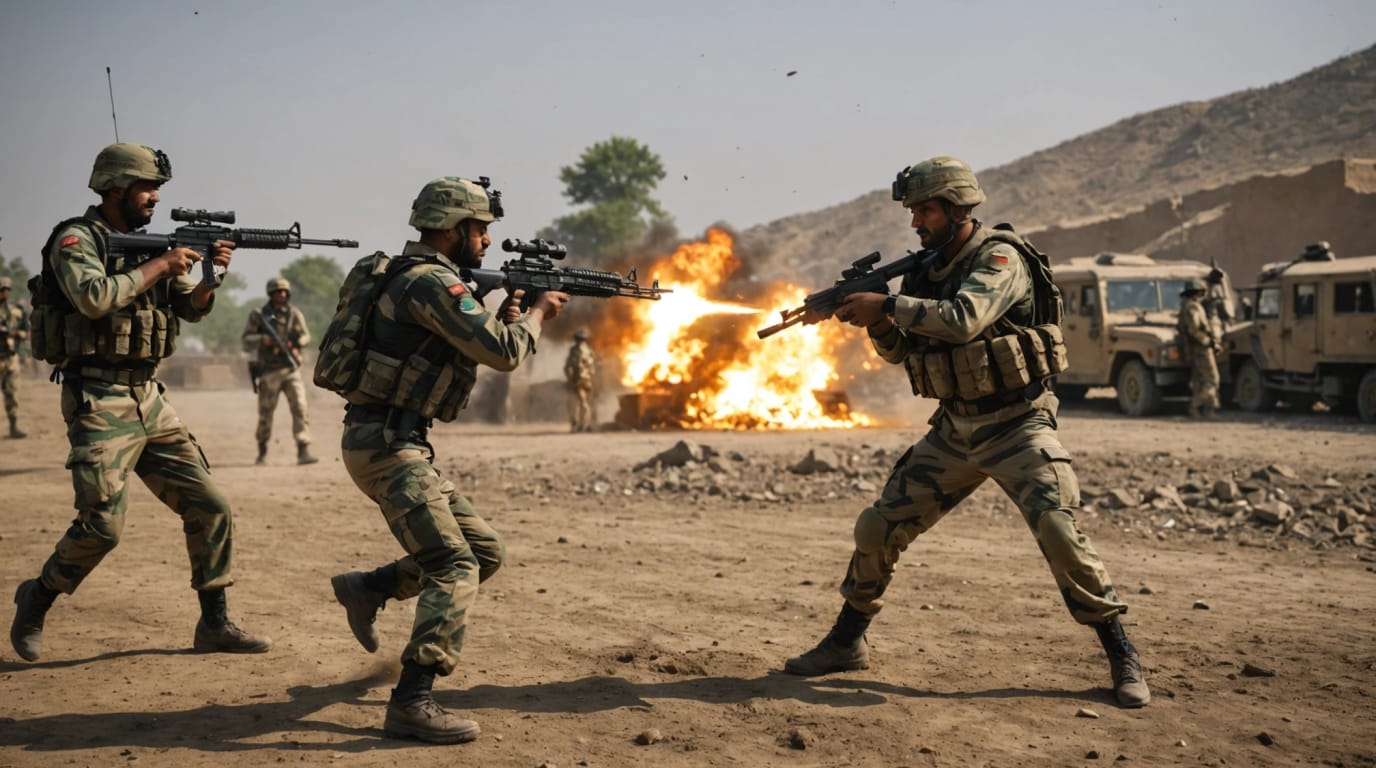
Tensions along the Line of Control (LoC) in the disputed Kashmir region flared anew Tuesday, as the Indian Army reported thwarting an attempted incursion by Pakistani forces in the Krishna Ghati sector of the Poonch district. The exchange of fire, a stark reminder of the fragile peace between the two nuclear-armed neighbors, comes despite a ceasefire agreement that has been in place for several years.
Breach Met With Fire
According to Indian defense officials, the Pakistan Army initiated unprovoked firing at approximately 1:10 PM, violating the 2003 ceasefire agreement. The Indian Army responded with what a defense spokesperson described as "controlled and calibrated" retaliation. Sources indicate that the Indian response resulted in the elimination of four to five infiltrators. While the Indian Army has not confirmed any casualties on the Pakistani side, reports suggest that five Pakistani soldiers sustained injuries in the exchange.
The incident occurred in the Krishna Ghati sector, an area that has witnessed increased ceasefire violations over the past two months, particularly in the Pir Panjal region. These violations have included incidents of sniping, infiltration attempts, and direct confrontations, prompting heightened vigilance from the Indian Army.
Conflicting Accounts
As is common in such incidents, initial reports offered conflicting accounts. Unnamed Indian security officials told broadcaster NDTV that Pakistani troops initiated the firing, prompting the Indian response. Pakistan's military declined to comment when asked by AFP. This lack of transparency from both sides often fuels further distrust and makes it difficult to ascertain the precise sequence of events.
In January 2013, a similar incident occurred where both sides accused each other of violating the ceasefire. Indian army spokesman Colonel Brijesh Pandey stated that Pakistani troops "initiated unprovoked firing" using mortars and automatic weapons, resulting in damage to a civilian home on the Indian side. Pakistan, however, claimed that Indian troops had launched a cross-border raid, resulting in the death of a Pakistani soldier.
Kashmir: A Region Divided
The exchange of fire underscores the persistent volatility of the Kashmir region, which has been a point of contention between India and Pakistan since their independence in 1947. Both countries claim the territory in full and have fought two major wars and numerous smaller battles over its control. The LoC, a heavily militarized frontier, serves as the de facto border dividing the region.
The region's complex history and the unresolved territorial dispute contribute to the ongoing tensions. Several rebel groups operate in the Indian-administered territory, demanding either independence or merger with Pakistan. These groups have frequently clashed with Indian forces, leading to a cycle of violence and mistrust.
Ceasefire Under Strain
While a ceasefire agreement was signed in 2003, it has been repeatedly violated by both sides. Accusations of ceasefire violations are common, and cross-border firing incidents occur sporadically. The recent incident in the Krishna Ghati sector highlights the fragility of the ceasefire and the ever-present risk of escalation.
In February 2021, India and Pakistan reaffirmed their commitment to the 2003 ceasefire agreement, leading to a period of relative calm along the LoC. However, Tuesday's incident serves as a reminder that the underlying issues remain unresolved, and the peace is easily disrupted.
Implications and the Path Forward
The exchange of fire raises concerns about the potential for further escalation and the impact on the already strained relations between India and Pakistan. Any increase in hostilities could have serious consequences for regional stability.
Moving forward, it is crucial for both sides to exercise restraint and adhere to the ceasefire agreement. Enhanced communication and de-escalation mechanisms are needed to prevent future incidents and manage tensions effectively. Dialogue and diplomacy remain the only viable path towards a lasting resolution of the Kashmir dispute and the establishment of a stable and peaceful relationship between India and Pakistan. The incident serves as a stark reminder of the human cost of the conflict and the urgent need for a peaceful resolution.