India Pursues German Submarines Amidst Escalating Regional Underwater Arms Race

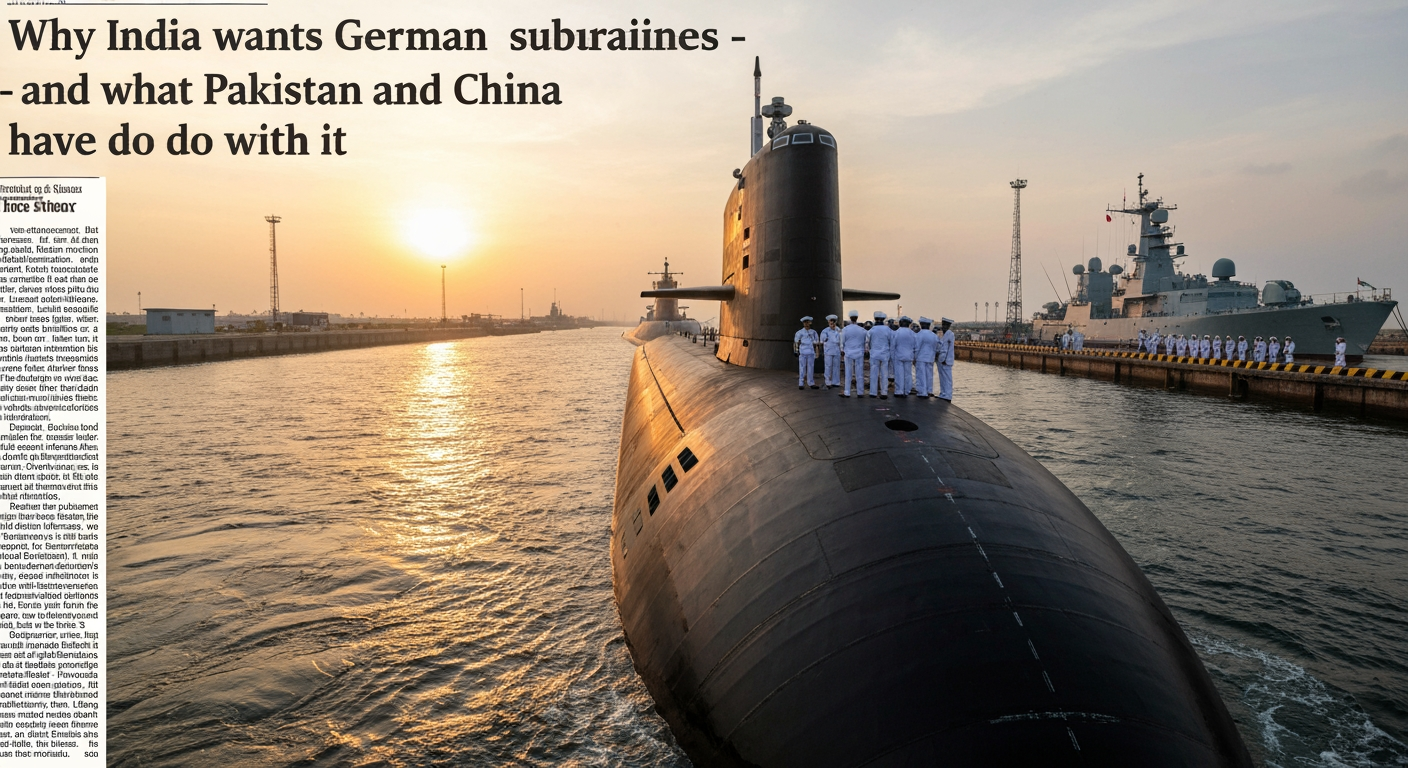
New Delhi, India – India is on the cusp of finalizing a landmark deal to acquire six advanced conventional submarines from Germany, a strategic move aimed at revitalizing its aging naval fleet and countering the burgeoning underwater capabilities of its regional rivals, China and Pakistan. This multi-billion-dollar acquisition, falling under Project 75I, underscores India's urgent need for advanced naval technology, particularly Air-Independent Propulsion (AIP) systems, to maintain its strategic dominance in the increasingly contested Indian Ocean.
The Imperative for Naval Modernization
India's ambition to bolster its submarine fleet stems from a critical need to modernize its existing underwater assets. The Indian Navy currently operates a mix of conventional diesel-electric submarines, including older Russian Kilo-class and German Type 209 (Shishumar class) vessels, many of which are nearing the end of their operational lifespans. This has resulted in a significant capability gap against an optimal requirement of 24 submarines, with the current operational fleet falling short. The proposed acquisition of advanced German submarines, specifically modified Type-214 Next-Generation models, is designed to address this shortfall and inject cutting-edge technology into India's undersea warfare capabilities.
A cornerstone of this modernization effort is the integration of Air-Independent Propulsion (AIP) technology. AIP systems, particularly the fuel-cell-based variants offered by Germany, allow conventional submarines to remain submerged for weeks rather than days. This dramatically enhances stealth, endurance, and combat effectiveness by significantly reducing the need to surface, thereby lowering detection risks. None of India's existing conventional submarines currently possess this critical capability, making the German offer particularly attractive. The deal, estimated at $8-10 billion (approximately ₹70,000-90,000 crore), represents one of India's largest defense procurements and aligns seamlessly with the nation's "Atmanirbhar Bharat" (self-reliant India) initiative. This initiative emphasizes indigenous defense manufacturing, technology transfer, and job creation, strengthening India's strategic autonomy in naval warfare.
Germany's Proven Submarine Prowess
Germany's Thyssenkrupp Marine Systems (TKMS) is a preferred partner for India, building on a history of successful collaboration. India previously acquired and domestically constructed Type 209 submarines from HDW (now TKMS) in the late 1970s and 1980s, demonstrating a long-standing relationship and trust in German submarine technology. The Type-214 submarines, or their customized derivatives for India, are known for their advanced fuel-cell AIP systems, stealth design, and long endurance, making them ideal for protracted patrols and covert surveillance in the Indian Ocean Region. The Indian variant is projected to have a displacement of approximately 2,500 tonnes, which is larger than the standard U-214, with an increased emphasis on stealth.
The Project 75I agreement stipulates that the six submarines will be constructed in India by Mazagon Dock Shipbuilders Limited (MDL) in partnership with TKMS, with a substantial portion of the components (45-60%) being indigenized. This deep technology transfer is crucial for India to not only acquire the platforms but also to develop the capability to build, maintain, and upgrade them independently, fostering a robust domestic defense industrial base. German Defence Minister Boris Pistorius has indicated Germany's readiness to share key submarine production technologies with India, solidifying this strategic partnership.
The Shadow of Neighbors: Pakistan and China
The urgency behind India's submarine acquisition program is significantly influenced by the escalating naval activities of its nuclear-armed neighbors, Pakistan and China. Both nations are actively modernizing and expanding their submarine fleets, posing a formidable "two-front submarine dynamic" for India in the Indian Ocean.
China, with the world's largest navy, has aggressively expanded its presence and operational reach across the Indian Ocean over the past three decades. Its growing submarine fleet, comprising around 70 vessels including nuclear-powered and advanced conventional submarines, along with its "String of Pearls" strategy of developing port access and bases, directly challenges India's maritime security. These deployments, often conducted under the guise of anti-piracy missions, also serve to map India's underwater environment and project Chinese power far from its shores.
Concurrently, Pakistan is rapidly upgrading its submarine capabilities, largely with substantial assistance from China. While Pakistan already operates Agosta-class submarines, some of which have been retrofitted with AIP, the most significant development is the acquisition of eight Yuan-class Type 039B/S26 (Hangor-class) submarines from China. These Hangor-class submarines are equipped with AIP systems and are being built through a joint China-Pakistan project, with four constructed in China and four in Karachi. The first Hangor-class submarine was inducted recently, with the remaining vessels scheduled for delivery between 2025 and 2028. Pakistan aims to eventually field an 11-strong AIP-equipped submarine fleet, further intensifying the underwater competition.
This coordinated naval expansion by China and Pakistan necessitates India's accelerated push for advanced submarine technology. Interestingly, Germany reportedly rejected Pakistan's requests for its advanced AIP technology and even withheld export licenses for diesel engines for Pakistani submarines, potentially signaling a strategic alignment with India in the region.
Geopolitical Implications and Future Outlook
The India-Germany submarine deal carries significant geopolitical weight, reinforcing strategic ties between the two nations and solidifying Germany's role as a trusted technology partner in the Indo-Pacific. For India, the Project 75I program is a critical component of its broader naval strategy, which envisions a powerful underwater fleet of over 30 submarines by 2040, including 24 AIP-equipped conventional submarines and 6 nuclear-powered attack boats. Beyond the German deal, India is also actively developing its indigenous AIP system for retrofitting its existing Kalvari-class (Scorpene) submarines and pursuing Project-76 for entirely indigenous submarine development.
While the first German-designed submarine under Project 75I is expected to enter service approximately seven years after the contract signing, with subsequent deliveries at an annual pace, the deal is a testament to India's commitment to securing its maritime interests. The new submarines will feature advanced defensive and offensive capabilities, including sophisticated torpedo countermeasures and the ability to operate silently for extended periods, providing a substantial deterrent in the Arabian Sea and the wider Indian Ocean. This acquisition is not merely about numbers; it is about acquiring superior capability and stealth, ensuring India's ability to safeguard its vast coastline, protect crucial sea lanes of communication, and project power effectively in a complex and evolving maritime landscape.
Sources
- indiatimes.com
- livefistdefence.com
- indiatimes.com
- internationalaffairs.org.au
- telegraphindia.com
- igmp.in
- defence.in
- newsd.in
- swarajyamag.com
- ciss.org.pk
- thehindu.com
- meta-defense.fr
- economictimes.com
- eurasiantimes.com
- uscc.gov
- brookings.edu
- capssindia.org
- indiatoday.in
- armyrecognition.com
- nti.org
- warpowerpakistan.com
- gisreportsonline.com