India Ramps Up Aid as Nepal Grapples with Devastating Floods, Hundreds Missing
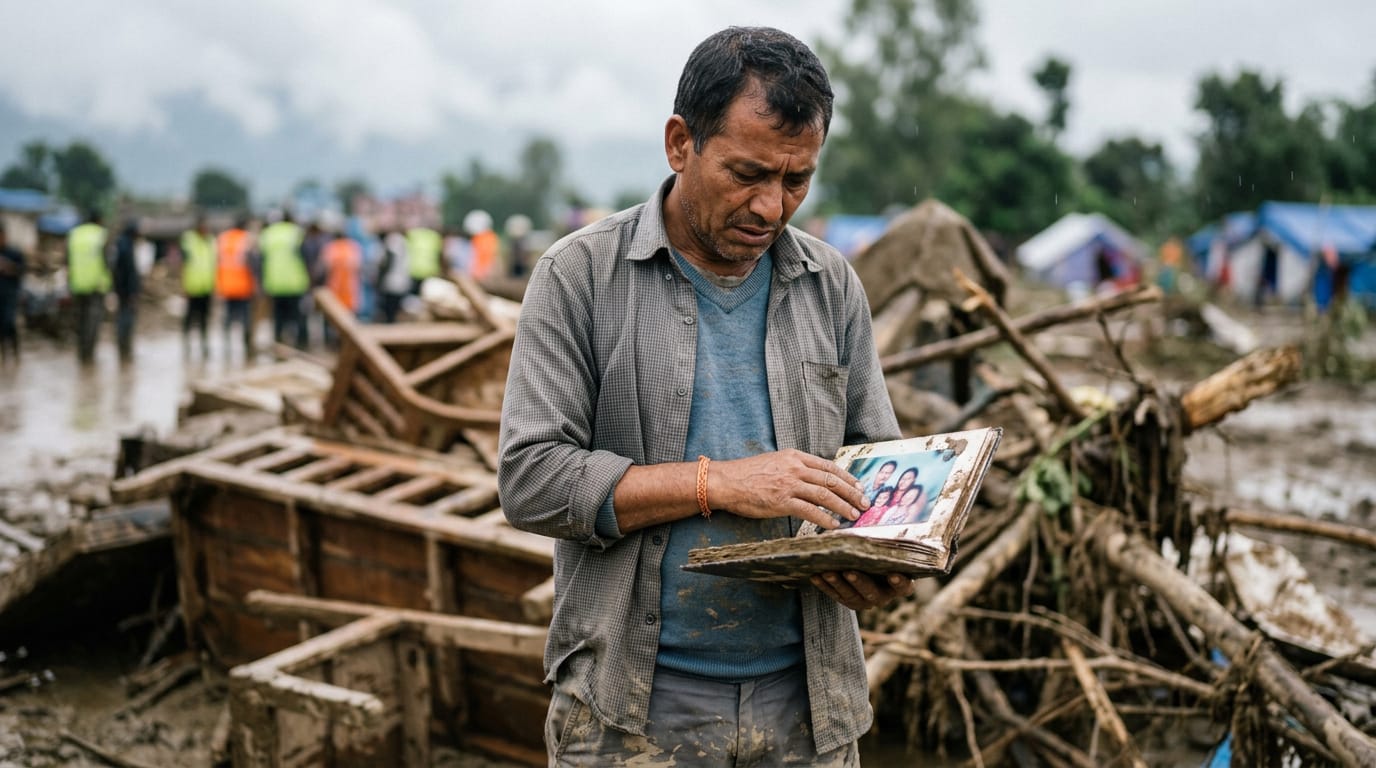
A catastrophic flash flood, triggered by a glacial collapse and debris flow from the Tibetan border, has ravaged central Nepal, leaving at least 165 people dead and hundreds more missing, prompting a significant humanitarian response from neighboring India. The sudden deluge, which struck on Wednesday, August 26, 2026, has wrought widespread destruction across vital infrastructure and communities, with search and rescue operations intensified amid a growing regional concern for the unaccounted, including numerous Indian pilgrims. The disaster has tested Nepal's resilience and highlighted the urgent need for coordinated international efforts in the face of escalating climatic events in the Himalayan region.
The Sudden Deluge and its Immediate Aftermath
The catastrophic event unfolded rapidly on Wednesday morning when a glacial collapse and subsequent debris flow, originating in Tibet, unleashed a massive surge of water, ice, rock, and mud down the Bhotekoshi River and its tributaries. Contrary to initial reports of an earthquake, the U.S. Geological Survey later confirmed the seismic activity was a result of this colossal glacial event, revising its magnitude to 5.2. This torrent swept through several Nepalese districts, including Rasuwa, Nuwakot, Dhading, Gorkha, and Chitwan, with devastating force.
The immediate impact was widespread and severe. Towns and villages were obliterated, critical bridges were washed away, and significant sections of roads, including the vital Syafrubesi-Rasuwagadhi route, suffered extensive damage. Six major hydropower projects, including Rasuwagadhi, Chilime, and Trishuli 3A, were crippled, leading to widespread power disruptions. The Rasuwagadhi customs office, a key border facility, was also destroyed. Compounding the tragedy, local residents received no warning as the area experienced no prior rainfall, leaving them with little to no time to escape the advancing wall of water and debris. The death toll in Nepal swiftly escalated from initial reports of 75-95 to at least 165-177 confirmed fatalities by Thursday, August 27. Across the border in China's Tibet region, the floods also claimed lives, with at least three confirmed dead and hundreds more missing in Gyirong County.
The Rising Tally of the Missing and Displaced
The human cost of the flash floods continues to mount, with over 750 people officially reported missing in Nepal alone, and the combined figure for Nepal and Tibet potentially exceeding 1,000 individuals. Among the missing in Nepal are a significant number of foreign nationals, estimated at over 400, including 133 to over 300 Indian pilgrims who were on their way to the sacred Mount Kailash in Tibet. Citizens from other nations, including the United States, Australia, the United Kingdom, Canada, and Malaysia, are also among the unaccounted.
Beyond the international visitors, numerous Nepali citizens are feared to have been swept away, particularly those trekking in the Gosaikunda Lake area in Rasuwa district, coinciding with the Janai Purnima festival. The disaster has led to the displacement of thousands of families, many of whom have lost their homes and livelihoods instantaneously. Eyewitness accounts paint a grim picture, with individuals reporting family members being swept away before their eyes, highlighting the sudden and overwhelming nature of the catastrophe. The ongoing search and rescue operations face immense challenges due to the treacherous mountainous terrain, damaged infrastructure, and the persistent risk of further landslides and secondary flooding.
India's "Neighbourhood First" Response
India has swiftly responded to the humanitarian crisis in its neighboring country, reaffirming its commitment under the "Neighbourhood First" policy. Prime Minister Narendra Modi engaged in a telephone conversation with Nepalese Prime Minister Balendra Shah, conveying condolences and assuring India's full support and humanitarian assistance.
Demonstrating immediate action, India dispatched an initial consignment of 10 tonnes of Humanitarian Assistance and Disaster Relief (HADR) materials and essential medicines to Nepal on Wednesday, August 26. These vital supplies, transported aboard an Indian Air Force C-130J aircraft, included temporary shelters, blankets, hygiene kits, solar lamps, and various medicines to address the immediate needs of the affected population. A second, even larger tranche of aid, comprising 37.5 tonnes of HADR material, medicines, and food packets, followed on Thursday, August 27, underlining India's continuous support.
The Indian Embassy in Kathmandu is actively coordinating with Nepalese authorities to facilitate rescue and relief efforts, particularly for Indian nationals affected by the floods. Teams from both nations are working in close cooperation on the ground, reflecting the strong bilateral partnership in disaster management. Furthermore, India's Ministry of Home Affairs is closely monitoring rising water levels in rivers originating from Nepal, expressing concerns about potential downstream impacts on its own border states of Bihar and Uttar Pradesh. Nepal's Foreign Minister Shishir Khanal publicly expressed gratitude for India's prompt assistance, acknowledging the crucial backing received during this difficult time.
The Path to Recovery: Challenges and Ongoing Efforts
As the immediate crisis unfolds, Nepal faces a long and arduous path to recovery. The extensive damage to critical infrastructure, including roads, bridges, and power facilities, significantly complicates rescue efforts and the delivery of aid to remote areas. The mountainous terrain itself, coupled with the risk of secondary flooding and landslides, continues to pose serious threats to both rescue workers and vulnerable communities. Rebuilding the dozens of affected towns and villages, along with the destroyed hydropower projects crucial for the nation's energy supply, will require monumental resources and sustained international cooperation.
Beyond India's immediate assistance, the international community has also extended support. Nepal's requests for assistance have garnered responses from China, the United States, and the World Bank, all of whom have offered aid. The World Bank, in particular, has indicated a potential mobilization of up to NRs 25 billion in emergency assistance, signaling a broader commitment to Nepal's reconstruction efforts. The long-term implications of the floods are profound, affecting thousands of displaced families and particularly children, who are cut off from familiar surroundings and essential services, facing immense uncertainty. The disaster has reignited concerns about Nepal's vulnerability to glacial lake outburst floods in the warming Himalayan region and the critical need for robust cross-border information-sharing mechanisms to provide early warnings and mitigate future catastrophes.
The scale of devastation in Nepal is a stark reminder of the fragile balance between human settlements and the powerful forces of nature, particularly in geologically active and climate-sensitive regions like the Himalayas. The ongoing relief and rescue operations, bolstered by crucial international support from nations like India, are pivotal in addressing the immediate suffering and laying the groundwork for a prolonged recovery. The solidarity demonstrated by regional partners underscores the shared challenges and interconnected destinies of nations in the face of such profound humanitarian crises.