Indian Parliament Fails to Fast-Track Women's Quota Amidst Delimitation Controversy
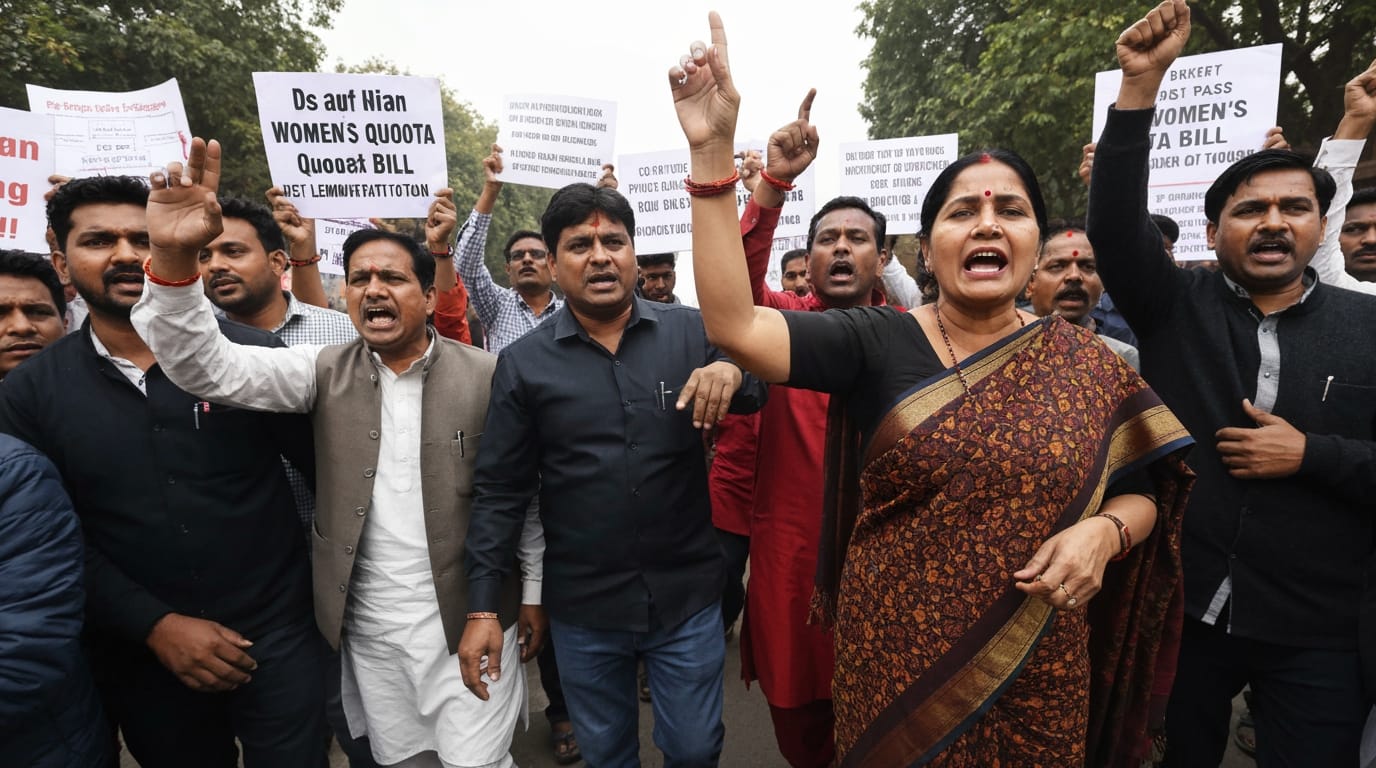
NEW DELHI – A recent legislative push to expedite the implementation of India's landmark women's reservation law has faltered in Parliament, exposing deep political divisions over the contentious issue of delimitation. The failure to pass a crucial amendment bill, intended to accelerate the 33% quota for women in legislative bodies, marks a significant setback in the decades-long struggle for equitable gender representation in Indian politics. The government's proposals, which sought to link immediate implementation of the women's quota to a broader, controversial redrawing of electoral boundaries, faced fierce opposition, culminating in the bills falling short of the required two-thirds majority in the Lok Sabha.
The Long Road to Women's Political Empowerment
The journey for women's reservation in India's legislative bodies has been protracted and challenging, spanning nearly three decades. The concept, first introduced in Parliament in 1996, aimed to reserve one-third of seats for women in the Lok Sabha and state assemblies. Despite intermittent support and various attempts, the bill consistently faced hurdles, often lapsing due to a lack of political consensus and societal resistance to changes in gender roles within leadership.
A significant breakthrough arrived in September 2023, when the Parliament unanimously passed the Nari Shakti Vandan Adhiniyam, officially known as the Constitution (One Hundred and Sixth Amendment) Act. This historic legislation mandates a 33% reservation for women in the Lok Sabha and all State Legislative Assemblies, including a sub-quota for Scheduled Castes and Scheduled Tribes within these reserved seats. Hailed as a monumental step towards gender equality, the Act aimed to address the stark underrepresentation of women, who currently constitute only about 14.7% of lawmakers in the Indian Parliament, ranking India 147th globally in women's representation in lower houses.
However, the 2023 Act's implementation was tied to two crucial prerequisites: the completion of the next census and a subsequent delimitation exercise. This clause, intended to ensure fair representation based on updated demographic data, immediately sparked concerns among opposition parties, who argued that it effectively delayed the quota's operationalization for several years, potentially until 2029 or even beyond. Critics viewed this linkage as a promise deferred indefinitely, turning a celebrated achievement into a waiting game.
The Government's Latest Attempt and the Delimitation Debate
In an effort to address the prolonged timeline and potentially bring the women's quota into effect sooner, the government recently introduced a new set of legislative proposals in April 2026. These included the Constitution (131st Amendment) Bill, designed to amend the Nari Shakti Vandan Adhiniyam, 2023, and a separate Delimitation Bill, 2026. The proposed amendments aimed to expedite women's reservation by potentially utilizing the 2011 Census data for delimitation or by increasing the total number of Lok Sabha seats to accommodate the reservation without reducing existing constituencies. Some proposals even suggested expanding the Lok Sabha's strength to up to 850 members.
However, these new bills reignited the fierce "delimitation uproar" that has historically plagued electoral reforms in India. Delimitation is the process of redrawing electoral constituency boundaries to reflect population changes, ensuring that each vote carries roughly equal weight. While seemingly a technical exercise, it is a politically charged issue with profound implications for power distribution among states. The current freeze on delimitation, based on the 2001 Census, was set to expire after 2026.
The government argued that a new delimitation exercise was necessary to reflect population growth and uphold the principle of "one person, one vote, one value." However, opposition parties strongly condemned the linkage of women's reservation to a fresh delimitation exercise, especially one that might bypass a recent census. They accused the ruling party of using the women's reservation as a "guise" or a "smokescreen" to push through a politically motivated redrawing of electoral maps.
The North-South Divide and Political Impasse
A core concern in the delimitation debate is the potential impact on the representation of southern states. States like Tamil Nadu, which have historically implemented successful family planning measures, fear that a delimitation based on current or even 2011 population figures would disproportionately reduce their share of seats in the Lok Sabha, while increasing the representation of more populous northern states. This prospect has been described as a "punishment" for states that effectively controlled their population, risking a "tyranny of the demographic majority."
Opposition leaders, including Rahul Gandhi of the Indian National Congress, asserted that linking women's reservations to delimitation effectively held the aspirations of Indian women "hostage" to one of the most contentious political exercises in the country's history. Many parties expressed support for women's reservation itself but insisted it should be implemented based on the current Lok Sabha strength without waiting for a new delimitation or census. They argued that the government's approach was a "nefarious, mischievous attempt" to alter India's electoral structure for political gain.
The Bills Fail to Pass and Uncertain Future
The intense debate culminated in the Lok Sabha failing to pass the women's reservation amendment bill. It secured 278 votes in favor and 211 against, falling short of the special two-thirds majority required for a constitutional amendment. This marked a rare legislative defeat for the ruling Bharatiya Janata Party (BJP) government. Following this failure, the government also decided to halt the associated Delimitation Bill, acknowledging the interconnectedness of the two proposals.
The immediate aftermath saw opposition leaders celebrating the defeat, interpreting it as a successful thwarting of a "politically motivated" attempt to manipulate electoral boundaries. Rahul Gandhi stated, "The amendment bill has fallen. They used an unconstitutional trick to break the Constitution in the name of women. India has seen it. INDIA has stopped it." However, the ruling party criticized the opposition for celebrating a setback to women's empowerment.
The failure leaves the implementation of the Nari Shakti Vandan Adhiniyam in a state of continued uncertainty. While the 2023 Act remains on the statute books, its operationalization is still contingent on a future census and delimitation exercise, which some estimates suggest may not occur until 2029 or even later. This outcome underscores the complex interplay of electoral reforms, federal dynamics, and political maneuvering that continues to shape India's democratic landscape, leaving millions of women to wait longer for enhanced representation in the nation's highest legislative bodies.