Indian Police Detain Hundreds of Protesting Farmers, Bulldoze Camps
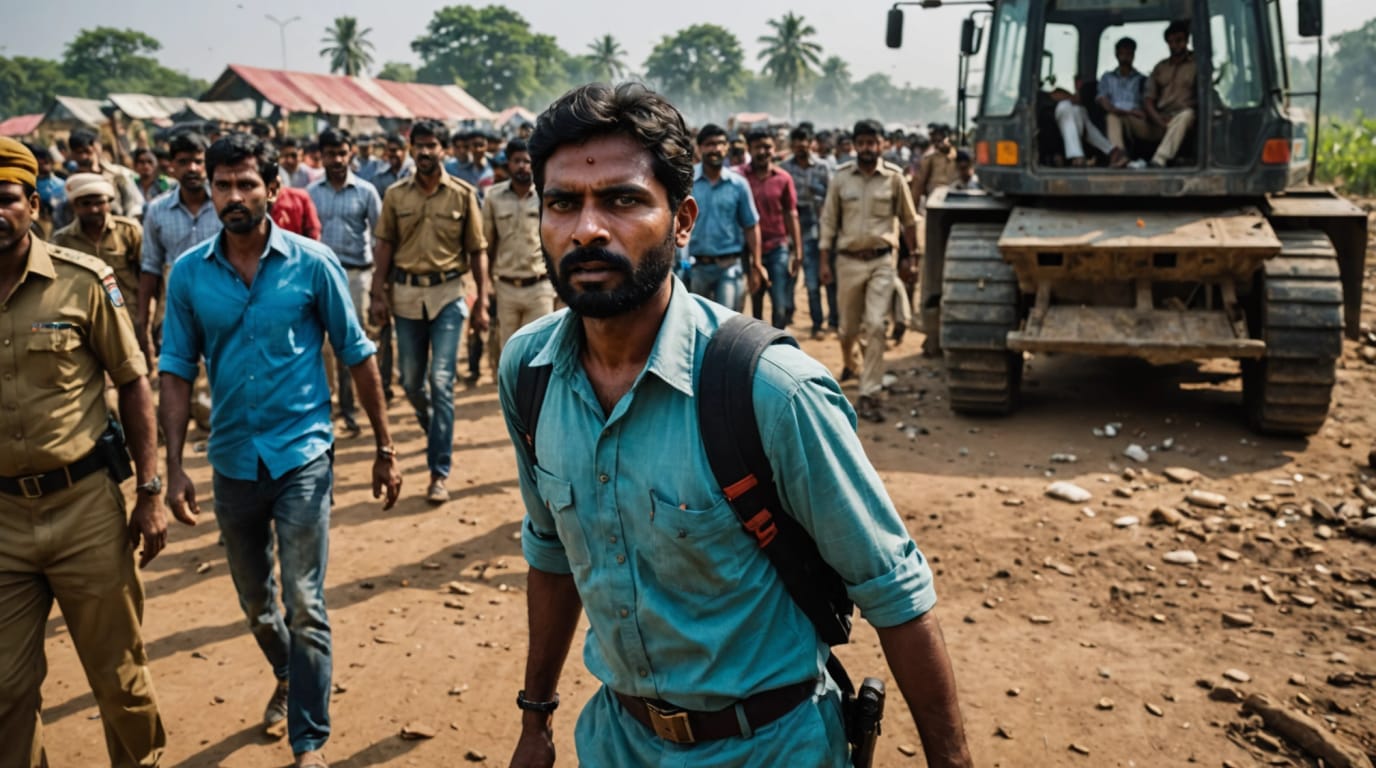
Indian authorities have detained hundreds of protesting farmers and dismantled their camps near the border between Punjab and Haryana, escalating tensions amid ongoing negotiations over crop prices and agricultural policies. The move comes after months of demonstrations by farmers demanding guaranteed minimum support prices (MSP) for all crops and other concessions.
Crackdown at the Border
In a late-night operation on Wednesday, Punjab police detained between 500 and 700 farmers, including key leaders, at the Shambhu and Khanauri border points. Simultaneously, authorities in Haryana deployed bulldozers to remove concrete barricades erected to prevent farmers from marching towards New Delhi. The actions effectively cleared protest sites that had been occupied since February 2024, when security forces initially halted the farmers' march toward the capital.
Nanak Singh, a senior police officer, told the ANI news agency that the clearance operation proceeded without resistance, stating, "We did not need to use any force because there was no resistance." Television images showed police using bulldozers to demolish tents and stages, while escorting farmers carrying personal items to vehicles.
Leaders Detained
Among those detained were prominent farmer leaders Sarwan Singh Pandher and Jagjit Singh Dallewal. Dallewal, who had been on an indefinite hunger strike for months, was reportedly taken to a hospital in Jalandhar after being detained. Other leaders detained include Guramneet Singh Mangat, Abhimanyu Kohar, Kaka Singh Kotra, and Manjit Singh Rai. Pandher was taken to Bahadurgarh Fort Commando Police Training Centre in Patiala, which has been converted into a makeshift detention center.
The detentions occurred as the farmer leaders were returning to the protest sites after inconclusive talks with the central government regarding a legal guarantee for MSPs for crops.
Government Justification
The Punjab government, led by the Aam Aadmi Party (AAP), defended the actions, stating that the farmers should protest in Delhi, not Punjab. Punjab Finance Minister Harpal Singh Cheema said the step was necessary for the economic growth of the state and to reopen the Shambhu and Khanauri borders, which had been closed for over a year due to the protests.
"We want to open Shambhu and Khanauri borders," Cheema said. "The demands of the farmers are against the central government, and they should stage a protest in Delhi or somewhere else but should not block the roads of Punjab."
Opposition Condemnation
The police action drew strong criticism from opposition parties. Congress MPs staged a protest in the Parliament complex, accusing the AAP and the BJP of betraying the farmers. MP Pramod Tiwari called the detentions a "suicidal step" for both parties.
Former Punjab Chief Minister Charanjit Singh Channi called the detentions an "attack" on the farm sector. Shiromani Akali Dal MP Harsimrat Kaur Badal accused Punjab Chief Minister Bhagwant Mann of having "lost his mental balance," stating that he had promised to fulfill farmers' demands during elections but was now deceiving them.
Farmers' Demands
The farmers have been protesting for several months, demanding that the government guarantee minimum support prices for all crops. Currently, the government sets MSPs for 22 crops but primarily purchases wheat and rice at those prices for its welfare programs. The farmers are seeking a legal guarantee that would obligate private buyers to pay the MSP as well.
Other demands include debt waivers, pensions for farmers and farm laborers, no increase in electricity tariffs, withdrawal of police cases against farmers, justice for the victims of the 2021 Lakhimpur Kheri violence, reinstatement of the Land Acquisition Act of 2013, and compensation to the families of farmers who died during previous agitations.
Background of the Protests
The current protests are a continuation of a long-standing movement by Indian farmers to secure better prices and policies. In 2020-21, tens of thousands of farmers camped outside Delhi for over a year, successfully pressuring the government to repeal three controversial farm laws that they feared would hurt their incomes.
The government had defended the laws as necessary reforms to modernize Indian farming, but farmers worried that the changes would leave them at the mercy of the markets. The protests, which began in northern India, triggered nationwide demonstrations and drew international support.
Concerns and Future Outlook
The recent crackdown on protesting farmers raises concerns about the government's approach to addressing their grievances. While authorities have emphasized the need to maintain order and reopen transportation routes, critics argue that the use of force and detentions undermine the right to peaceful protest.
The next round of talks between farmer leaders and the central government is scheduled for May 4. It remains to be seen whether the two sides can reach a consensus on the farmers' demands and prevent further escalation of tensions. The Supreme Court has previously urged the government to consider the "genuine demands" of the farmers and to keep its doors open for dialogue.
The farmers' protests highlight the ongoing challenges facing India's agricultural sector, where a majority of the population depends on farming for their livelihoods. The demand for guaranteed crop prices reflects the farmers' desire for greater economic security and protection from market volatility. The government's response to these demands will have significant implications for the future of Indian agriculture and the well-being of millions of farmers.