Indian Protests Ignite Debate Over AI Surveillance and Digital Freedoms
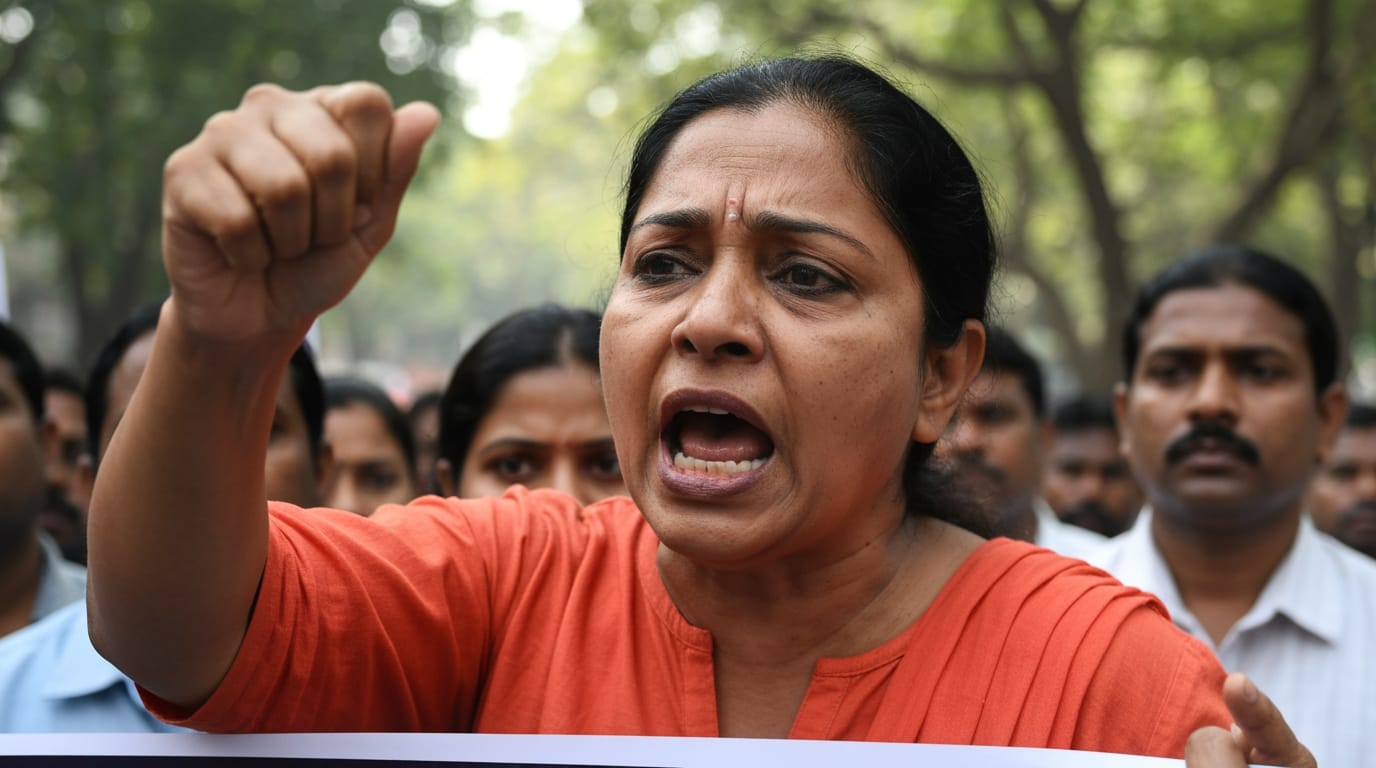
New Delhi, India – Recent youth-led protests across India, particularly those orchestrated by the satirically named Cockroach Janata Party (CJP), have brought the pervasive use of artificial intelligence (AI) surveillance technologies by law enforcement into sharp focus, sparking widespread condemnation from activists and digital rights advocates. The deployment of advanced monitoring tools, including facial recognition systems and mobile surveillance vans, has ignited a fierce legal and ethical debate over privacy, freedom of assembly, and the burgeoning digital authoritarianism in the world's largest democracy.
Thousands of young people, primarily students, have taken to the streets of New Delhi and other cities, protesting irregularities in national examinations, rampant unemployment, and broader governance concerns under Prime Minister Narendra Modi's administration. While these demonstrations have highlighted systemic issues, they have simultaneously illuminated the state's increasingly sophisticated response to public dissent: a dual strategy of preemptive internet blackouts and extensive AI-powered surveillance. This approach, critics argue, is creating a "chilling effect" on the fundamental right to protest and raising serious questions about the balance between national security and individual liberties.
The Escalation of Digital Monitoring
The recent CJP protests, specifically at Jantar Mantar, a traditional protest site in Delhi, became a stark exhibition of this expanded surveillance infrastructure. Police deployed a range of technologies, including permanent surveillance towers, AI-enabled CCTV cameras, and specialized facial recognition vans, such as the "Ikshana" system. These systems were complemented by body-worn cameras and even Meta smart glasses used by Delhi Police personnel, enabling continuous and indiscriminate filming of demonstrators. Activists noted that this monitoring extended beyond public acts of protest to mundane activities like eating, resting, and seeking medical assistance.
Beyond static installations, mobile surveillance vehicles equipped with 360-degree cameras and telescopic masts were observed, reportedly capable of real-time crowd monitoring and processing footage through AI-powered analytics. Security agencies claimed these systems were used to compare facial images against police databases of proclaimed offenders and individuals with criminal antecedents, aiming to prevent anti-social elements from exploiting the agitation. One police officer indicated that the technology also assists in identifying those with a criminal history and counting protesters. However, the scale and nature of these databases remain largely undisclosed.
A Legal Battle for Privacy
The legality and ethical implications of this surveillance have been vigorously challenged. Student activist Aishe Ghosh, among others, has filed a Public Interest Litigation (PIL) in the Delhi High Court, seeking to declare such mass surveillance unconstitutional. The petition demands the destruction of all personal data collected during the demonstrations and the establishment of clear guidelines for the use of surveillance technology. Concerns have also been raised that police personnel allegedly threatened to disseminate footage of young protesters to their parents and educational institutions, transforming surveillance into a tool of coercion. The PIL also highlighted a disproportionate impact on women protesters, who were reportedly filmed even in vulnerable physical conditions during heavy rainfall.
During court hearings, the Union government, represented by the Solicitor General, defended the surveillance, asserting that photography and videography are standard law-and-order measures essential for public safety. The government also contended that privacy claims at a public gathering were "ironical," given that protesters often record and broadcast their own demonstrations. However, digital rights experts like Prashant Sugathan from the Software Freedom Law Center argue that active facial recognition, which maps an individual's face against databases, presents a far greater privacy concern than routine video recording, effectively treating every individual as a suspect. India currently lacks a dedicated legal framework specifically governing the use of facial recognition technology and AI surveillance by law enforcement agencies, leaving a critical void in legal protections. This absence is particularly significant following the Supreme Court's landmark judgment in Justice K.S. Puttaswamy v. Union of India, which recognized the right to privacy as a fundamental right.
The Broader Landscape of Digital Repression
Beyond AI surveillance, internet shutdowns have become a recurrent feature of the state's response to dissent in India. The Ministry of Home Affairs frequently orders suspensions of mobile internet services in protest areas, citing public order and prevention of incitement as reasons. During the recent CJP protests, mobile internet services were repeatedly suspended for extended periods in parts of central Delhi. India ranked second globally in internet shutdowns in 2025, with 65 instances during protests, conflicts, and religious holidays, according to international non-profit Access Now.
These shutdowns compel protesters to seek alternative communication methods, as seen with students utilizing Bluetooth-based apps like Bitchat to communicate peer-to-peer without internet access. Digital rights activists lament that such restrictions are the state's go-to response, reflecting a lack of effective strategies for managing public discourse and dissent. The combination of internet blackouts and advanced surveillance technologies points to a concerning trend towards a "surveillance democracy," where civil liberties are increasingly threatened.
Unanswered Questions and Future Implications
The debate surrounding AI surveillance at Indian protests extends beyond the immediate concerns of privacy and free speech. Critics highlight the potential for technological errors and biases within these systems, which could disproportionately impact vulnerable groups. There are also fears of digital authoritarianism, where advanced technologies are used to stifle dissent and control narratives.
As the Delhi High Court continues to hear challenges against police surveillance, the outcome will likely set a crucial precedent for how surveillance technologies are regulated and deployed in India. The evolving situation underscores a fundamental tension: the government's stated need for security and law enforcement efficiency versus the constitutional rights of citizens to privacy, dignity, and peaceful protest. Without a robust, transparent, and rights-based legal framework, India's digital future risks undermining democratic participation and civic freedoms.