IOC Paves Way for Russia's Full Olympic Return, Sparks International Outcry
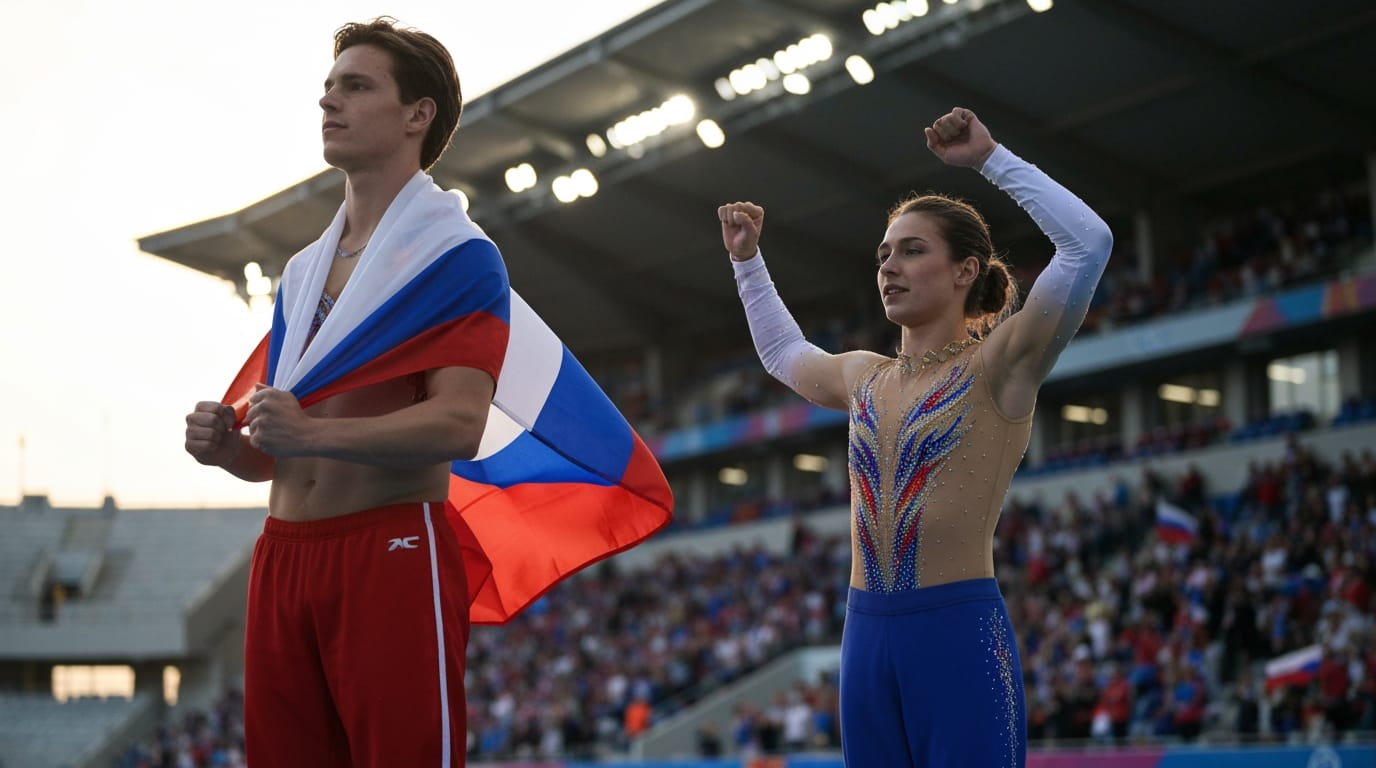
Lausanne, Switzerland – The International Olympic Committee (IOC) has significantly altered its stance on Russian athletes' participation in the Olympic Games, provisionally lifting the suspension of the Russian Olympic Committee (ROC) and advising an end to the "Individual Neutral Athlete" (AIN) vetting program for the 2028 Los Angeles Olympics. This pivotal decision, announced on July 7, 2026, marks a major step toward Russia's full reintegration into the global sporting arena after years of sanctions, though it has ignited immediate condemnation from Ukraine and raised complex questions about the future of Olympic neutrality.
The move effectively removes the blanket recommendations that restricted Russian athletes to neutral status in individual events and mandates that they could not have actively supported the war in Ukraine or have ties to military or state security agencies. While the decision on whether Russia will be permitted to display its national flag, colors, or have its anthem played at the Los Angeles Games is still pending, the lifting of the ROC suspension signals a potential return to team events and a full national presence.
From Sanctions to Provisional Reinstatement: A Policy Shift
The IOC's latest decision fundamentally changes the landscape for Russian athletes, moving beyond the stringent conditions observed at the upcoming Paris 2024 and Milan Cortina 2026 Games. The Russian Olympic Committee had been suspended since October 2023, following its recognition of regional Olympic councils in Russian-occupied Ukrainian territories, including Luhansk, Donetsk, Kherson, and Zaporizhzhia. The IOC's Legal Affairs Commission conducted a thorough review and determined that the ROC no longer includes these regional sports organizations as members, with the Russian committee formally pledging not to conduct any activities in the disputed territories. This compliance, coupled with the commencement of qualification periods for the Los Angeles 2028 Games, was cited by the IOC as a key factor in its decision to ensure "equal access to competition for all athletes."
IOC President Kirsty Coventry articulated the committee's stance, emphasizing that athletes should not be held accountable for the actions of their governments. This principle appears to underpin the broader policy shift, which saw restrictions on Belarusian athletes lifted two months prior, allowing them to compete with their full national identity. The IOC's recommendations to International Federations (IFs) regarding Russian athletes' participation, including the requirement for neutral status, are now "no longer applicable." This transfers significant regulatory authority back to individual sporting bodies, allowing them to set their own entry conditions and potentially consider hosting international tournaments within Russia.
The AIN Precedent: Paris 2024 and Milan Cortina 2026
Prior to this sweeping change, Russian and Belarusian athletes faced rigorous restrictions under the "Individual Neutral Athlete" (AIN) designation for the Paris 2024 Summer Olympics and the Milan Cortina 2026 Winter Olympics. This framework, introduced following Russia's full-scale invasion of Ukraine in February 2022, mandated that athletes compete without national flags, anthems, or colors. The acronym AIN, derived from the French Athlètes Individuels Neutres, explicitly forbade any representation of the Russian Federation or Belarus, including their National Olympic Committees or National Federations.
Under the AIN status, athletes were subjected to a two-step vetting procedure, requiring approval first by their sport's international governing body and then by an IOC-appointed review panel. Strict eligibility criteria stipulated that neutral athletes must not have publicly supported the invasion of Ukraine and must not be affiliated with military or state security agencies. Furthermore, AINs were barred from participating in team events and were excluded from the traditional parade at the opening ceremonies, though they could attend to "experience the event." For Paris 2024, approximately 32 athletes with Russian or Belarusian passports qualified as AINs, a stark contrast to the hundreds of athletes typically fielded by Russia in previous Games. Any medals won by AINs were not counted in a collective medal table, underscoring their individual, non-national status.
International Reactions and Divisive Implications
The IOC's decision has been met with immediate and strong opposition, particularly from Ukraine. Skeleton racer Vladyslav Heraskevych, a prominent Ukrainian athlete, described the decision as "absolutely shameful" and warned that it risks providing a platform for Russian propaganda. Ukraine's National Olympic Committee has consistently urged a complete ban on Russian and Belarusian athletes, arguing that allowing their participation normalizes the ongoing conflict and that sport should not be separated from politics in such circumstances. There are concerns that Russia will once again leverage athletes to bolster its war effort and distract from atrocities in Ukraine.
Conversely, the Russian Sports Minister, Mikhail Degtyaryov, welcomed the decision, viewing it as a "green light for international federations to restore the rights of our athletes." However, the path to full reintegration remains fragmented. While the IOC has eased its own recommendations, individual sports federations retain autonomy. World Athletics, for example, has maintained its ban on Russian and Belarusian athletes in its international events, and FIFA and UEFA continue to exclude Russian teams from major soccer competitions. This divergence means that a unified return across all sports is far from guaranteed.
The Road Ahead: Los Angeles 2028 and Beyond
As the Olympic movement looks towards Los Angeles in 2028, the specifics of Russia's participation remain a subject of ongoing debate. While the IOC has lifted the suspension of the ROC and the requirement for neutral status, the crucial decision regarding the display of national symbols — flag, anthem, and colors — has been deferred to a later date. This suggests a cautious approach, acknowledging the political sensitivities surrounding a full return.
The IOC has also reaffirmed that it will not organize its own events in Russia or invite Russian government or state officials to any IOC-sanctioned events. Additionally, to address integrity concerns, all returning Russian athletes must comply with stringent anti-doping policies and undergo multiple tests. This re-emphasizes the IOC's commitment to clean sport, a perennial concern given Russia's history of state-sponsored doping scandals, which led to prior bans and neutral athlete designations even before the conflict in Ukraine. The current decisions represent a complex balancing act, attempting to uphold the principle of athlete universality while navigating the profound geopolitical divisions of the contemporary world.
Conclusion
The International Olympic Committee's latest decisions mark a significant turning point for Russian participation in the Olympic Games. By lifting the suspension of the Russian Olympic Committee and ending recommendations for neutral status, the IOC has opened a pathway for a more complete return of Russian athletes, beginning with qualifiers for the Los Angeles 2028 Games. This shift, however, comes at a substantial cost to the IOC's perceived neutrality, drawing sharp criticism from Ukraine and igniting a global debate over the intersection of sport and geopolitics. The delicate balance between upholding Olympic ideals and responding to international conflicts remains a formidable challenge, with the implications of these decisions likely to resonate throughout the Olympic movement for years to come.


