Iran's Uncharted Path: A New Order Takes Shape Amidst War and Economic Upheaval
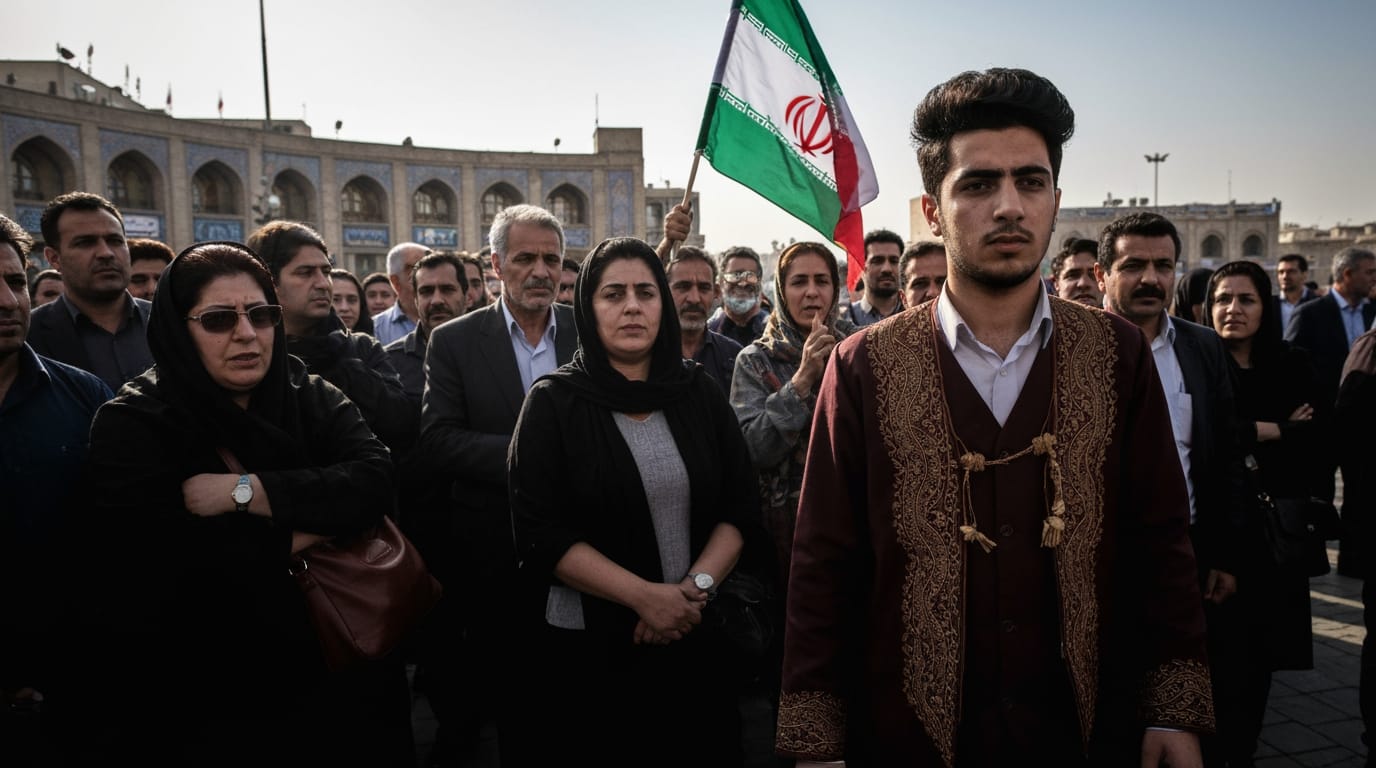
The Islamic Republic of Iran is navigating an unprecedented era following the death of Supreme Leader Ayatollah Ali Khamenei, who was killed in a U.S.-Israel airstrike on February 28, 2026. His son, Mojtaba Khamenei, has since been appointed as his successor, marking only the second leadership transition in the nation's post-revolutionary history. This pivotal moment unfolds against a backdrop of escalating regional conflict and a severe economic crisis, raising profound questions about the future trajectory of the Iranian state, its internal power dynamics, and its role on the global stage.
The Succession in Crisis: A Nation Gripped by Transition
The sudden vacuum created by Ayatollah Ali Khamenei's death sent immediate shockwaves through Iran's complex political system. His passing on February 28, 2026, during a joint U.S.-Israel military operation dubbed "Operation Epic Fury," left the nation in a critical state of leadership transition. According to Iran's constitution, a temporary leadership council was formed, comprising the sitting president, the head of the judiciary, and a member of the Guardian Council, to assume immediate duties. Simultaneously, the 88-member Assembly of Experts, a panel of Shiite clerics constitutionally tasked with selecting and overseeing the Supreme Leader, initiated the process of choosing Khamenei's permanent successor.
On March 8, 2026, the Assembly of Experts announced its decision, naming Mojtaba Khamenei, the second son of the late Supreme Leader, as the new spiritual and political head of Iran. This selection, while widely anticipated in some circles, immediately faced scrutiny due to Mojtaba's limited public profile and lack of prior government office. Reports indicated that Mojtaba himself sustained injuries in the late February airstrikes that killed his father, contributing to his conspicuous absence from public view since his appointment. Concerns have also been voiced regarding the potentially hereditary nature of this succession, a concept the Islamic Republic has historically criticized. The ongoing war with the U.S. and Israel, which has seen retaliatory missile strikes and significant damage, has amplified nationalistic sentiment, yet also cast a long shadow over the legitimacy and immediate challenges facing the new leadership.
A Militarized Future: The IRGC's Ascendance in the New Order
The ascension of Mojtaba Khamenei is widely perceived as strengthening the influence of Iran's Islamic Revolutionary Guard Corps (IRGC), a powerful military and economic force with which he maintains strong ties. Under the late Ali Khamenei, the IRGC had already significantly expanded its power, becoming a critical instrument for projecting Iranian influence regionally and suppressing internal dissent. The Guards' extensive involvement in Iran's economy, its formidable military capabilities, and its role as the ultimate defender of the regime underscore its pivotal position in the current power structure.
Analysts suggest that Mojtaba's leadership could accelerate a shift towards an even more militarized system, where the IRGC plays an increasingly dominant role in policy-making and governance. Some observers contend that the IRGC benefits from maintaining the office of the Supreme Leader as a source of religious and constitutional legitimacy, even as real power increasingly consolidates within security institutions. Mojtaba is seen by many as ideologically rigid, likely to continue confrontational stances against the U.S. and Israel, reinforcing hardline policies. However, some speculate he might also enact limited social and cultural relaxations to appease public discontent, a balancing act to secure broader societal acquiescence.
Internal Strife: Economic Hardship and Lingering Social Unrest
The new order in Iran inherits a nation grappling with a severe and intensifying economic crisis, exacerbated by the recent conflict. Even before the U.S.-Israel war, Iran's economy was in significant decline, marked by chronic mismanagement, endemic corruption, and international sanctions. By June 2026, point-to-point inflation had soared to 77.2 percent, one of the highest rates since World War II, with food prices skyrocketing (e.g., cooking oil up 430 percent year-on-year). The Iranian Rial has fallen to record lows, and widespread layoffs have impacted over a million jobs, with two million more affected indirectly. The closure of the Strait of Hormuz due to the war has further crippled vital oil exports and disrupted critical supply chains, leading to a "grocery supply emergency" in Gulf Cooperation Council states and significant economic damage within Iran.
Beneath a temporary "rally-around-the-flag" effect observed during wartime, deep-seated public grievances persist. Economic hardships, political frustrations, and persistent calls for greater freedoms, which fueled repeated waves of protests in the past decade, remain unresolved. The long-term impact of the war, including thousands of casualties and widespread damage, will undoubtedly intensify these internal pressures. Furthermore, Mojtaba Khamenei's continued absence from public view has led to skepticism among some Iranians regarding the true extent of his authority and control.
Regional Repercussions and Global Uncertainty
The leadership transition in Tehran carries profound implications for regional stability and international relations. A new Supreme Leader from Ali Khamenei's orbit, or a shift towards overt military leadership, is expected to perpetuate and potentially intensify Iran's destabilizing foreign policies. This includes continued investment in proxy militias, advancement of its nuclear program, and a heavy-handed authoritarianism at home. The U.S. and its allies are actively preparing for various succession scenarios, including potential surges in proxy activity and threats to regional territorial integrity.
Mojtaba Khamenei's appointment, particularly during an active conflict, is seen as a clear signal of defiance to the United States and Israel, indicating Tehran's resolve to maintain its strategic trajectory. The war has already inflicted immense human and material costs across the region, with thousands dead and millions displaced. While there is a possibility for a more confrontational stance, some analyses suggest the new Supreme Leader might exhibit "conditional flexibility" aimed at regime preservation, potentially even opening doors for limited negotiations in the future. However, the immediate aftermath of the transition is characterized by a high degree of uncertainty regarding the precise nature and extent of Iran's engagement with regional and global actors.
Conclusion: A Precarious Future Unfolds
The Islamic Republic of Iran stands at a critical juncture, with a new order attempting to solidify its grip amidst a turbulent landscape. The succession of Mojtaba Khamenei marks a significant moment, yet his legitimacy and ability to steer the nation remain under question, both domestically and internationally. The intricate interplay between the new leadership, the increasingly powerful IRGC, the nation's severe economic woes, and persistent public discontent will define Iran's immediate future. The regional and global ramifications of this transition are substantial, with a high likelihood of continued hardline policies and ongoing struggles for power within the Iranian establishment. The ultimate shape and stability of this new order are yet to be determined, portending a precarious and unpredictable path for Iran and the wider Middle East.


