Jürgen Klopp Calls on Germany to Reclaim National Flag in Push for Civic Unity
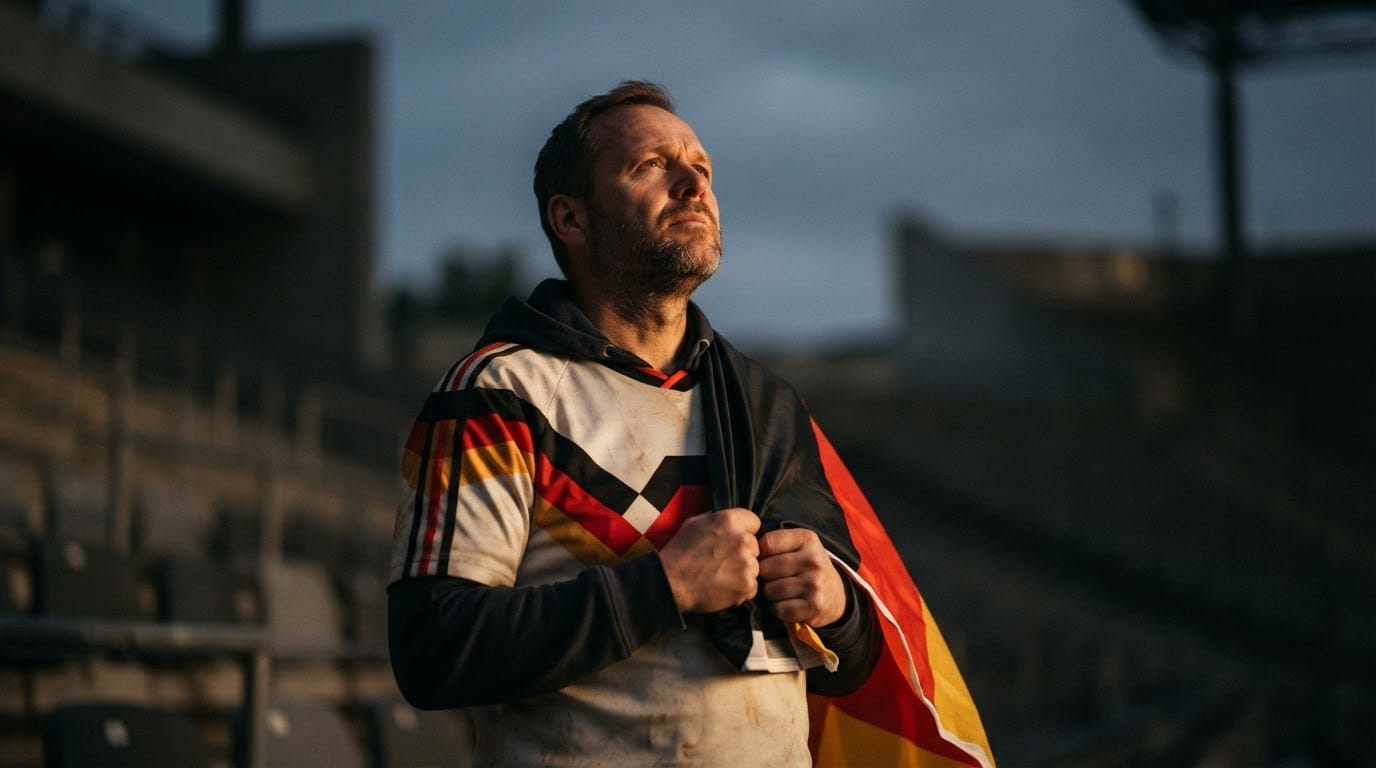
FRANKFURT — Germany men's national soccer coach Jürgen Klopp stepped directly into the nation’s political and cultural debate during his first major squad presentation, calling on citizens to reclaim the German flag and champion an inclusive form of civic identity.
Appearing in Frankfurt to unveil an expansive 44-man roster for the upcoming UEFA Nations League matches, the former Liverpool manager framed the national team not merely as a sporting outfit, but as an instrument capable of uniting a polarized society. Arriving in a cap bearing the national colors of black, red, and gold alongside the phrase "One of 83 million," he urged citizens to embrace what he termed positive patriotism rather than surrendering public symbols to political extremists.
A Call for Positive Patriotism
The manager explained that he wants ordinary citizens to wave the German flag freely, without fear of immediate suspicion or negative assumptions. In his view, waving the flag should reflect appreciation for living in a stable, welcoming nation, whether someone was born there, grew up there, or arrived as a newcomer.
He stated that national pride should never be left to the wrong hands. For decades following World War II, public displays of national pride and overt flag-waving remained deeply sensitive subjects across the country. Although the 2006 World Cup hosted by Germany initiated a notable shift toward relaxed public celebrations, displays of the flag have once again become contentious amid rising domestic political tensions.
The coach defined his concept of patriotism as entirely compatible with diversity, compassion, openness, and friendliness. He emphasized that acknowledging the country's strengths and feeling pride in its democratic freedoms does not equate to exclusionary nationalism.
Political Backdrop and Public Reaction
The manager's comments arrived at a moment of significant political friction across the federal republic. Political observers widely interpreted his remarks as a direct challenge to right-wing populism following strong electoral showings by the Alternative for Germany party, notably in state elections in eastern Germany.
Mainstream political figures moved quickly to support the sentiment. Franziska Hoppermann, secretary general of the governing Christian Democratic Union under Chancellor Friedrich Merz, endorsed the coach's message, stating that national colors represent shared constitutional freedoms rather than political extremism. Hoppermann affirmed that citizens across the political spectrum have every right to wear and display national emblems with confidence.
The remarks also drew notice from political commentators who pointed out that prominent figures in German sports rarely engage so openly in debates surrounding national identity. By addressing the intersection of athletics and social cohesion, the coach revitalized discussions regarding the cultural responsibility of national sporting figures.
Radical Roster Experimentation
On the field, the coach matched his bold cultural rhetoric with an unprecedented tactical experiment. To prepare for the upcoming fixtures against the Netherlands, Greece, and Serbia, he assembled a double roster totaling 44 players.
The group includes 16 uncapped players, signaling an immediate departure from past selection habits. Established stars such as Florian Wirtz and Kai Havertz are expected to face strict workload limits, appearing in no more than two matches each during the international window. This rotation strategy aims to prevent player fatigue while expanding the national team's player pool ahead of the 2028 European Championship.
The expanded roster is intended to create an extended audition process, giving young domestic talent meaningful international exposure. Goalkeeper Marc-André ter Stegen and forward Karim Adeyemi are among the focal points of the restructured squad, anchoring a side undergoing rapid structural change following disappointing major tournament performances in recent years.
The Role of Football in National Life
The national team has historically served as a focal point for German civic morale. When the coach accepted the leadership role, he noted that few institutions possess the same capacity to bridge regional, social, and political divides as the men's national soccer team.
His Frankfurt appearance consolidated that philosophy, combining player development with a broader public appeal. While acknowledging that athletic competitions cannot resolve complex socio-economic challenges, he insisted that sports can model inclusive community values and foster mutual respect across diverse backgrounds.
As Germany enters its Nations League campaign, the team carries both athletic expectations and cultural weight. By connecting national symbols to democratic values and team cohesion, the coaching staff hopes to build a competitive team on the pitch while encouraging a unified national spirit off it.