Japan Launches MMX Spacecraft on H3 Rocket Toward Martian Moons
The international mission aims to return pristine samples from Phobos to resolve longstanding debates about how the Martian moon system formed.
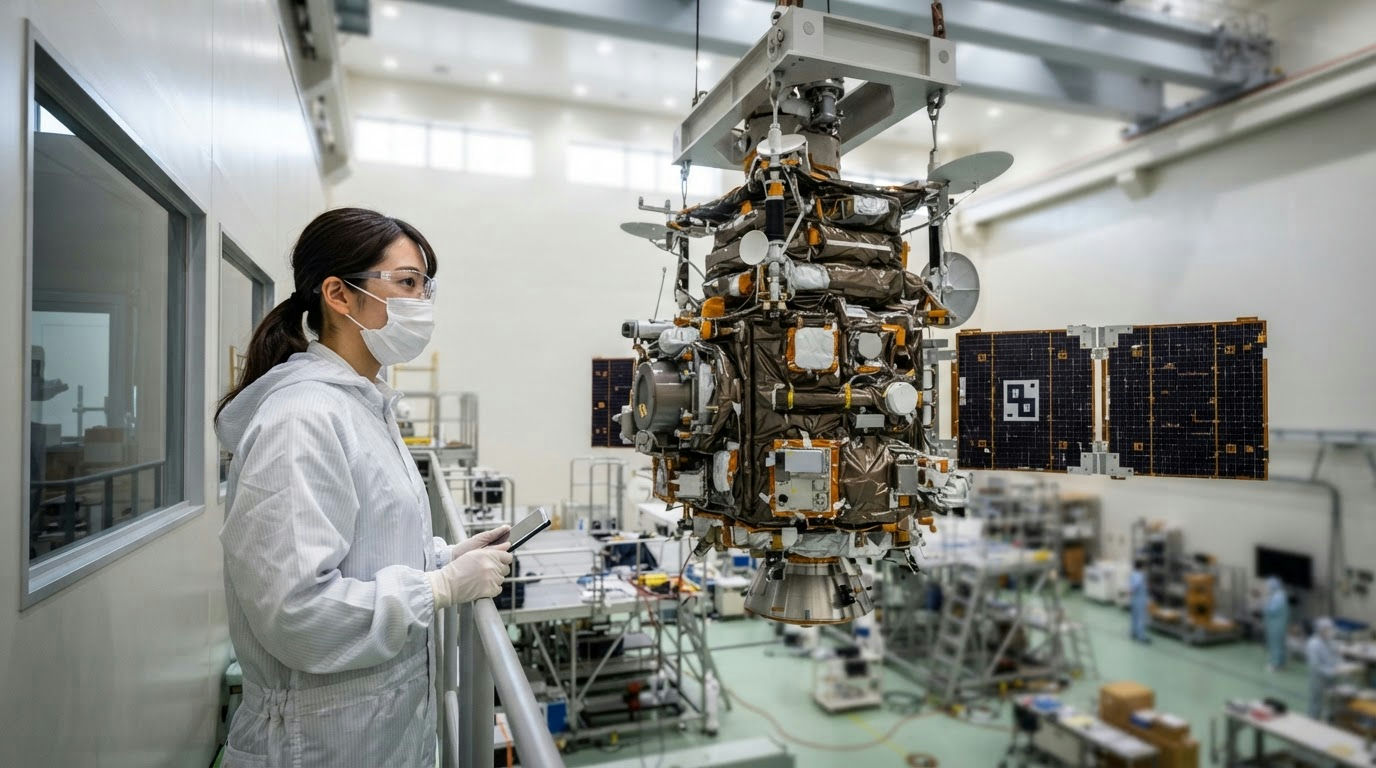
Japan launched the Martian Moons eXploration spacecraft toward Mars on an H3 rocket early Tuesday. The rocket lifted off from Pad-2 of the Yoshinobu Launch Complex at Tanegashima Space Center in Kagoshima Prefecture. Liftoff occurred at 4:41 a.m. Japan Standard Time on October 20, 2026.
Flight controllers confirmed mission success about one hour later when the spacecraft separated into its planned trajectory toward Mars. The flight marked the first interplanetary exploration launch for Japan's flagship H3 rocket. Mitsubishi Heavy Industries and the Japan Aerospace Exploration Agency operated the H3-24L configuration vehicle.
JAXA leads the project alongside NASA, the European Space Agency, the French space agency CNES, and the German Aerospace Center. CBS News reported the mission has an estimated cost of around $350 million. The spacecraft had a total launch mass of approximately 4,480 kilograms and a dry mass of roughly 2,100 kilograms.
The mission aims to land on the Martian moon Phobos and collect at least 10 grams of surface material. Nicky Fox of NASA said the material will provide important science for generations as agencies plan crewed Mars missions. Fox added that NASA will support sample curation and receive portions for study.
Thomas Statler of NASA said the samples should determine if Phobos and Deimos are captured asteroids or impact debris. Daniel Glavin of NASA said resolving the origins of the moons is an outstanding solar system mystery. ESA Project Scientist Elliot Sefton-Nash said the rocket performed well as scientists prepare for operations at Mars.
Phobos orbits roughly 6,000 kilometers above Mars three times a day and spans 14 to 17 miles across. Scientists debate whether the moons are captured asteroids from the outer belt or debris from an ancient Mars impact. While orbiters have photographed the moons, no spacecraft has landed on Phobos or returned samples.
Japan approved MMX development in February 2020, but development timelines and rocket testing schedules delayed earlier launch windows. The H3 rocket suffered a failure during its 2023 debut when its second stage did not start. The vehicle has since completed a series of successful flights.
The spacecraft is scheduled to enter Mars orbit around August 2027. It will deploy a rover built by CNES and DLR, then collect samples using robotic tools and a NASA pneumatic device. MMX will also fly past Deimos, monitor the Martian climate, and deliver the sample capsule to Earth in 2031.