Kurdish Forces Withdraw from Aleppo After Days of Intense Clashes, Thousands Displaced
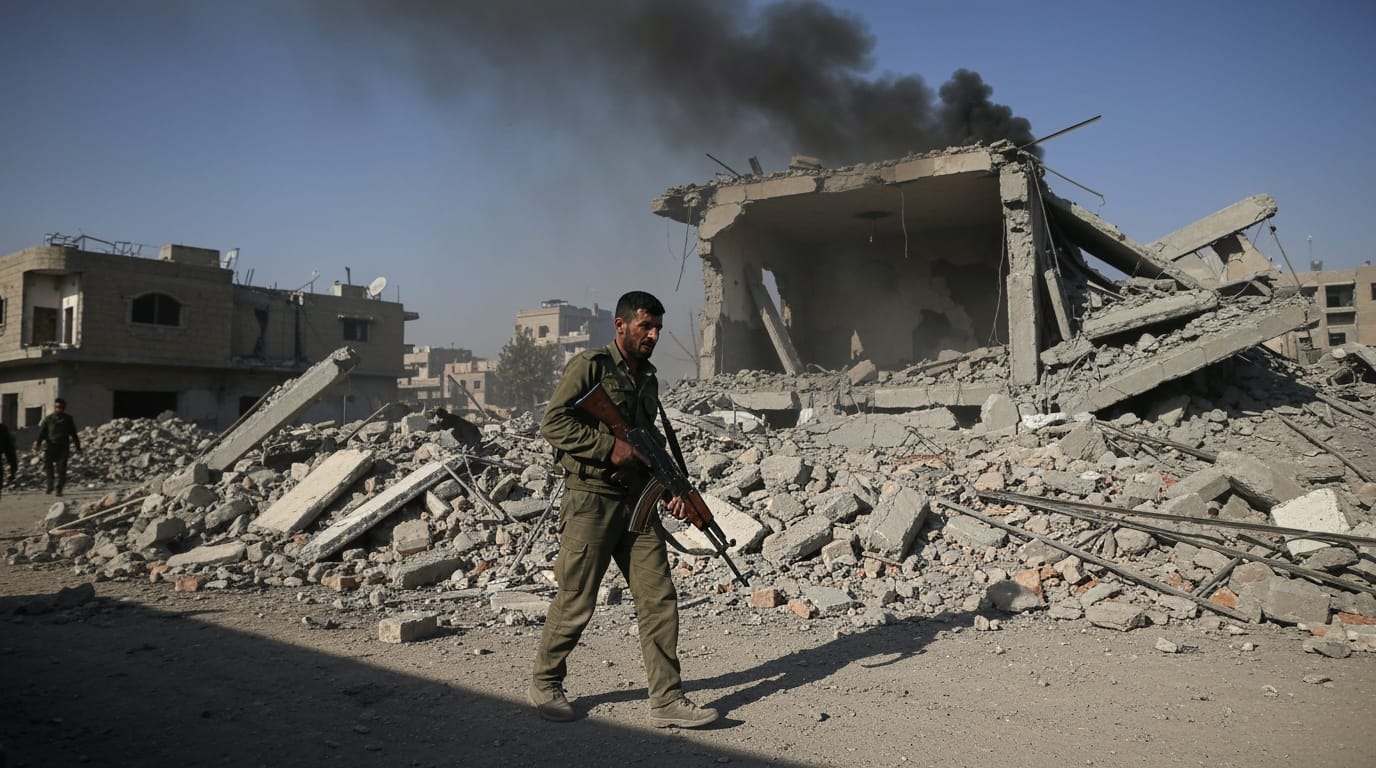
Aleppo, Syria – Kurdish forces on Saturday began withdrawing from key neighborhoods in Aleppo, Syria’s second-largest city, following days of intense fighting with Syrian government troops that claimed civilian lives and displaced over 150,000 people. The pullout, concentrated primarily from the Sheikh Maqsud district and nearby areas, marks a significant shift in control within Aleppo and underscores the ongoing complexities of post-war Syria, particularly the unresolved status of Kurdish-administered regions. The move came after a series of escalating clashes and ultimately, a deal brokered under pressure, signaling a consolidation of the new Syrian government's authority in the strategic city.
The Retreat from Sheikh Maqsud
Buses carrying Kurdish fighters and, according to Syrian state television, those who "announced their surrender," departed the Kurdish-majority Sheikh Maqsud district on Saturday, January 10, 2026. An AFP correspondent observed multiple buses, accompanied by security forces, facilitating the transfer, reportedly to the city of Tabaqa in the Kurdish-controlled northeast of Syria. This withdrawal effectively ends the Kurdish forces' decade-long control over these pockets of Aleppo, a hold they maintained since the early days of the Syrian conflict that erupted in 2011.
The Syrian military had announced a halt to all military operations in Sheikh Maqsud, Ashrafieh, and Bani Zaid on Saturday afternoon, following earlier declarations of the areas as "closed military zones." Syrian security sources indicated that the last entrenched Kurdish fighters had been evacuated from the vicinity of al-Razi hospital in Sheikh Maqsud. However, the Kurdish internal security forces, known as the Asayish, later asserted that those who departed were civilians forcibly displaced, not fighters. This discrepancy highlights the competing narratives surrounding the withdrawal, a common feature in the protracted Syrian conflict.
Days of Deadly Conflict and Failed Ceasefire
The latest bout of violence erupted on Tuesday, January 6, 2026, stemming from long-stalled efforts to integrate the de facto autonomous Kurdish administration and its military forces, including the Syrian Democratic Forces (SDF) and People's Protection Units (YPG), into the new Syrian government structure. A framework agreement from March 2025 aimed at this integration had seen little progress, primarily due to Kurdish demands for decentralized rule, a concept rejected by the Islamist-led government of President Ahmed al-Sharaa.
Initially, Kurdish groups in Aleppo vehemently rejected calls for withdrawal, viewing them as a "call to surrender" and vowing to defend their neighborhoods against government forces. They accused government forces of intensive shelling and denied claims of significant territorial losses. Despite a ceasefire declaration by the Syrian Defense Ministry on Friday, which included a deadline for Kurdish forces to withdraw to the Kurdish-held northeast, fighting resumed, with Kurdish groups reporting continued attacks. The Syrian army subsequently announced a ground operation to clear the remaining Kurdish presence after the ceasefire deadline expired.
The clashes exacted a heavy toll on the civilian population. Reports indicated at least 21 civilians were killed, though some sources cited nine fatalities. More significantly, between 140,000 and 155,000 people were displaced from their homes in Aleppo due to the intense fighting. Families, many carrying what belongings they could, were seen leaving Sheikh Maqsud, with some being directed to displacement shelters by Syrian security forces.
Strategic Implications and Broader Context
The Kurdish withdrawal from these Aleppo neighborhoods represents a notable gain for the Syrian government, allowing it to exert greater control over the entirety of its second-largest city. This move aligns with President Ahmed al-Sharaa's stated goal of unifying the country under a single leadership after 14 years of devastating conflict. The Syrian army's actions underscore its determination to overcome resistance from Kurdish forces that have sought to maintain their autonomous status.
The situation in Aleppo also highlights the deep fault lines within Syria. While the Syrian government views the YPG/SDF as a destabilizing force that needs to be integrated or removed, Kurdish groups have consistently fought for their self-governance and protection. Neighboring Turkey, which considers the YPG a terrorist organization linked to the Kurdistan Workers' Party (PKK), had actively warned of military action if the integration agreement was not honored, further complicating the regional dynamics. Turkish Foreign Minister Hakan Fidan had expressed hope for normalization "through the withdrawal of SDF elements" before the ceasefire was announced.
International actors have also weighed in, with US envoy Tom Barrack engaging with Syrian President Ahmed al-Sharaa. Barrack urged all parties to "exercise maximum restraint, immediately cease hostilities, and return to dialogue," emphasizing the importance of consolidating the ceasefire, ensuring the peaceful withdrawal of Kurdish forces, and guaranteeing civilian safety, as well as pushing for the implementation of the stalled integration agreement.
An Uncertain Future
The withdrawal of Kurdish forces from parts of Aleppo is a pivotal development in the ongoing Syrian conflict. While it may signify a degree of military victory for the Syrian government and a step towards its stated goal of national unity, it also leaves the future of Kurdish aspirations for autonomy within Syria more uncertain. The displacement of a large civilian population adds to the humanitarian crisis gripping the nation, and the underlying political disagreements that sparked this latest round of fighting remain largely unresolved. The long-term implications for the balance of power in Syria, the fate of Kurdish self-rule, and the potential for future confrontations will undoubtedly continue to unfold as the country grapples with its complex post-war reality.


