Kyiv Reeling After Massive Missile Barrage Follows Russian Retaliation Threat
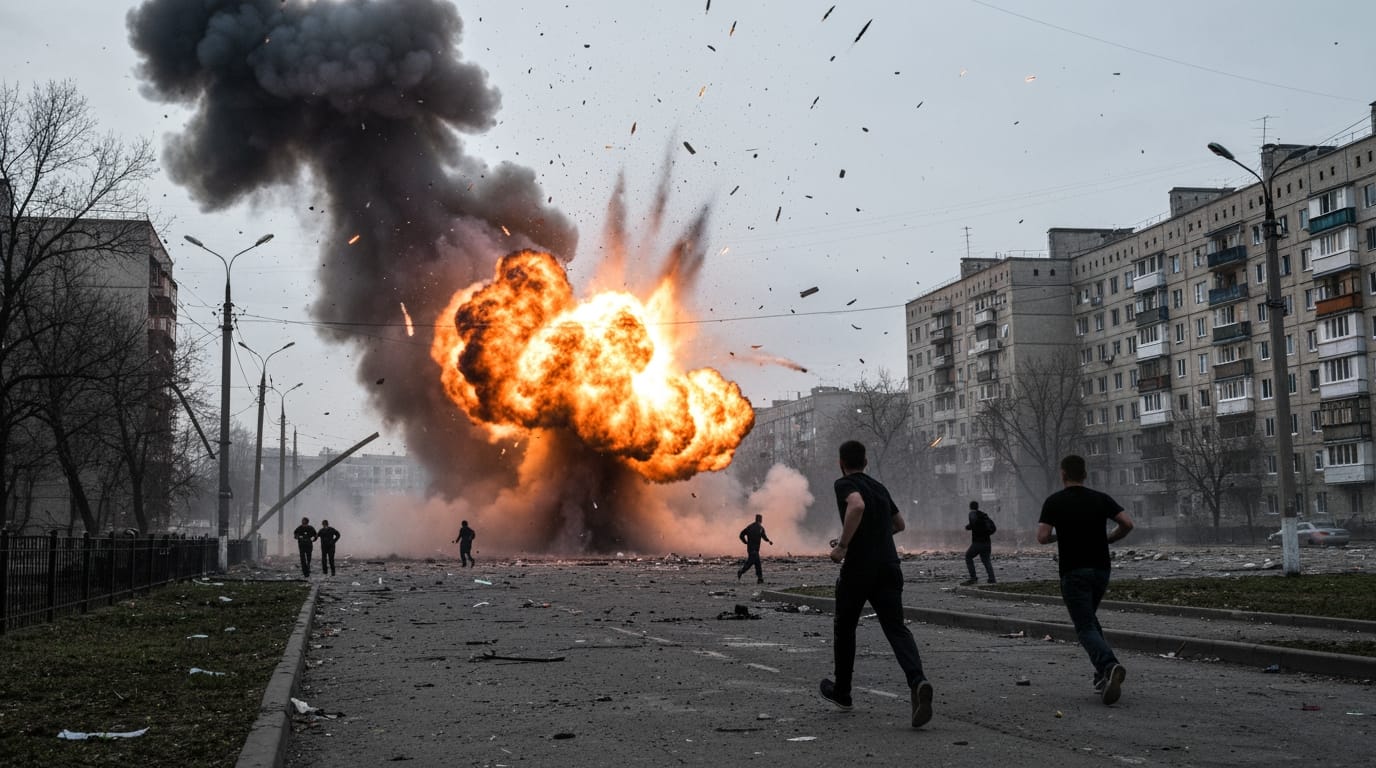
Kyiv awoke to a terrifying dawn on Sunday, May 24, 2026, as a massive wave of Russian missiles and drones slammed into the Ukrainian capital, causing widespread damage, injuries, and at least one fatality. The ferocious assault came hours after Russian President Vladimir Putin publicly ordered his military to prepare options for retaliation following a Ukrainian drone strike on a student dormitory in Russian-controlled Luhansk earlier in the week. The attack underscored the escalating and brutal nature of the conflict, with both sides intensifying their long-range strikes and trading accusations of targeting civilians.
The early morning onslaught, described by Ukrainian authorities as a "mass ballistic missile attack," shattered the relative calm that had sporadically settled over the capital. Explosions reverberated across the city shortly after 1 a.m. local time, sending residents scrambling for shelters. Ukrainian officials had warned of the impending strike, with President Volodymyr Zelenskyy citing intelligence from Ukrainian, U.S., and European sources indicating Russia's intent to use advanced weaponry, including the hypersonic Oreshnik missile.
The Night of Fire and Fear
The scale of the May 24 attack was immediate and devastating. Fire crews battled blazes ignited by falling debris and direct impacts across multiple districts, including Shevchenkivsky, Dniprovsky, Podilsky, Solomianskyi, Darnytskyi, and Holosiivskyi. Residential buildings bore the brunt of the assault, with at least one person confirmed killed after a nine-story apartment block in the central Shevchenko district was hit. Kyiv Mayor Vitali Klitschko reported that emergency services were on the scene, dealing with fires and working to free individuals trapped in shelters at a school and a business center whose entrances were blocked by rubble.
Initial reports indicated at least three injuries, but this number quickly climbed, with city officials eventually stating that 20 people were wounded in the overnight attack, and an additional three in the broader Kyiv region. Among the injured was a 15-year-old boy. The impact extended beyond direct hits, as shattered windows, damaged cars, and debris-strewn streets became common sights across the capital. A school building was also damaged, with debris igniting a fire on its premises.
The Retaliation Narrative
The missile and drone barrage followed a direct and widely publicized threat from Moscow. On Saturday, President Zelenskyy had specifically warned that Russia was preparing a major strike, leveraging intelligence gathered from international partners. This warning came in the wake of President Putin's directive to his military to formulate retaliatory options. The Russian leader's order was a direct response to a Ukrainian drone strike two days prior, which Moscow claimed targeted a student dormitory in Starobilsk, a town in the Russian-occupied Luhansk region of eastern Ukraine. Russian officials reported that the Luhansk dormitory strike resulted in 18 fatalities.
Ukraine's military, however, refuted the accusation of targeting civilians, stating that its drone operation in Starobilsk aimed at a Russian drone command unit. This clash of narratives underscores the deeply entrenched animosity and the frequent use of accusations and counter-accusations during the prolonged conflict. The incident highlights a pattern of tit-for-tat escalation, where strikes on one side often trigger punitive actions from the other.
The Hypersonic Threat and Air Defense Challenges
A particularly alarming aspect of the May 24 attack was the potential deployment of the hypersonic Oreshnik ballistic missile. Ukrainian air force officials had specifically warned of its possible launch. Russia has reportedly utilized the Oreshnik missile twice before, with President Putin having boasted about its virtually intercept-proof velocity, reportedly exceeding 10 times the speed of sound.
Despite Ukraine's formidable air defense systems, particularly around Kyiv, the sheer volume and advanced nature of Russia's missile arsenal continue to pose a significant challenge. While air defenses successfully intercepted many incoming projectiles, the widespread damage and casualties demonstrate the difficulty in achieving a complete shield against such large-scale and technologically sophisticated attacks. Ukrainian military and political leaders consistently appeal to Western allies for more advanced air defense systems to better protect their cities and critical infrastructure.
Broader Implications and International Reaction
The latest large-scale attack on Kyiv, following a clear declaration of retaliation, intensifies concerns about the trajectory of the ongoing conflict. Such direct punitive strikes by Russia, ostensibly in response to Ukrainian actions in occupied territories, signal a continued willingness to escalate hostilities and inflict damage far from the front lines. The U.S. Embassy in Kyiv had also issued a warning of a "potentially significant air attack" hours before the missiles struck, emphasizing the gravity of the intelligence shared with Ukraine.
Ukrainian President Zelenskyy, in the aftermath of the attack, called on the international community to exert pressure on Moscow, advocating for preventive measures rather than post-factum condemnation. He warned that allowing Russia to conduct such widespread destruction sets a dangerous global precedent. The United Nations has consistently condemned attacks against civilians and civilian infrastructure, wherever they occur, a stance reiterated in response to similar incidents throughout the conflict. However, with restricted access to conflict zones, verifying specific details and attributing responsibility accurately remains a complex challenge for international bodies.
Conclusion
The missile barrage on Kyiv on May 24, 2026, serves as a stark reminder of the persistent and destructive nature of the war in Ukraine. Coming directly on the heels of a Russian vow for retaliation, the assault demonstrates Moscow's readiness to employ its advanced missile capabilities against Ukrainian urban centers. While Ukrainian air defenses continue their vital work, the human cost in casualties and destroyed infrastructure remains tragically high. As the conflict grinds on, the cycle of strike and counter-strike, fueled by advanced weaponry and geopolitical tensions, continues to inflict immense suffering and underscores the urgent need for a lasting resolution. The international community watches closely, navigating the delicate balance of supporting Ukraine while attempting to de-escalate a conflict with far-reaching global implications.