M23 Rebels Seize Strategic DRC Port City of Uvira, Defying Recent Peace Deal
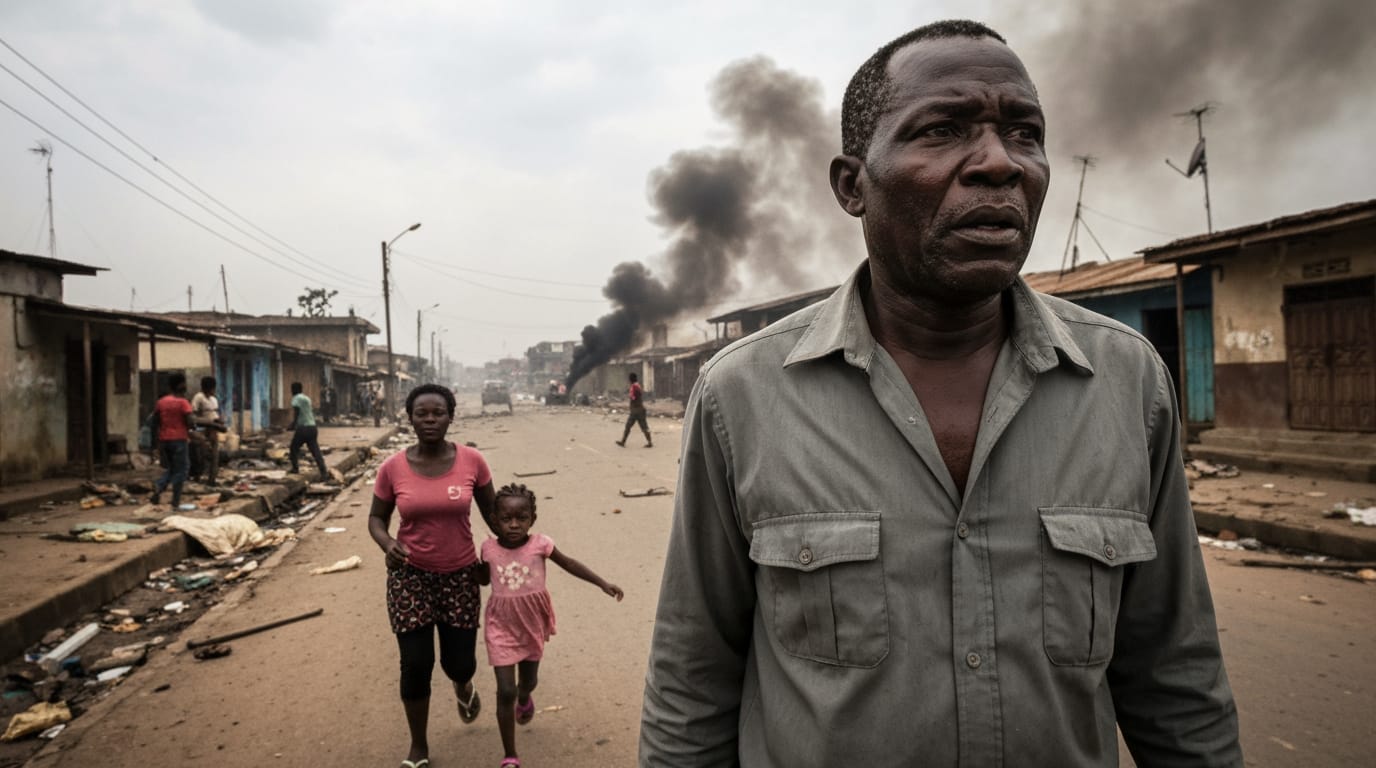
Uvira, Democratic Republic of Congo – The M23 rebel group, reportedly backed by Rwanda, announced Wednesday afternoon its capture of Uvira, a critical port city in the eastern Democratic Republic of Congo (DRC). This swift advance follows a rapid offensive that began at the start of December and marks a significant blow to regional stability, coming just days after a U.S.-mediated peace agreement between the DRC and Rwanda. The fall of Uvira exacerbates an already dire humanitarian crisis and signals a worrying escalation in the long-standing conflict.
The rebel group's spokesperson, Lawrence Kanyuka, confirmed the takeover on social media platform X, urging residents to return to their homes and resume normal activities. However, reports from Uvira residents depict a chaotic scene, with Congolese army troops reportedly fleeing and gunfire echoing through the city during the preceding night. Congolese authorities have yet to officially comment on the situation or have dismissed the claims as a diversion tactic aimed at sowing panic.
A Rapid and Strategic Advance
The M23's latest offensive in South Kivu province has seen a series of quick territorial gains. The rebels first intensified their push into the region on December 1, capturing the strategic town of Luvungi on December 7. This was followed by the seizure of Sange on December 8, placing M23 forces approximately 25 kilometers (about 15 miles) from Uvira. Burundian troops, allied with the Congolese army, reportedly sustained significant casualties and withdrew from their positions in the Ruzizi Plain as the M23 advanced. Some Burundian and Congolese soldiers were observed crossing into Burundi ahead of the rebel entry into Uvira.
This recent military success for the M23 comes after the group had already seized other key cities in eastern Congo earlier this year, including Goma, the capital of North Kivu, in January, and Bukavu, the capital of South Kivu, in February. The capture of Uvira now extends the rebel group's influence significantly across the eastern provinces.
Uvira's Pivotal Role in Regional Trade
Uvira's strategic importance cannot be overstated. Located on the northern tip of Lake Tanganyika, it serves as a vital port city directly across from Burundi's largest city, Bujumbura. With an estimated population of 726,000 as of 2024, Uvira functions as a crucial hub for trade and transport, connecting South Kivu province not only with neighboring Burundi but also with Tanzania and Zambia via Lake Tanganyika. The city's port, Kalundu, facilitates maritime commerce across the lake, making it a critical economic artery for the region.
As the second-largest city in South Kivu, Uvira had also been serving as the provisional administrative center for the province since Bukavu fell under M23 control. Its geographic position, nestled between towering plateaus to the west and Lake Tanganyika to the east, makes it both a natural transport corridor and a vulnerable target. The loss of Uvira represents not just another town changing hands, but a structural shift in regional power dynamics and control over critical trade routes, intensifying concerns for both economic disruption and the potential further fragmentation of state authority in the Kivus.
Diplomatic Efforts Undermined by Renewed Hostilities
The M23's offensive in Uvira comes at a particularly sensitive time, challenging recent international diplomatic efforts to de-escalate tensions in the Great Lakes region. Just last week, on December 4, the presidents of the DRC and Rwanda signed a U.S.-mediated peace agreement in Washington, D.C. While the accord aimed to halt hostilities and obliged Rwanda to cease support for armed groups in eastern Congo, it notably did not include the M23 rebels themselves, who are reportedly engaged in separate negotiations with the Congolese government.
The DRC government has consistently accused Rwanda of backing the M23, an assertion supported by reports from United Nations experts who allege the deployment of 3,000 to 4,000 Rwandan troops in eastern Congo. Rwanda, while denying direct support, maintains that any actions taken are to protect its own territory. Congo's Communications Minister, Patrick Muyaya, directly blamed Rwanda for the latest offensive, citing it as a violation of the Washington agreement. Conversely, the M23 has accused Congolese forces, in conjunction with Burundian troops and local militias, of attacking villages under their control. These conflicting narratives underscore the deeply complex and fragmented nature of the conflict, involving over 100 armed groups vying for control in the mineral-rich eastern Congo.
Escalating Humanitarian Catastrophe
The renewed fighting has precipitated a severe humanitarian crisis. United Nations partners report that since December 2, more than 200,000 people have been displaced across South Kivu province, with at least 70 fatalities recorded. Thousands have fled across the border into neighboring Burundi, prompting concerns about the conflict spilling over into Burundian territory, especially after reports of shells falling in the Burundian town of Rugombo. Burundi has responded by closing its border with the DRC.
The UN humanitarian coordinator in the DRC, Bruno Lemarquis, has issued an urgent call for the protection of civilians, condemning the use of explosive weapons in populated areas and attacks on civilian infrastructure. The M23 has also been accused by human rights organizations like Amnesty International of severe abuses, including raiding hospitals, abducting patients, torture, and sexual violence in areas under its control. This fresh wave of displacement compounds an already critical situation where eastern Congo accounts for one of the world's most significant humanitarian crises, with over 7 million people displaced in total.
The capture of Uvira not only deals a significant military and political blow to the Congolese government, potentially weakening President Félix Tshisekedi's authority, but also intensifies the human suffering in a region already ravaged by decades of conflict. The coming days will reveal the full implications of this latest M23 offensive on regional stability, peace efforts, and the millions of civilians caught in the crossfire.


