Mbappé Delivers Powerful Rebuke to Paraguayan Senator's Racist Outburst
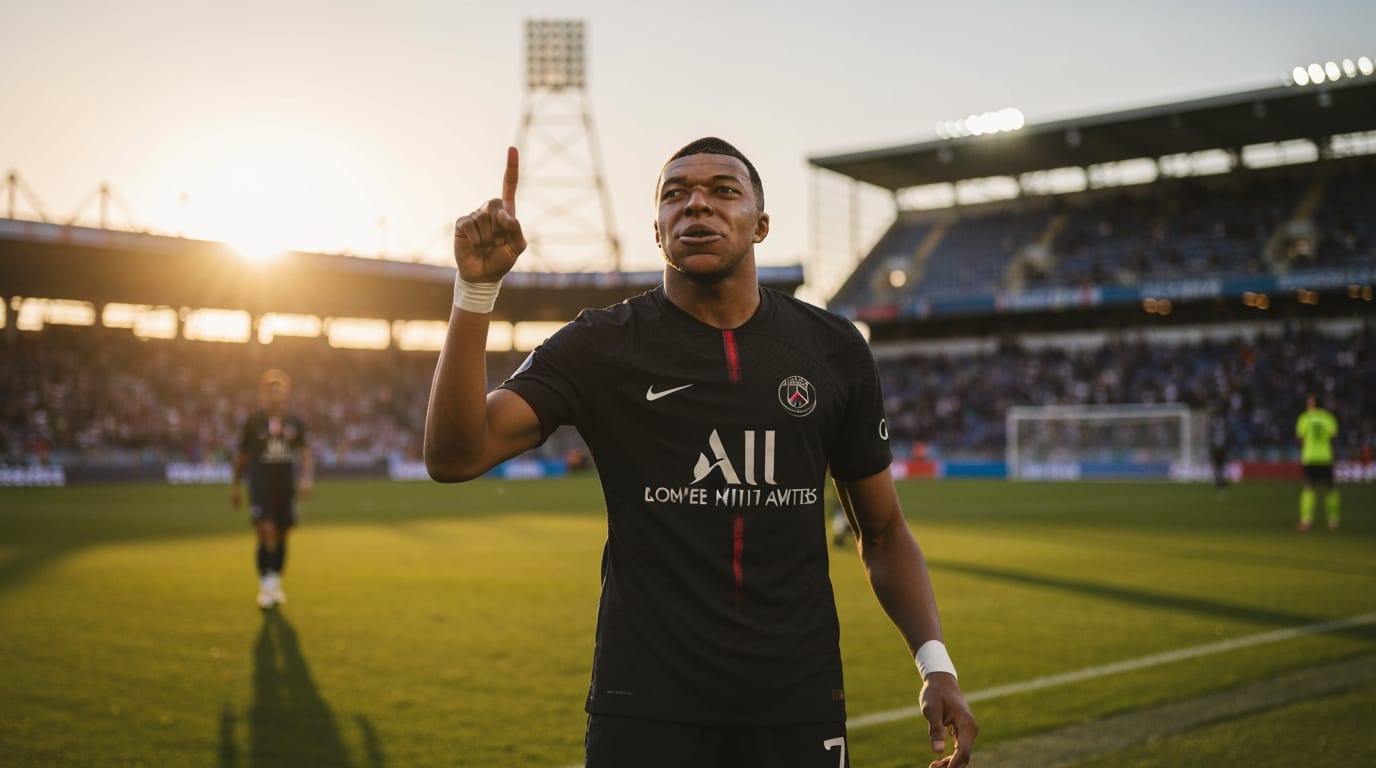
Philadelphia, USA – In a swift and unequivocal condemnation that reverberated across the globe, French football sensation Kylian Mbappé has fiercely countered a barrage of racist and xenophobic remarks launched by Paraguayan Senator Celeste Amarilla following France's 1-0 victory over Paraguay in the World Cup Round of 16. Mbappé, whose decisive penalty secured France's progression, branded Amarilla a "despicable woman unworthy of her position," transforming a post-match social media tirade into a crucial flashpoint in the ongoing battle against discrimination in sports and public life. The incident has drawn widespread international condemnation, prompting legal action from French football authorities and a strong disavowal from the Paraguayan government, highlighting the persistent challenges of racism despite global efforts for inclusivity.
The Provocation: A Senator's Venomous Tirade
The controversy ignited in the aftermath of a tense World Cup knockout match on Saturday, July 4, 2026, in Philadelphia, where Mbappé scored the lone goal from the penalty spot, ending Paraguay's World Cup journey. Following the match, Senator Celeste Amarilla, a member of Paraguay's Liberal Radical Party, took to social media platform X (formerly Twitter) to publish a series of inflammatory posts targeting the French captain. Her remarks were not merely critical of his performance but delved into deeply offensive racist and xenophobic tropes.
Amarilla described Mbappé as a "colonized Cameroonian, desperately trying to pass himself off as French," a "brute who had not learned to write," and asserted, in a particularly egregious comment, that he "grew up sucking coconuts instead of breast milk, and the smartest beings he's ever heard of were chimpanzees." She further incited violence, suggesting that Paraguayan players "should have slapped him" after the game. These remarks, delivered by an elected public official, rapidly circulated online, drawing immediate outrage from sports enthusiasts, anti-racism advocates, and public figures worldwide. The senator’s comments mocked not only Mbappé’s origins and cultural background but also his education and physical appearance, attempting to diminish his identity and achievements through prejudiced stereotypes.
The severity of the senator's statements was magnified by her public office, raising questions about the responsibility of leaders in fostering respectful discourse. While football matches often generate passionate reactions, Amarilla's comments crossed a clear line from criticism to blatant hate speech, demonstrating a concerning disregard for ethical conduct. Her remarks attempted to delegitimize Mbappé's French identity by referencing his Cameroonian heritage, a common tactic used to undermine the belonging of individuals from diverse backgrounds within national teams.
A Resounding Response: Mbappé's Unwavering Stance
Kylian Mbappé, known for his prowess on the field, demonstrated equal strength in his response, refusing to let the senator's comments go unchallenged. On Monday, July 6, 2026, he issued a powerful statement on X, directly addressing Senator Amarilla. His message transcended a personal defense, extending solidarity to the Paraguayan national team and underscoring the broader implications of her racism.
"Madame Celeste Amarilla, you are a despicable woman and unworthy of your position," Mbappé wrote. He continued, emphasizing that her views did not represent the nation she serves: "You do not represent Paraguay, that country which has sweated passion and honour throughout the competition." Mbappé powerfully asserted that Amarilla's "recklessness and brazen racism" had regrettably overshadowed "the journey and the historic effort that your players accomplished during this World Cup," replacing it with "an incompetent woman who gives the worst possible image of her country." He concluded with an emphatic promise: "I will never allow people like her the freedom to spread their hatred and racism across the world."
Mbappé's response was widely lauded for its dignity, directness, and its focus on defending not only himself but also the integrity of football and the honest efforts of the Paraguayan team. His firm stance reaffirmed the role of prominent athletes as powerful voices against injustice and discrimination, demonstrating that such hateful rhetoric will not be tolerated or ignored. The speed and clarity of his statement set a precedent for how public figures can, and should, respond to racist attacks.
Global Condemnation and Legal Action
The senator's racist remarks and Mbappé's robust response quickly triggered a wave of condemnation from official bodies and political leaders. The French Football Federation (FFF) acted decisively, denouncing Amarilla's comments as "utterly abhorrent and unacceptable." The FFF announced its intention to file criminal charges and referred the matter to the public prosecutor's office, signaling a commitment to pursuing legal recourse against hate speech. They reiterated that such remarks are "criminal and reprehensible" and must be prosecuted "here as elsewhere," adding that "These remarks bring shame upon those who make them and those who disseminate them. The players of the French national team represent France; it is our country that is being insulted.”
Significantly, the Paraguayan government also swiftly distanced itself from Senator Amarilla's statements. Through its foreign ministry, it issued a strong condemnation, affirming that her remarks were "contrary to the values and principles that inspire peaceful coexistence and respect for human dignity" that Paraguay promotes. The government explicitly stated that Amarilla's comments "in no way represent the position of the Government of the Republic of Paraguay or of the Paraguayan people." This official repudiation highlighted the universal rejection of racism and xenophobia, even from within the senator's own nation.
French political figures also rallied in support of Mbappé. President Emmanuel Macron declared his "full support" for the captain, stating on X, "One more goal for Kylian Mbappé. This time against racism." Sports Minister Marina Ferrari echoed this sentiment, emphasizing that by targeting Mbappé, the senator was attacking "everything our captain embodies and everything our country stands for: liberty, equality and fraternity." This unified front from national and international bodies demonstrated a clear message that such discriminatory language has no place in society or sport.
In a curious turn, Senator Amarilla later issued an open letter, written in French and Spanish, expressing regret for "mistreating Mbappé with 'the same insults' she's received as a mixed-race person" and confirmed she had deleted her initial inflammatory post. However, this attempt at damage control was undercut by her simultaneous demand for an apology from Mbappé, whom she accused of gender-based violence, even threatening legal action if he did not retract his own comments. This secondary statement was widely perceived as an attempt to shift blame rather than a genuine retraction, further complicating the public narrative.
The Larger Battle Against Racism in Football
This incident involving Kylian Mbappé and Senator Amarilla is not an isolated event but rather a stark reminder of the persistent and pervasive issue of racism in football, reflecting broader societal challenges. Football, a sport celebrated for its ability to unite diverse populations, has long grappled with deep-seated racial biases, both overt and subtle. From racist chants in stadiums to institutional discrimination within governing bodies, the problem manifests in various forms across continents, including Europe and South America.
International football organizations like FIFA have acknowledged the problem of racism for decades, with the first official address at an extraordinary congress in 2001. Efforts have been made to implement measures, such as FIFA's 2013 announcement of new strategies and UEFA's protocol for referees to stop games in the event of racist incidents. However, as demonstrated by the regular occurrence of racist abuse targeting players, these measures often fall short. The anonymity offered by large crowds and online platforms frequently emboldens individuals to engage in discriminatory behavior with perceived impunity.
Athletes, particularly those from marginalized communities, often bear the brunt of such abuse, yet they are increasingly becoming powerful advocates for change. Mbappé's firm response adds his influential voice to a growing chorus of players who refuse to be silenced. His willingness to challenge a high-ranking political figure on such a public stage underscores the critical role athletes play in driving social change and holding those in power accountable. This episode serves as a potent illustration that the fight against racism extends beyond the stadium and into the political arena, demanding unwavering vigilance and concerted action from all sectors of society.
A Call for Continued Vigilance
The confrontation between Kylian Mbappé and Senator Celeste Amarilla serves as a potent reminder of the enduring presence of racism, even in high-profile public discourse. Mbappé's swift and resolute response, coupled with widespread official condemnation, sent an unmistakable message that such hate speech is unacceptable and will be met with firm resistance. While the immediate aftermath saw legal action initiated by French football authorities and a clear disavowal from the Paraguayan government, the incident also highlighted the disturbing readiness of some public figures to employ discriminatory language.
This event transcends a mere football controversy; it underscores the critical need for continued vigilance, education, and decisive action against racism in all its forms. It reinforces the significant platform athletes hold in shaping public opinion and challenging prejudice, inspiring a collective commitment to fostering a more inclusive and respectful global society. The battle against racism is far from over, and incidents like this serve to galvanize renewed efforts in this essential fight.