Mediators Urge Crucial "Next Steps" for Enduring Gaza Ceasefire Amid Fragile Peace
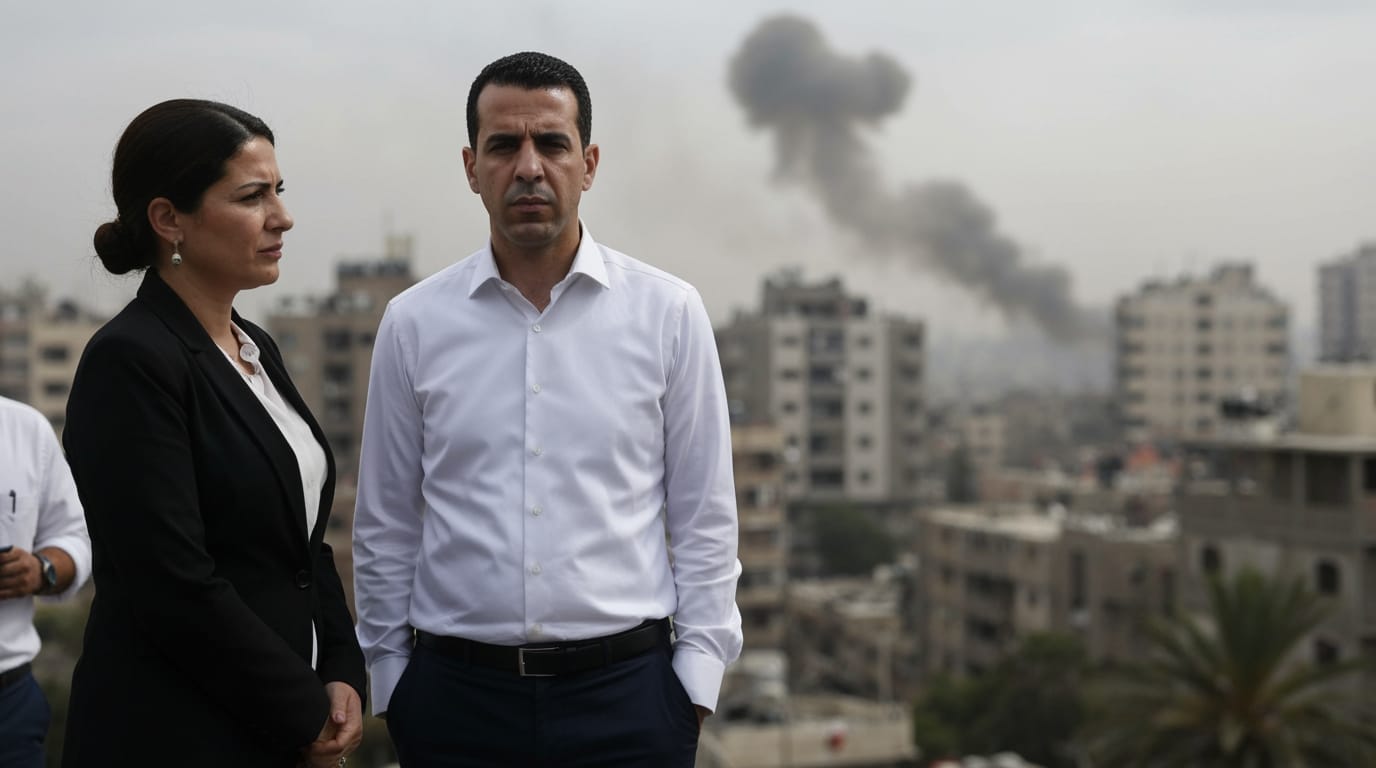
DOHA, QATAR – As the fragile ceasefire in the Gaza Strip approaches its two-month mark, key mediators Qatar and Egypt are intensifying calls for immediate and critical "next steps" to transition from a tenuous pause in hostilities to a lasting peace. The two nations, instrumental in brokering the October 10 truce, assert that the agreement remains incomplete without the full withdrawal of Israeli forces and the deployment of an international stabilization force (ISF) to ensure security and prevent further escalation. The urgent appeals come amidst persistent violence, a deepening humanitarian crisis, and growing concerns over the long-term viability of the current arrangement.
The ceasefire, a product of extensive diplomatic efforts by Qatar, Egypt, and the United States, largely brought an end to two years of intense conflict between Israel and Hamas. Its initial phase involved the partial disengagement of Israeli troops behind a designated "yellow line" within Gaza's borders, alongside the release of remaining living hostages by Palestinian militant groups and the handover of the remains of deceased captives. However, leaders from the mediating countries now emphasize that this initial success represents merely a "pause" rather than a definitive resolution, with the region facing a critical juncture that demands bolder action to establish genuine stability.
The Precarious Truce and Lingering Instability
The ceasefire, which took effect on October 10, was hailed as a significant breakthrough after a protracted period of devastating conflict. It temporarily halted a war that had claimed tens of thousands of Palestinian lives, predominantly civilians, and inflicted catastrophic damage across the Gaza Strip. The initial phase saw Israeli forces repositioning behind a demarcated "yellow line" within Gaza, a move intended to de-escalate direct confrontations. Concurrently, Hamas released the remaining living hostages it held and returned the remains of all but one of the deceased, fulfilling a key condition of the truce.
Despite these initial achievements, the ceasefire's implementation has been fraught with challenges. Reports indicate a persistent undercurrent of violence and alleged violations, raising serious questions about the agreement's durability. Since October 10, Israeli forces have reportedly killed more than 360 Palestinians, including at least 70 children, and wounded 900 others. These casualties, which occurred in contexts often described as "ceasefire violations," underscore the volatile nature of the current situation and the continued dangers faced by Gaza's population. The term "ceasefire" itself has been questioned by some, with critics arguing it risks creating a "dangerous illusion" that normalcy is returning, while conditions on the ground remain far from stable. The ongoing violence, even at a reduced intensity compared to the preceding conflict, serves as a stark reminder that a lasting peace is yet to be achieved.
Mediators Demand Israeli Withdrawal and International Oversight
Addressing the Doha Forum, Qatar's Prime Minister and Minister of Foreign Affairs, Sheikh Mohammed bin Abdulrahman Al Thani, unequivocally stated that the ceasefire "cannot be completed unless there is a full withdrawal of the Israeli forces, [and] there is stability back in Gaza." He underscored that the current situation is merely a "critical moment" and a temporary measure, not a permanent solution. This sentiment was echoed by Egypt's Foreign Minister Badr Abdelatty, who urged the swift deployment of an international stabilization force (ISF) along Gaza's "yellow line" to monitor and verify the ceasefire agreement. Abdelatty highlighted "daily Israeli violations" as a reason for the urgent need for independent oversight, asserting that such a force is crucial to prevent the undermining of the peace deal.
The calls for Israeli withdrawal and international presence are not arbitrary but are stipulated within the broader US- and UN-backed peace plan. This comprehensive framework envisions a second phase that includes Israel's withdrawal from its positions, the establishment of an interim governance authority, and the deployment of the ISF. The role of the ISF would be to maintain security, ensure stability, and facilitate the disarming of militant groups, a key Israeli demand. However, the proposal for an ISF has met with reluctance from some Arab and Muslim nations, who express concern about their forces potentially being drawn into clashes with Palestinian militants. Discussions are ongoing regarding the command structure and composition of such a force, with Turkey's Foreign Minister Hakan Fidan indicating that while talks are progressing, critical questions remain unresolved.
Charting Gaza's Future: Governance, Reconstruction, and Aid
Beyond the immediate security arrangements, the mediators are also pushing for the implementation of the next phases of the peace plan, which include establishing a new governance structure for Gaza and embarking on massive reconstruction efforts. An international body, tentatively named the "Board of Peace" and reportedly chaired by U.S. President Donald Trump, is expected to be announced by the end of the year. This body, operating under a two-year, renewable U.N. mandate, would oversee Gaza's reconstruction and involve leaders from several Middle Eastern and Western nations. Complementing this, a committee of Palestinian technocrats is slated to manage the day-to-day administration of post-war Gaza. These developments are intended to provide a stable, internationally supervised framework for the territory's recovery.
The humanitarian situation in Gaza remains catastrophic, making robust aid efforts and reconstruction paramount. Despite the ceasefire, which began on October 10, the needs are immense. Over 80% of Gaza's buildings have been destroyed or damaged, leaving nine in ten Palestinians without homes. Most of the displaced are living in tents, highly vulnerable to the approaching winter conditions, with heavy rains already causing flooding in November. The health system is on the brink of collapse, with many facilities non-functional and thousands of patients, including children, requiring medical evacuation. Famine conditions were confirmed in parts of Gaza in August, and food insecurity remains critical, despite an increase in aid deliveries since the ceasefire. The UN has highlighted that at least 500 trucks of aid are needed daily to meet humanitarian demands.
A point of contention remains the Rafah border crossing with Egypt. While Israel announced plans to open the crossing exclusively for residents to exit Gaza, Egypt and several other Arab and Muslim nations, including Jordan, Saudi Arabia, and Turkey, voiced "deep concern" and an "absolute rejection" of any attempts to expel Palestinians from their land. They insist that the crossing must be opened in both directions to facilitate both the entry of humanitarian aid and the free movement of people, rather than serving as a mechanism for forced displacement. Egypt views any such plans as a national security threat, reinforcing its commitment to preventing the depopulation of Gaza.
The Call for a Lasting Solution
The current situation in Gaza, nearly two months into the ceasefire, highlights the immense challenges inherent in translating a cessation of hostilities into a genuine and enduring peace. Mediators Qatar and Egypt have made it clear that the present arrangement is insufficient and requires substantial progress on the agreed-upon next steps. The full withdrawal of Israeli forces, the deployment of an international stabilization force, and the establishment of a credible interim governance structure are seen as essential foundations for any sustainable future.
Without these critical measures, the region risks remaining in a perpetual state of fragility, with sporadic violence and humanitarian suffering continuing to define daily life in Gaza. The call from Doha and Cairo is not just for the implementation of a peace plan, but for a "lasting solution that provides justice for both people", a complex endeavor that demands sustained political will, international cooperation, and a fundamental shift towards stability and reconstruction. The coming months will be crucial in determining whether the current pause can evolve into the comprehensive peace that has long eluded the region.


