Merz and Trump Convene in Washington Amid Escalating Mideast Crisis
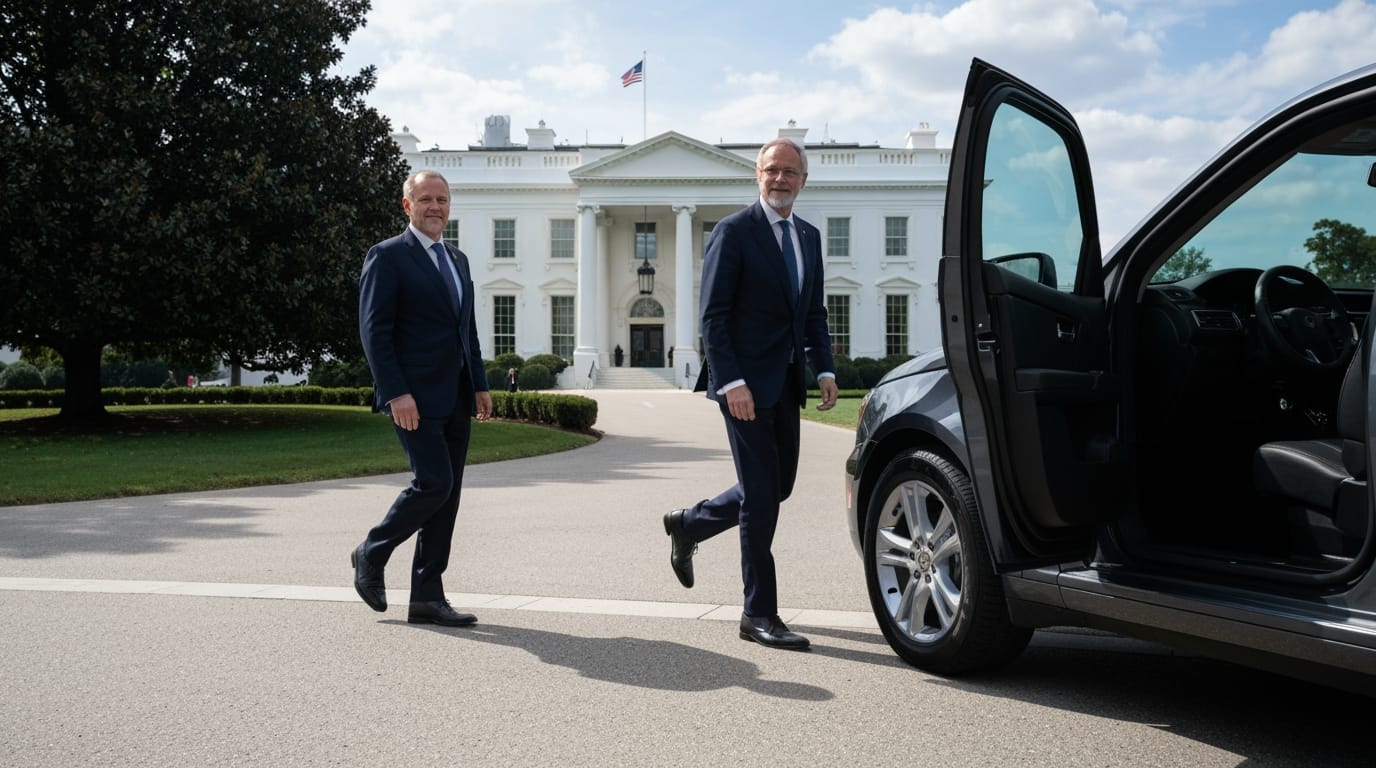
Washington, D.C. — German Chancellor Friedrich Merz arrived in Washington today for a pivotal meeting with U.S. President Donald Trump, a summit overshadowed by a rapidly escalating conflict in the West Asia region and pressing concerns over the ongoing war in Ukraine. The high-stakes talks at the White House are anticipated to delve into the complex geopolitical challenges facing the transatlantic alliance, as leaders grapple with a volatile international landscape and strive to navigate divergent strategic priorities. This visit marks Chancellor Merz's first official encounter with President Trump since assuming Germany's top leadership role in May 2025, setting the stage for critical discussions on global security, economic stability, and the future of German-American cooperation.
The Washington Summit: A Diplomatic Tightrope
The meeting between Chancellor Merz and President Trump, initially slated to prioritize transatlantic security and the enduring conflict in Ukraine, has been significantly reshaped by the intensifying military operations in West Asia. Sources close to the discussions indicate that the deepening crisis, marked by joint U.S.-Israeli strikes on Iran and retaliatory actions, will now dominate the agenda. Chancellor Merz, who has been in close contact with European, Israeli, and regional partners, stated via social media that he intends to discuss the latest developments in West Asia with President Trump, emphasizing that "this is not the moment to lecture our allies, but to stand together in unity." This sentiment underscores a delicate diplomatic balancing act for Merz, who must affirm Germany's commitment to its allies while also representing European anxieties about the conflict's broader implications.
Their engagement began with a bilateral meeting in the Oval Office, followed by a working lunch, signifying the depth of the discussions planned. While the immediate focus is on crisis management, the leaders are also expected to touch upon long-standing issues such as European defense spending, trade relations, and the imperative to maintain a united front against Russian aggression in Ukraine. Merz, a staunch Atlanticist with a history of advocating for robust German defense investments, has consistently aimed to meet U.S. demands for increased burden-sharing within NATO, a stance that has reportedly helped him maintain cordial ties with President Trump.
Navigating a Shifting Transatlantic Landscape
The relationship between Germany and the United States has experienced periods of strain, particularly during past Trump administrations. Chancellor Merz, a veteran politician and former leader of the CDU/CSU parliamentary group, has long been recognized for his pro-American leanings and his previous role as chairman of the Atlantik-Brücke association, an organization dedicated to fostering German-American friendship. Despite his multilateral instincts, Merz has managed to cultivate a working relationship with President Trump, partially by fulfilling the U.S. demand for increased defense spending among NATO members. Under his leadership, Germany has pledged significant investments to bolster its armed forces, a move seen as addressing a key concern of the American administration.
However, Merz has also periodically asserted the need for Europe to enhance its sovereignty amidst geopolitical shifts and has pushed back on occasion against the more mercurial aspects of U.S. policy, particularly regarding Ukraine. At the Munich Security Conference in February, he acknowledged a "deep rift" between traditional allies and urged America to "repair and revive transatlantic trust together." This reflects a broader European desire to be a more independent and capable partner, rather than merely a recipient of U.S. security guarantees. The discussions today are thus expected to be a test of how the two leaders can reconcile these perspectives and forge a unified path forward on critical global issues.
The Shadow of Conflict: West Asia and Ukraine
The sudden intensification of the conflict in West Asia has dramatically altered the context of the Washington summit. With the U.S. and Israel engaged in strikes against Iran and Tehran reportedly retaliating, European officials express growing fears that the West Asian war could divert Washington's attention and resources away from supporting Ukraine, which is now in its fifth year of repelling a full-scale Russian invasion. Merz's visit, scheduled before the latest escalation, now takes on an added urgency as he seeks assurances that Ukraine will not be sidelined.
Chancellor Merz has taken a firm stance against Iran's nuclear program and its military actions, stating that Berlin shares the "relief" of the Iranian people regarding the potential end of the "mullah regime." However, while refraining from "lecturing" the U.S. and Israel on the legality of their strikes, Germany, along with France and the UK, has limited its commitment to "defensive action" in the Gulf, drawing some criticism from U.S. officials for a perceived "soft" response. This nuanced position highlights the domestic and international pressures Merz faces, balancing solidarity with allies against concerns over regional destabilization and public opinion.
The long-term implications of a protracted conflict in West Asia for global energy markets, trade routes, and the broader international order are significant. European leaders, including Merz, are broadly hoping for a diplomatic resolution to the conflict, emphasizing the need for an end to hostile activities and Iran's nuclear program.
Germany's New Political Trajectory Under Merz
Friedrich Merz's ascendancy to the chancellorship on May 6, 2025, marked a significant shift in German politics. As the leader of the Christian Democratic Union (CDU) since January 2022, Merz campaigned on a platform that promised a departure from the centrist policies of his predecessor, Angela Merkel. His focus includes revitalizing Germany's stagnating economy, rebuilding voter trust, and countering the rise of the far-right.
In foreign policy, Merz has articulated a vision for Germany that emphasizes greater responsibility for European security, boosting NATO, and strengthening the alliance with the U.S. while also seeking to manage relations with China. His tenure has already seen Germany take steps to align more closely with U.S. strategic interests, particularly in pushing back against China's economic influence in Europe. Merz has acknowledged that the transatlantic relationship is evolving, stressing that Europe must remain flexible amid shifting geopolitical landscapes. His government's strategy aims to reset relations and revitalize the transatlantic alliance, a move that is seen by some as strengthening America's strategic leverage in Europe. However, his statements have also at times reflected a pragmatic acknowledgment that Europe may need to achieve greater independence from the U.S. in defense matters, particularly in response to perceived shifts in Washington's foreign policy.
Conclusion
Chancellor Friedrich Merz's meeting with President Donald Trump arrives at a moment of profound global uncertainty. The discussions in Washington today are not merely a bilateral exchange but a critical barometer for the health of the transatlantic alliance and the collective West's capacity to confront simultaneous crises. While the immediate imperative is to coordinate responses to the escalating conflict in West Asia and ensure continued support for Ukraine, the summit also lays the groundwork for shaping German-American relations in a new era. Merz's conservative leadership, coupled with his commitment to both transatlantic cooperation and European self-reliance, faces the formidable task of balancing diverse interests and expectations. The outcomes of these talks will undoubtedly resonate across continents, influencing not only the immediate crises but also the long-term trajectory of international stability and cooperation.


