Messi's India Tour: A Masterclass in Brand Power and a Catalyst for Indian Sports Discourse
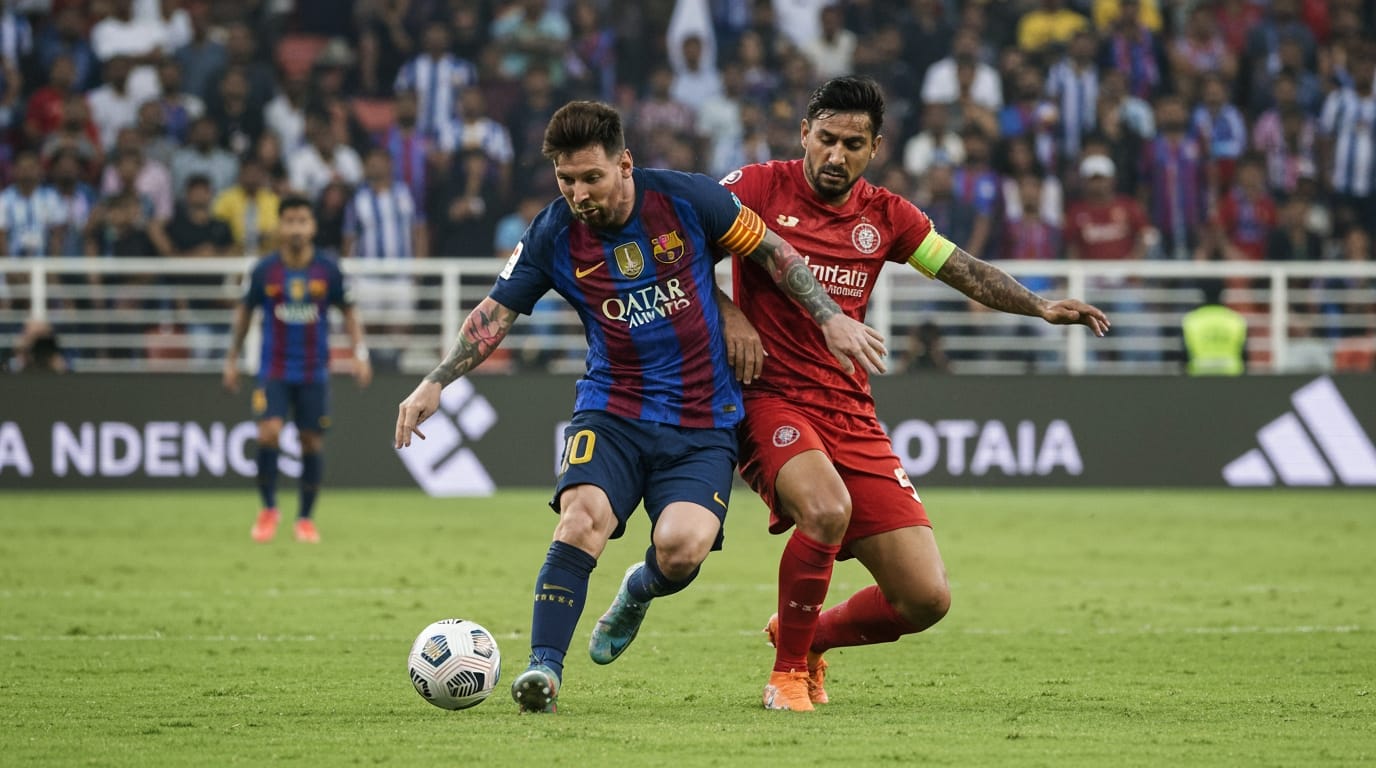
Lionel Messi, the Argentine football icon and reigning World Cup champion, recently concluded a high-profile three-day "GOAT Tour" across India, leaving in its wake a spectacle of fervent fan engagement and a potent reminder of the commercial supremacy of individual athlete brands in modern sports. From December 13 to 15, 2025, Messi, accompanied by former FC Barcelona teammate Luis Suárez and fellow Argentine international Rodrigo De Paul, captivated millions across Kolkata, Hyderabad, Mumbai, and New Delhi, underscoring India's burgeoning sports market and igniting crucial conversations about the nation's sporting development trajectory. This tour, a meticulously crafted blend of athletic celebrity and strategic marketing, vividly illustrated that in the 21st century, brand is indeed king.
The Lure of the Legend: Messi's Magnetic Pull in a Growing Market
Messi's whirlwind visit, his second to the subcontinent after a 2011 friendly, commenced in Kolkata, where an eager crowd, estimated to be in the tens of thousands, gathered to witness the superstar. The initial stop was marred by chaotic crowd management, leading to Messi's abbreviated appearance and a public apology from the Chief Minister. However, subsequent legs in Hyderabad, Mumbai, and New Delhi saw smoother operations, allowing the footballer to engage in a range of activities. These included meet-and-greet sessions, exhibition matches, a Padel GOAT Cup, charity events, and even the virtual unveiling of a 70-foot statue in Kolkata. Fans paid significant sums for tickets, with some photo opportunities reportedly priced upwards of 12 lakh rupees, illustrating the immense commercial value attached to proximity with such a global icon. In Mumbai, Messi interacted with cricket legend Sachin Tendulkar, and in New Delhi, he was scheduled to meet Prime Minister Narendra Modi, further amplifying the tour's high-profile nature. The sheer scale of fan turnout, despite the organizational hurdles, highlighted India's deep fascination with international sporting heroes and its rapidly expanding football fanbase.
Beyond the Beautiful Game: The Commercial Engine of 'Brand Messi'
The "GOAT Tour" was less a traditional sporting event and more a strategic commercial enterprise, a testament to the colossal economic power wielded by "Brand Messi." With an estimated net worth of $850 million in 2025, buoyed by a lifetime Adidas contract and diverse business ventures, Messi's personal brand is a global phenomenon. His influence is so profound that his departure from FC Barcelona was projected to cause an 11% drop in the club's brand value, equivalent to €137 million, with his social media following far surpassing that of his former team. In India, this brand power translated into substantial commercial opportunities. HSBC India emerged as a key brand partner for the tour, leveraging Messi's global appeal to connect with aspirational young consumers and enhance its own market positioning. The association signaled to the market the commercial viability of high-standard sporting events in India, potentially spurring further corporate investment in football infrastructure and initiatives. Sponsorships are a cornerstone of football's global economy, commanding 41% of all sports sponsorships, and Messi's tour provided a vivid demonstration of how a single athlete's brand can drive significant economic activity, media visibility, and brand partnerships. Critics, however, pointed out that the tour was primarily a "luxury marketing activation" designed to sell aspiration and boost corporate visibility, rather than a direct investment in sporting development.
India's Sporting Crossroads: Spectacle vs. Substance
While the tour undeniably generated immense excitement, it also sparked a critical debate within India's sporting community regarding the balance between celebrating international superstars and fostering homegrown talent. Olympic gold medalist Abhinav Bindra voiced concerns about the considerable resources expended on the tour, questioning whether India was truly building a robust sporting culture or merely engaging in "star worship." Bindra emphasized that meaningful sporting nations develop talent through accessible playgrounds, trained coaches, and structured pathways, rather than through fleeting spectacles. Former Indian football captain Bhaichung Bhutia echoed these sentiments, criticizing the mismanagement at the Kolkata leg of the tour and lamenting that genuine fans were often overshadowed by VIPs. These observations highlight a recurring tension in Indian sports: the ambition to host world-class events often collides with persistent gaps in grassroots infrastructure and governance. The financial outlay for Messi's appearance and logistics, estimated to be between ₹150–200 crore, could have funded domestic leagues or numerous academies for years, according to some commentators. This ongoing discussion underscores the challenge of translating the inspirational power of global icons into sustainable, impactful development at the foundational levels of Indian sports.
The Evolving Landscape of Indian Sports Marketing
Despite these critiques, Messi's tour undeniably underscored India's emergence as a significant and rapidly expanding sports market. Football is firmly established as India's second most popular sport after cricket, with approximately 305 million fans, representing 21% of the population. Nielsen's 2024 data further identifies India as a "football hotbed" with 138.7 million fans, making it a key growth market for sponsors and media platforms. The country's sports economy is projected to surge from $52 billion to $130 billion by 2030, driven by increased discretionary spending, digital engagement, and a diversification of sports consumption beyond cricket. Sports marketing in India reached nearly $2 billion in 2023, with significant investments in sponsorships and endorsements across various sports. International leagues and events are increasingly adapting to the Indian audience, offering multi-language commentary and digital-first campaigns. Sports tourism, encompassing travel to participate in, observe, or volunteer at sporting events, is also a burgeoning sector in India, experiencing a 20-35% increase in demand. High-profile visits like Messi's are pivotal in attracting foreign tourists and boosting local economies, further solidifying India's position on the global sports map.
Conclusion: The Enduring Legacy of Brand and Aspirations
Lionel Messi's "GOAT Tour" of India was a multifaceted event that transcended mere exhibition matches. It served as a powerful affirmation of the modern sporting landscape, where the personal brand of an athlete can command global attention and significant commercial value. While the tour successfully galvanized millions of fans and showcased India's growing appetite for diverse sports, it simultaneously brought into sharp focus the perennial debate about resource allocation and the need for sustained investment in grassroots development. The challenge for India now lies in harnessing the aspirational energy generated by such iconic visits and channeling it into building a robust, inclusive sporting ecosystem. Messi's presence unequivocally demonstrated that the age of the celebrity athlete is also the age of the formidable brand, a reality that will continue to shape the future of sports both globally and within India's dynamic landscape.