Middle East Oil Exports Rebound to Prewar Levels Despite Shipping Attacks
Persian Gulf producers have restored crude deliveries by rerouting supplies around the Strait of Hormuz, stabilizing regional energy outflows even as Iranian sales remain cut off.
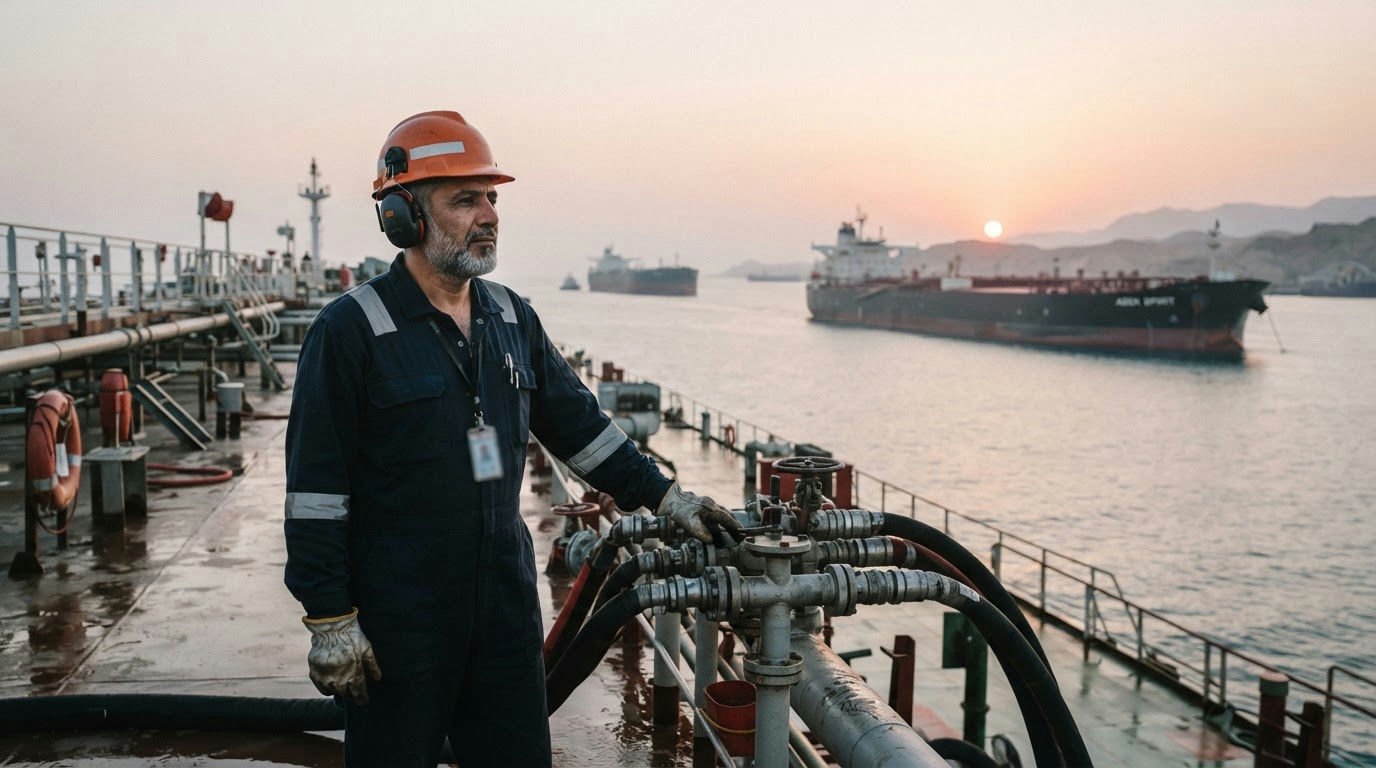
Persian Gulf crude oil exports rebounded to prewar volumes in September, maritime tracking firms reported, seven months after military conflict disrupted traffic through the Strait of Hormuz. Exporters adapted to persistent security threats by redirecting crude into overland pipelines and organizing offshore ship transfers.
Shipments from regional producers excluding Iran reached at least 16.5 million barrels per day in September, according to trade intelligence firm Kpler. That volume matched the regional pre-conflict average. The figure marked an increase of 10.5 million barrels per day compared with the monthly low in March.
Tracking estimates from other monitoring groups showed lower volumes moving through the waterway itself. Kpler recorded an average of 10 million barrels per day crossing the strait. Vortexa placed that flow at about 7.9 million barrels per day, while TankerTrackers.com counted 7.4 million barrels per day.
The recovery reshaped Middle Eastern logistics. Kpler reported that 40 percent of regional crude departed without transiting the Strait of Hormuz in September, compared with 17 percent before fighting broke out. Approximately 60 percent of regional crude physically moved through the strait, while 23 percent loaded from ports outside it, and 17 percent exited via the Red Sea.
Saudi Arabia and the United Arab Emirates drove the diversions. Abu Dhabi moved crude through its pipeline directly to the port of Fujairah on the Gulf of Oman. Saudi Arabia reopened its East-West pipeline to the Red Sea port of Yanbu in late September following repairs after a drone attack.
Exporters also instituted offshore shuttle runs to bypass danger zones. Very large crude carriers loaded inside the Gulf and transferred cargoes to external vessels off the coasts of Oman and the UAE. More than 70 percent of crude transiting the strait in August changed tankers offshore, Kpler stated.
By contrast, Iranian crude exports collapsed. A naval blockade led by the United States prevented Iranian tankers from leaving regional waters. Preliminary tracking data compiled by Bloomberg, Kpler and Vortexa showed Iranian crude loadings fell to zero in September, down from 1.7 million barrels per day before the war.
Product flows have not matched the crude rebound. J.P. Morgan estimated Middle East refined fuel flows, including diesel and gasoline, remained at 58 percent of prewar levels due to infrastructure damage and higher transit hazards.
Security risks remain active across the corridor. The United Kingdom Maritime Trade Operations reported at least seven strikes on merchant vessels near the Strait of Hormuz since late September. The very large crude carrier Kazimah III was struck by a projectile in the waterway on Oct. 1.