Mission Creep in the Video Operation Room Emerges as Football's Growing Crisis
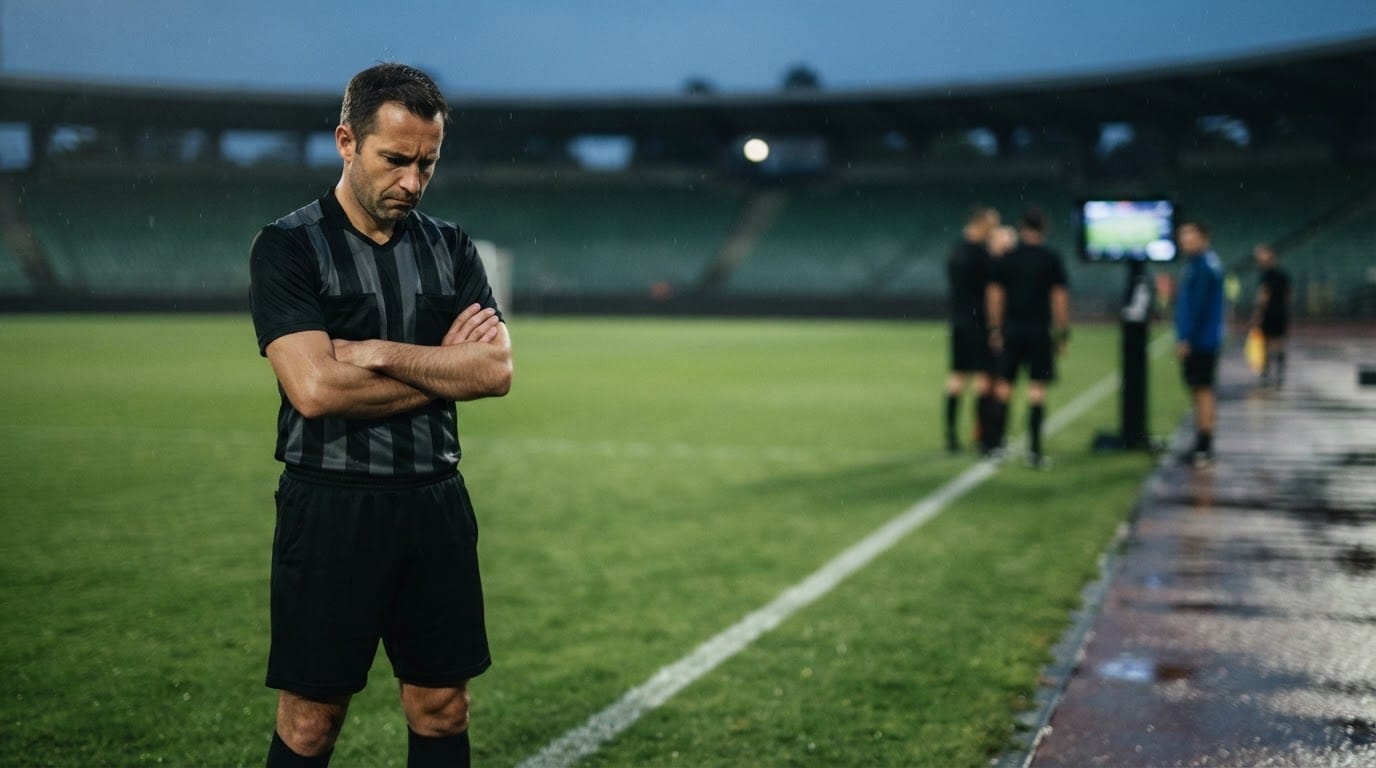
LONDON — When the International Football Association Board codified the Video Assistant Referee system in 2018, the mandate arrived with a strict and modest promise: "minimum interference, maximum benefit." The technology was designed as an emergency safety net to eliminate catastrophic blunders—the missed handballs, mistaken identities, and blatant offsides that previously scarred major tournaments.
Yet years into its worldwide rollout across domestic leagues and continental competitions, the system has steadily expanded beyond its original borders. Rather than functioning strictly as a backstop for clear and obvious mistakes, video reviews have gradually turned into a forensic microscope. This gradual expansion of authority—a phenomenon known as mission creep—is testing the patience of supporters, disrupting the natural rhythm of the sport, and reshaping how the game is officiated at the highest levels.
The Drift from Obvious Errors to Forensic Re-Refereeing
The central friction point in modern officiating lies within the definition of a "clear and obvious error". Under initial protocols, officials in the video operation room were instructed to intervene only when an on-field referee had committed an undeniable mistake. If an incident required multiple viewings from five separate camera angles, standard protocol held that the call was inherently subjective and the on-field decision should stand.
In practice, that threshold has significantly softened. Video referees routinely dissect plays frame-by-frame, searching for incidental contact in the penalty box or tracing attacking possession phases back dozens of seconds prior to a goal. Marginal contact that appears innocuous at full speed often looks malicious when slowed down to super-slow motion, leading to penalty awards and red cards that defy the organic feel of the match.
By scrutinizing decisions that football traditionally accepted as gray areas, the booth has shifted from an advisory role into a second officiating crew. When on-field referees are summoned to pitchside monitors, statistics across European leagues show they reverse their original calls more than 80 percent of the time. The monitor visit, once intended as a rare safeguard, has become an informal directive to overturn, undermining the authority of the lead referee on the pitch.
Stifled Celebrations and the Erosion of the Fan Experience
The expansion of video reviews has hit match-going supporters the hardest. Football’s emotional heartbeat has long been the instantaneous release of raw joy that accompanies a goal. Today, that spontaneous celebration is increasingly muted by an immediate, anxious glance toward the assistant referee or the center official's earpiece.
Supporters inside stadiums often face extended periods of confusion. Reviews can take anywhere from two to five minutes while technicians calibrate offside lines or parse through crowded goalmouth skirmishes. In many venues, spectators are kept in the dark, watching a static graphic on a stadium screen with no audio feed or visual replays explaining what is being examined.
Surveys conducted by independent supporters' associations across England, Spain, and Germany consistently report falling satisfaction rates regarding match-day atmosphere. A substantial majority of attending fans cite long delays and the over-policing of minor incidents as their primary frustration with modern professional football. While television audiences receive immediate replays and multi-angle analysis, the fans paying for tickets in the stands are frequently left stranded in silence.
The Illusion of Total Accuracy
Much of the drive toward expanded video involvement stems from a broader cultural demand for absolute perfection. Leagues promote accuracy statistics showing that correct key match decisions have climbed into the 95-to-98 percent range since the introduction of the technology.
Yet the pursuit of perfection has exposed an uncomfortable truth: football’s rulebook was written for human interpretation, not digital measurement. Offside determinations made by fractional millimeter margins have drawn particular criticism. High-speed broadcast cameras operating at 50 frames per second contain inherent margins of error regarding the exact microsecond a ball leaves a passer’s foot. Drawing virtual lines across pixels creates a veneer of scientific certainty, but it often punishes attackers for having a sleeve or a toe stray marginally beyond a defender.
Subjective decisions, such as handball infringements and tackles involving reckless force, remain open to endless debate regardless of how many replays are generated. When video officials intervene in these nuanced moments, they do not eliminate controversy; they merely transfer the source of the argument from a human error on the grass to a bureaucratic calculation inside a remote studio.
Navigating the Balance Between Justice and Flow
Officiating governing bodies, including UEFA and domestic referee organizations, have begun acknowledging the strain caused by technological overreach. Several leagues have introduced higher bars for intervention, instructing video assistants to tolerate reasonable contact and prioritize the flow of play.
Semi-automated offside technology has helped reduce review times for boundary line decisions, and experiments with in-stadium public address announcements by referees have aimed to bring transparency to spectators. There are also rising calls to limit the time allotted for video reviews, forcing officials to uphold the original call if a clear error cannot be confirmed within 60 seconds.
The central challenge facing global football administrators is determining where justice ends and disruption begins. Technology has effectively stamped out blatant errors that once decided World Cup finals and league championships. However, by allowing video checks to creep into every corner of the game, football risks sacrificing the spontaneous energy and human character that made it the world's most popular sport. Reclaiming that balance will require governing bodies to enforce the strict boundaries they originally promised.