Netflix Acquires Warner Bros.: An $83 Billion Deal Set to Reshape the Entertainment Landscape
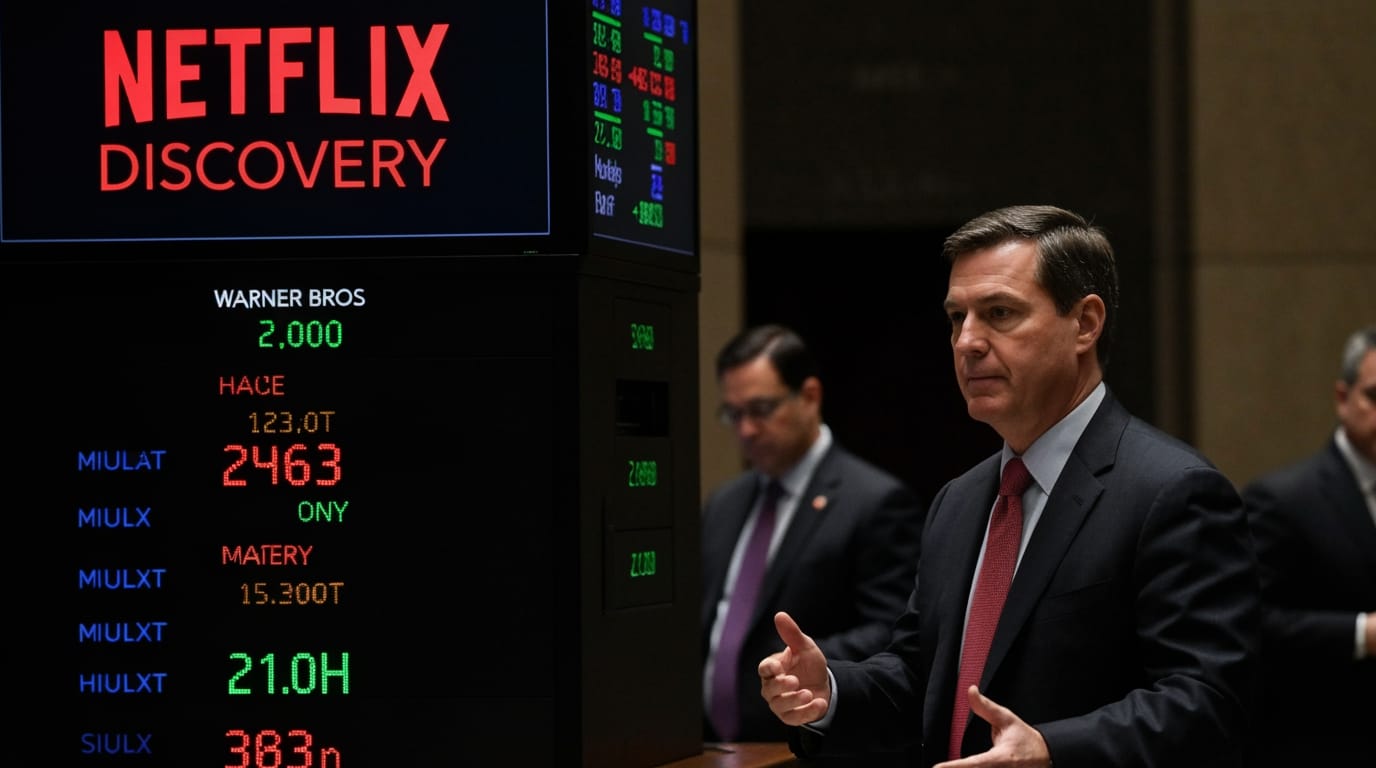
In a seismic shift for the entertainment industry, streaming titan Netflix announced Friday its definitive agreement to acquire the film and television studios of Warner Bros., including its prestigious HBO and HBO Max streaming services, for an estimated $82.7 billion. This monumental transaction, which also encompasses Warner Bros.' vast content library, marks the largest consolidation deal in entertainment since Disney's $71 billion acquisition of 21st Century Fox in 2019, fundamentally altering the competitive dynamics of the global streaming wars.
The deal, unanimously approved by the boards of both companies, is poised to reshape Netflix's content empire, providing the streaming giant with an unparalleled trove of iconic franchises and critically acclaimed programming. However, it is expected to face rigorous scrutiny from antitrust authorities in the United States and potentially other major international markets, reflecting concerns over market dominance in a rapidly consolidating sector.
The Blockbuster Bid: A New Era for Netflix
Netflix's acquisition of Warner Bros. represents a dramatic strategic pivot for the company, which has historically prioritized organic growth and internal content development over large-scale mergers. "This acquisition will improve our offering and accelerate our business for decades to come," stated Greg Peters, co-CEO of Netflix. The move is designed to significantly bulk up Netflix's already considerable content production capabilities, securing premium assets like HBO and the legendary Warner Bros. studios.
The comprehensive deal will see Netflix integrate Warner Bros.' century-long legacy of storytelling, including beloved franchises such as "Harry Potter," the DC Universe, "The Sopranos," "Game of Thrones," "The Big Bang Theory," and classic films like "Casablanca" and "Citizen Kane." This infusion of intellectual property and production infrastructure is expected to enhance Netflix's studio capabilities, expand its U.S. production capacity, and deepen its investment in original content.
The acquisition comes after Warner Bros. Discovery (WBD) reportedly put itself up for sale in October, following multiple unsolicited offers. The company had been grappling with financial pressures and a substantial debt load, with a debt-to-EBITDA ratio standing at 18.13x. The streaming segment of WBD, particularly HBO Max, was identified as the core asset attracting significant bidder interest.
A Fierce Bidding War and Industry Reactions
The path to this historic agreement was paved by an intense bidding war that played out over the U.S. Thanksgiving holiday. Netflix emerged victorious against formidable competitors, including Paramount (recently acquired by the family of Oracle founder Larry Ellison), Comcast, and Skydance. Paramount, a significant contender, reportedly submitted a bid close to $27 per share and subsequently voiced criticisms, alleging an unfair auction process that favored Netflix.
The transaction values WBD at $27.75 per share, resulting in a total equity value of approximately $72 billion and an enterprise value of nearly $83 billion. Under the terms of the agreement, each WBD shareholder will receive $23.25 in cash and $4.501 in shares of Netflix common stock for each share of WBD common stock.
However, the news has been met with mixed reactions, particularly within Hollywood. Concerns have been raised by prominent figures, including "Titanic" director James Cameron, who publicly called a Netflix takeover of Warner Bros. "a disaster." These anxieties largely stem from Netflix's traditional strategy of limiting theatrical releases for its film productions, a practice that clashes with the conventional distribution models favored by many filmmakers and studios. In response to these concerns, Netflix has stated its intention to "maintain Warner Bros.' current operations and build on its strengths, including theatrical releases for films."
Strategic Consolidation in a Crowded Streaming Landscape
The deal highlights the accelerating trend of consolidation within the streaming and entertainment industries. With viewing of traditional linear TV at an all-time low and streaming viewership reaching record highs, media companies are increasingly seeking scale, robust content libraries, and diversified revenue streams to maintain profitability. Wall Street's shift away from rewarding subscriber growth at any cost has intensified pressure on platforms to achieve profitability, driving a wave of mergers and acquisitions.
For Netflix, which boasts over 280 million global subscribers, the acquisition is a strategic maneuver to cement its dominance and acquire an unparalleled content library that complements its existing originals. Analysis of content catalogs suggests minimal overlap between Netflix and HBO Max offerings, implying significant gains for Netflix's library in terms of both movies and shows. The integration is expected to allow Netflix to offer even more compelling bundled offerings, potentially reducing consumer costs and churn. Furthermore, Netflix aims to achieve substantial cost savings of $2-3 billion annually by the third year post-acquisition.
A crucial aspect of the agreement involves the separation of Warner Bros. Discovery's Global Networks division (Discovery Global) into a new publicly traded company. This separation is now expected to be completed in the third quarter of 2026, with the Netflix acquisition anticipated to close within 12 to 18 months thereafter, pending regulatory approvals.
The Road Ahead: Regulatory Hurdles and Future Implications
While the deal promises significant strategic advantages, the path to completion is not without obstacles. The sheer size and scope of the acquisition, creating an entertainment powerhouse with control over an immense catalog of content and a leading streaming service, will undoubtedly draw intense scrutiny from antitrust regulators. The U.S. government has historically shown a cautious approach to media consolidation, and this transaction will be a key test of current antitrust enforcement policies.
Beyond regulatory challenges, the integration of two massive corporate cultures and diverse content strategies presents its own complexities. Warner Bros. has a long history of traditional theatrical distribution, while Netflix has revolutionized direct-to-consumer streaming. Bridging these approaches while delivering on subscriber expectations and financial synergies will be critical to the deal's long-term success.
This acquisition signals a new phase in the streaming wars, where comprehensive content ownership and strategic market positioning are paramount. As Netflix prepares to absorb one of Hollywood's most storied studios, the entertainment industry watches intently to see how this consolidation will redefine content creation, distribution, and consumption for decades to come.


