Niger Defies EU, Rejects Demands for Ousted President Bazoum's Release
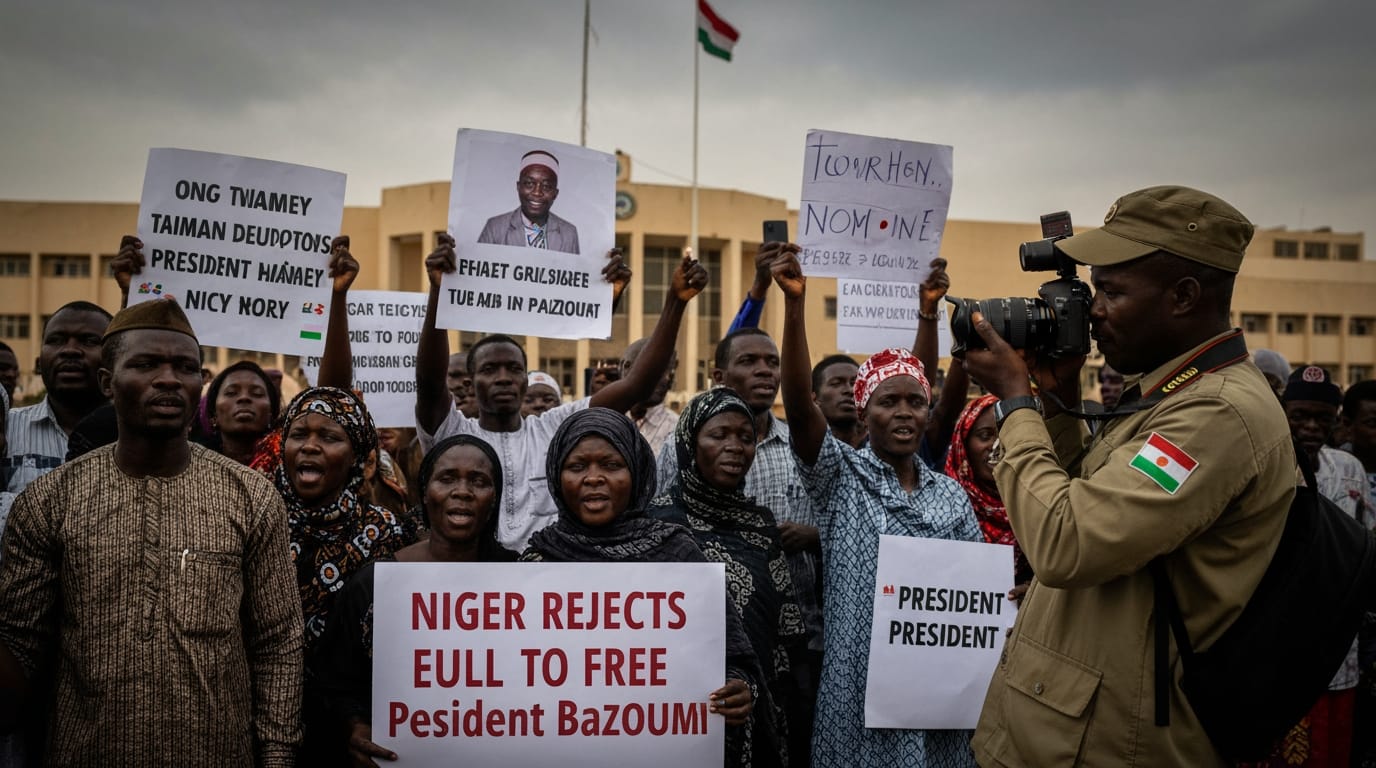
NIAMEY, NIGER – In a stark display of its unyielding stance, Niger's military government has vehemently rejected a recent resolution by the European Parliament demanding the immediate and unconditional release of ousted President Mohamed Bazoum. The junta, which seized power in a July 2023 coup, summoned the European Union's chargé d'affaires in Niamey to deliver a formal protest, denouncing the EU's resolution as "interference" in its internal affairs and criticizing what it termed a "paternalistic and condescending attitude." This diplomatic confrontation underscores the deepening chasm between Niger's ruling authorities and the international community, prolonging a political deadlock that has reverberated across the fragile Sahel region.
The Diplomatic Chasm Deepens
The latest escalation in tensions follows a resolution adopted by the European Parliament on March 12, 2026. The resolution, overwhelmingly passed with 524 votes in favor, explicitly called for the "immediate and unconditional release" of President Bazoum and his wife, emphasizing that Bazoum's constitutional presidential term was set to conclude on April 2, 2026. European lawmakers highlighted the arbitrary nature of his detention and urged the Nigerien authorities to restore democratic order, reinstate political parties, and organize free and fair elections. However, the junta in Niamey reacted with indignation, with Niger's foreign ministry directly communicating its strong objection to Nicoletta Avella, the EU's chargé d'affaires ad interim. This firm rebuke signals Niger's consistent refusal to bow to external pressure regarding Bazoum's fate, a position supported by several civil society organizations within the country who view the EU's demands as an infringement on national sovereignty. The Alliance of Sahel States, comprising Niger, Mali, and Burkina Faso—all led by military juntas—echoed Niger's outrage, collectively condemning the European Parliament's resolution as "a grave attempt of meddling" in the affairs of independent states.
Echoes of a Coup: Bazoum's Continued Detention
Mohamed Bazoum, Niger's democratically elected president, was overthrown on July 26, 2023, when members of his own presidential guard, led by General Abdourahamane Tchiani, detained him and seized control. The coup leaders quickly established the National Council for the Safeguard of the Homeland (CNSP), suspended the constitution, and dissolved state institutions, citing deteriorating security and poor governance as justifications for their actions. Since his ousting, Bazoum, along with his wife and son, has remained under house arrest at the presidential palace in Niamey. Concerns have repeatedly been raised regarding his detention conditions, with reports suggesting limited access to lawyers, family visits, and medical care.
In a move that further solidified their defiance, the military junta announced its intention to prosecute Bazoum for "high treason" and undermining state security, charges that could potentially carry the death penalty. In June 2024, a state court established by the junta lifted Bazoum's presidential immunity, paving the way for such prosecution, though no formal case has been initiated to date. International bodies, including Human Rights Watch, the United Nations Working Group on Arbitrary Detention, and the Economic Community of West African States (ECOWAS) Court of Justice, have consistently deemed Bazoum's detention arbitrary and illegal under international law, calling for his immediate release. Despite these rulings, Niger's military government has shown no indication of complying.
International Pressure and Regional Realignment
The July 2023 coup in Niger drew widespread condemnation from the international community, including the European Union, the United Nations, the United States, and the West African regional bloc ECOWAS. ECOWAS, under the leadership of Nigerian President Bola Tinubu, initially imposed stringent sanctions and issued a seven-day ultimatum for Bazoum's reinstatement, threatening potential military intervention if their demands were not met. However, this deadline passed without military action, and while ECOWAS subsequently activated its standby force, diplomatic options were prioritized.
The EU, a significant partner to Niger in various cooperation areas, including security, migration, and development, swiftly suspended its financial aid and military cooperation with the country following the coup. Prior to the coup, Niger was considered a critical ally for Western nations in the fight against Islamist insurgency in the Sahel, especially as other regional states experienced similar military takeovers. However, the political landscape in the Sahel has since undergone a significant realignment. Niger, alongside Mali and Burkina Faso—both also governed by military juntas—has withdrawn from ECOWAS, further isolating itself from traditional regional and international partners. This pivot reflects a broader sentiment among these nations to assert sovereignty and redefine their international partnerships, often accompanied by heightened anti-Western, particularly anti-French, sentiment.
A Nation in Turmoil: Humanitarian and Security Fallout
The political instability ignited by the coup has had profound consequences for Niger, one of the world's poorest countries, which was already grappling with significant challenges. The security situation has deteriorated markedly since the military takeover, with a reported increase in jihadist attacks, human and arms trafficking, and irregular migration flows across the Sahel. This worsening security environment poses a severe threat to the civilian population and further complicates humanitarian efforts in a country where nearly three million people were already in need of assistance.
The suspension of substantial international aid, which previously accounted for approximately 40% of Niger's national budget, has exacerbated the humanitarian crisis. The withdrawal or restriction of major international organizations and NGOs due to the unstable environment and the junta's policies has severely curtailed the delivery of essential services and aid, leaving millions vulnerable. The EU's decision to halt development and military cooperation, while continuing humanitarian assistance, reflects the difficult balancing act faced by international actors aiming to pressure the junta while mitigating suffering among the populace.
An Unyielding Standoff
As Mohamed Bazoum's original presidential term formally draws to a close, the standoff between Niger's military rulers and the European Union shows no signs of abating. The junta's resolute rejection of calls for Bazoum's release, coupled with its plans for prosecuting him on serious charges, signals a firm intent to consolidate its power and resist what it perceives as external dictates. This unwavering stance has not only isolated Niger from many traditional allies but has also contributed to a volatile and unpredictable regional environment. The ongoing detention of a democratically elected leader, the deteriorating security situation, and the profound humanitarian impact collectively paint a grim picture for Niger's immediate future, with no clear diplomatic pathway emerging from the current impasse.