No Credible Evidence of Petition Against Migrant National Team Players
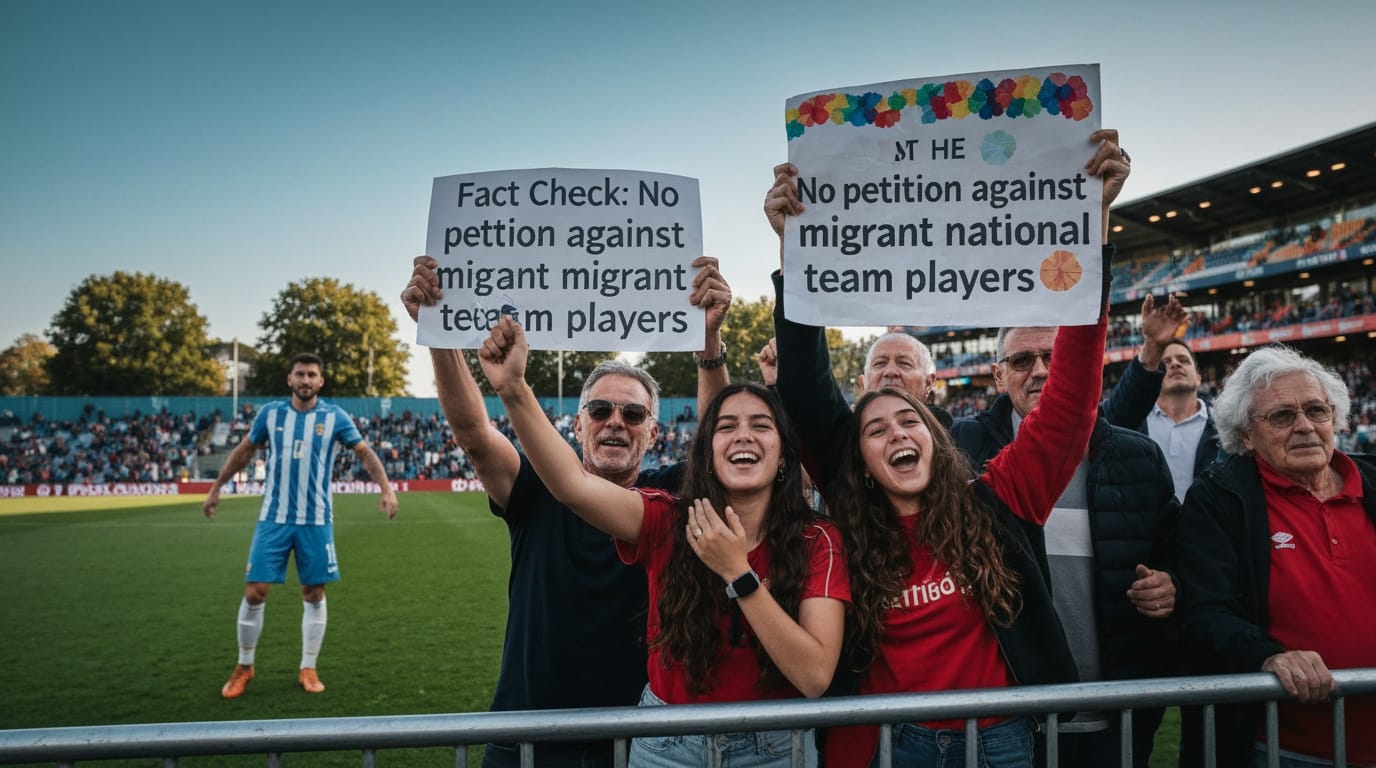
Fact Check Reveals Absence of Widespread Anti-Migrant Athlete Movement Amidst Online Rumors
Recent unsubstantiated claims circulating online, suggesting the existence of a widespread petition against migrant players on national sports teams, have been debunked by fact-checking initiatives. Despite the rapid spread of such narratives across various digital platforms, no verifiable evidence or credible sources support the notion of an organized movement or formal petition seeking to remove or exclude athletes based on their migrant status. This finding underscores the pervasive challenge of misinformation within the sports world, a realm often susceptible to emotional and nationalistic sentiments.
The unsubstantiated reports gained traction in various online communities, particularly through social media channels, where rumors can quickly proliferate without immediate scrutiny. These claims often tapped into broader societal discussions surrounding immigration and national identity, projecting them onto the highly visible stage of professional sports. However, dedicated efforts to trace the origin and verify the authenticity of such a petition yielded no concrete results, confirming that the alleged petition lacks any factual basis. Independent fact-checkers and media organizations found no official records, reputable organizational backing, or significant public endorsement for any such initiative.
The Spreading Scourge of Sports Misinformation
The emergence and spread of the fabricated petition claim are not isolated incidents but rather symptomatic of a larger trend of misinformation in sports journalism and public discourse. The digital age, characterized by the rapid circulation of news and information, has inadvertently created fertile ground for the propagation of false narratives. Social media platforms, while facilitating instant communication, also enable misinformation to spread at an alarming rate, often six times faster than accurate information, making it 70% more likely to be shared. This phenomenon can have detrimental effects, misleading the public, damaging the reputations of athletes, and potentially affecting significant sporting events.
Historical precedents demonstrate the impact of such falsehoods. Allegations of referees manipulating matches during the 2014 FIFA World Cup, for instance, led to a surge of speculation and eroded trust. More recently, during the 2022 World Cup in Qatar, a significant number of false news stories circulated about prominent players like Lionel Messi and Cristiano Ronaldo. These instances highlight how rumors, whether born from malice or as market tactics, contribute to an environment where fact and fiction can become blurred, distracting from the essence of the game. The emotional investment fans have in their teams and national representation makes sports a particularly vulnerable area for the exploitation of such sentiments through false narratives.
Diversity as a Cornerstone of Modern Sports
The false petition claim stands in stark contrast to the reality of modern sports, where diversity is increasingly recognized as a strength and a fundamental aspect of national teams. Many national squads across various sports are composed of athletes from a wide array of backgrounds, reflecting the multicultural fabric of their respective nations. For example, a significant portion of the Australian sporting population is either born overseas or has at least one parent from another country. Similarly, the U.S. Men's National Team includes several players who are immigrants, underscoring the vital role diverse talents play in national representation.
This inclusivity is not merely a demographic reflection; it fosters a sense of unity and mutual respect within teams, allowing athletes to learn from different cultures and appreciate varied perspectives. Diverse sports teams often serve as powerful role models for acceptance and inclusivity, inspiring individuals from under-represented groups and challenging societal stereotypes. The presence of players from varied ethnic and national origins enriches the sporting landscape, promotes cultural exchange, and helps break down barriers, demonstrating that success in professional sports transcends ethnicity or origin.
Navigating the Complexities of International Sports and Immigration
While the petition against migrant players proved to be a fabrication, the broader context of international sports has indeed seen real issues arise concerning the treatment of athletes and officials from different countries. Recent events, such as the 2026 World Cup co-hosted by the United States, have brought to light genuine challenges related to immigration policies and their impact on global sporting events. Controversies emerged over visa denials for certain participants, including a Somali referee and members of the Iraqi national team, which sparked significant international outrage and raised questions about the host nation's approach to international engagement.
Somali referee Omar Abdulkadir Artan, who was set to make history as the first Somali to officiate at a World Cup, was denied entry into the U.S. due to "vetting concerns," a decision that drew widespread criticism from his home country and the global football community. Similarly, members of the Iraqi national team faced extended questioning and temporary detention upon arrival, despite ultimately being granted entry. These incidents, while distinct from the fabricated petition, highlight the sensitivities and complexities involved when national immigration policies intersect with the inclusive spirit of international sporting competitions. They underscore the need for clear communication and equitable treatment to ensure that such events remain platforms for global unity rather than sources of diplomatic friction.
Conclusion: Upholding Integrity in the Digital Age
The swift debunking of the alleged petition against migrant national team players serves as a critical reminder of the imperative for rigorous fact-checking in an increasingly digital and interconnected world. False narratives, particularly those preying on national identity and public sentiment, can rapidly erode trust and foster division. While the diversity of national sports teams continues to be a source of strength and unity, ongoing vigilance is required to combat misinformation that seeks to undermine these values. The sports world, much like society at large, must actively champion factual accuracy and resist the propagation of unverified claims to preserve the integrity of both competition and community. The true spirit of sport thrives on inclusivity and fair play, not on fabricated divisions.