North Africa's Enduring Rift: Unpacking the Algeria-Morocco Rivalry
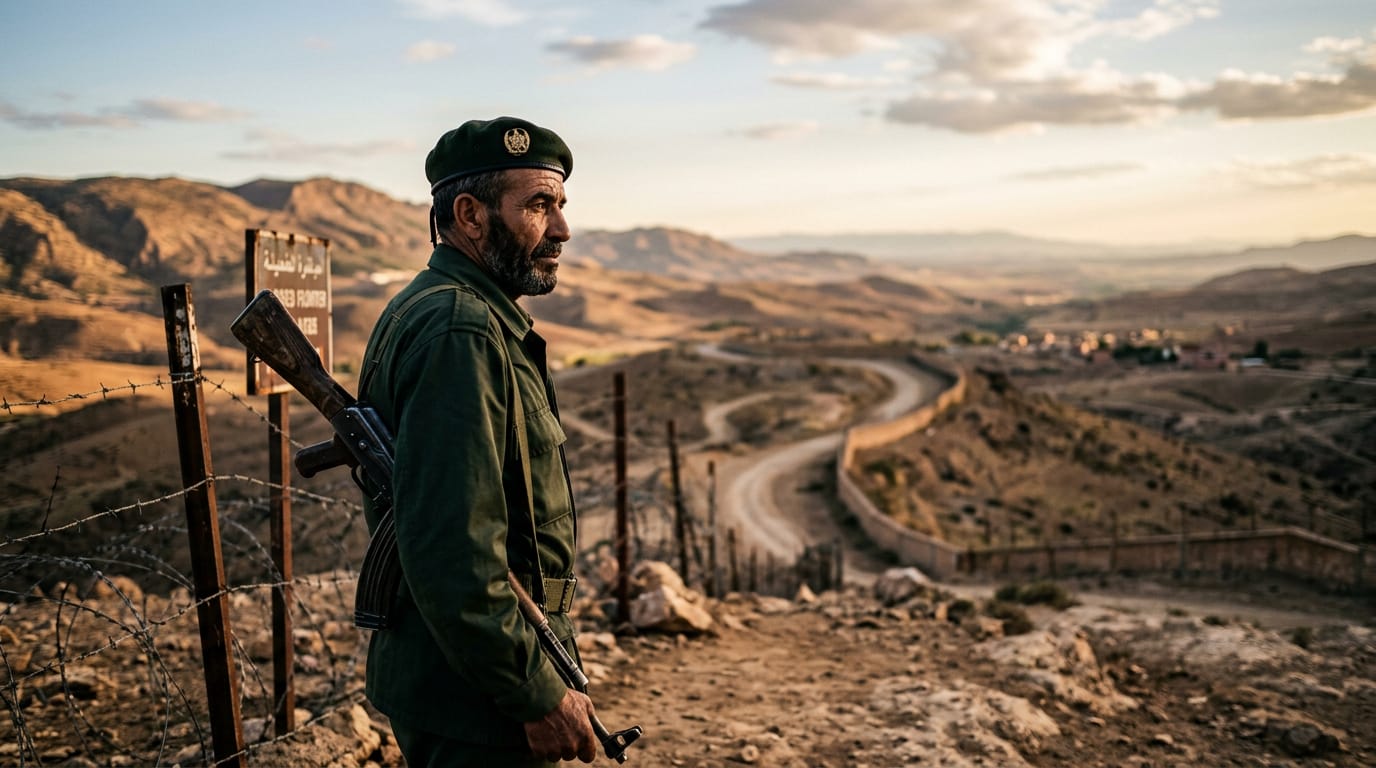
The relationship between Algeria and Morocco, two of North Africa's most prominent nations, has been characterized by deep-seated rivalry for decades, preventing regional integration and profoundly impacting the lives of their citizens. What began as post-colonial border disputes has evolved into a complex geopolitical struggle, with the unresolved status of Western Sahara standing as the primary flashpoint and a symbol of their broader competition for regional influence. The continued closure of their shared 1,559-kilometer land border, diplomatic freezes, and differing international alignments underscore a rivalry that shows little sign of abatement, cementing the Maghreb as one of the world's least economically integrated regions.
Historical Echoes and Contested Borders
The roots of the Algeria-Morocco rivalry stretch back to their post-independence eras, shaped by the legacy of French colonialism which left behind arbitrarily drawn borders and unresolved territorial claims. Following Algeria's independence from France in 1962, a significant military confrontation, known as the Sand War, erupted in October 1963. This brief but impactful conflict stemmed from Moroccan claims to territories in southwestern Algeria, regions that Morocco asserted were historically part of its domain. While the war did not alter the newly independent countries' borders, it established an intense antagonism between the Moroccan monarchy and the Algerian government, setting a precedent for future mistrust.
Decades later, in 1994, a terrorist attack at the Atlas Asni Hotel in Marrakesh led to a severe deterioration in relations. Morocco accused the Algerian secret service of involvement and responded by imposing visa requirements on Algerian nationals. Algeria, in turn, retaliated by unilaterally closing its land border with Morocco, a closure that has remained in effect ever since. Despite the official closure, clandestine crossings have been common, particularly for drug trafficking. This decision severely impacted cross-border communities, separating families and stifling legitimate trade and cultural exchange between the two nations. The border closure alone is estimated to cost both countries approximately 2% of their annual growth rate.
Western Sahara: The Central Fault Line
While historical grievances contributed to the animosity, the dispute over Western Sahara emerged as the principal and most enduring fault line in the Algeria-Morocco rivalry. The conflict originated in 1975 when Spain withdrew from its former colony, leading to Morocco annexing much of the territory. Morocco asserts sovereignty over Western Sahara and considers support for its autonomy proposal a central test of its foreign partnerships.
In stark contrast, Algeria champions the self-determination of the Sahrawi people and provides extensive political, logistical, and humanitarian support to the Polisario Front, the independence movement for Western Sahara. Algeria hosts thousands of Sahrawi refugees in camps near Tindouf, on its territory. The involvement in Western Sahara led to direct military clashes between Algerian and Moroccan armies in 1976 during the battles of Amgala, further cementing the conflict's status as a proxy war. Algeria's continued backing of the Polisario Front is widely seen as an effort to undermine Morocco's regional ambitions and prevent its incorporation of the territory.
Geopolitical Chessboard and Shifting Alliances
Beyond direct territorial claims, the rivalry between Algeria and Morocco is profoundly shaped by a competition for regional hegemony and influence within the Maghreb and across Africa. Both countries have adopted increasingly assertive foreign policies, vying for leadership and international recognition.
A significant escalation occurred on August 24, 2021, when Algeria officially severed diplomatic ties with Morocco. Algeria cited a series of "hostile actions," including alleged Moroccan support for the Movement for the Self-Determination of Kabylia (MAK), a separatist group in Algeria, and accusations of Morocco using Israeli-made Pegasus spyware against Algerian officials. Morocco dismissed these accusations. Adding to Algeria's concerns was Morocco's 2020 decision to normalize relations with Israel as part of the Abraham Accords, a move viewed by Algiers as a direct threat to its national security and regional interests. Subsequently, France's decision in 2024 to back Moroccan sovereignty over Western Sahara and support its autonomy proposal further strained France's relations with Algeria, highlighting how international alignments are increasingly impacted by the Maghreb's internal dynamics.
This geopolitical contest has fueled an arms race in North Africa, creating a "security dilemma" where each nation's defensive buildup is perceived as an offensive threat by the other. The longstanding rivalry has also severely hampered the functionality of the Arab Maghreb Union (AMU), an organization established in 1989 with the aim of fostering economic and political unity among its members. The AMU has largely failed to achieve its goals, with the Algeria-Morocco impasse preventing significant regional integration and cooperation.
Human Cost and Economic Stagnation
The prolonged diplomatic freeze and the closed border have imposed a substantial human cost, dividing countless families who live in border communities and hindering their ability to connect with relatives across the divide. For many, daily life is impacted by the artificial barrier, severing historical ties and cultural exchanges that once thrived. One resident lamented, "Since 1994, I have not seen them a single time" referring to relatives across the border.
Economically, the lack of cooperation has stifled the potential for regional development. The Maghreb remains one of the least economically integrated regions globally, primarily due to the intractable rivalry between its two largest economies. Opportunities for joint infrastructure projects, cross-border trade, and shared economic growth are continuously lost, impacting potential prosperity and job creation for millions. Despite periodic calls for dialogue and the reopening of the border, Algerian President Abdelmadjid Tebboune declared in March 2023 that relations had reached a "point of no return," underscoring the depth of the current diplomatic abyss.
A Stalled Future for Regional Unity
The Algeria-Morocco rivalry represents a multifaceted geopolitical struggle rooted in historical grievances, magnified by the Western Sahara conflict, and exacerbated by competition for regional influence and divergent international alignments. While some efforts towards reconciliation have been attempted over the years, the current state of relations remains precarious, with diplomatic ties severed and the land border closed indefinitely. The human and economic costs are considerable, stifling regional integration and cooperation that could otherwise benefit the entire Maghreb. Until a political will emerges to genuinely address the core issues, particularly the Western Sahara dispute, and to prioritize regional stability over nationalistic one-upmanship, the prospects for a unified and prosperous Maghreb remain distant.