North Korea Conducts Long-Range Cruise Missile Test, Bolstering Nuclear Ambitions
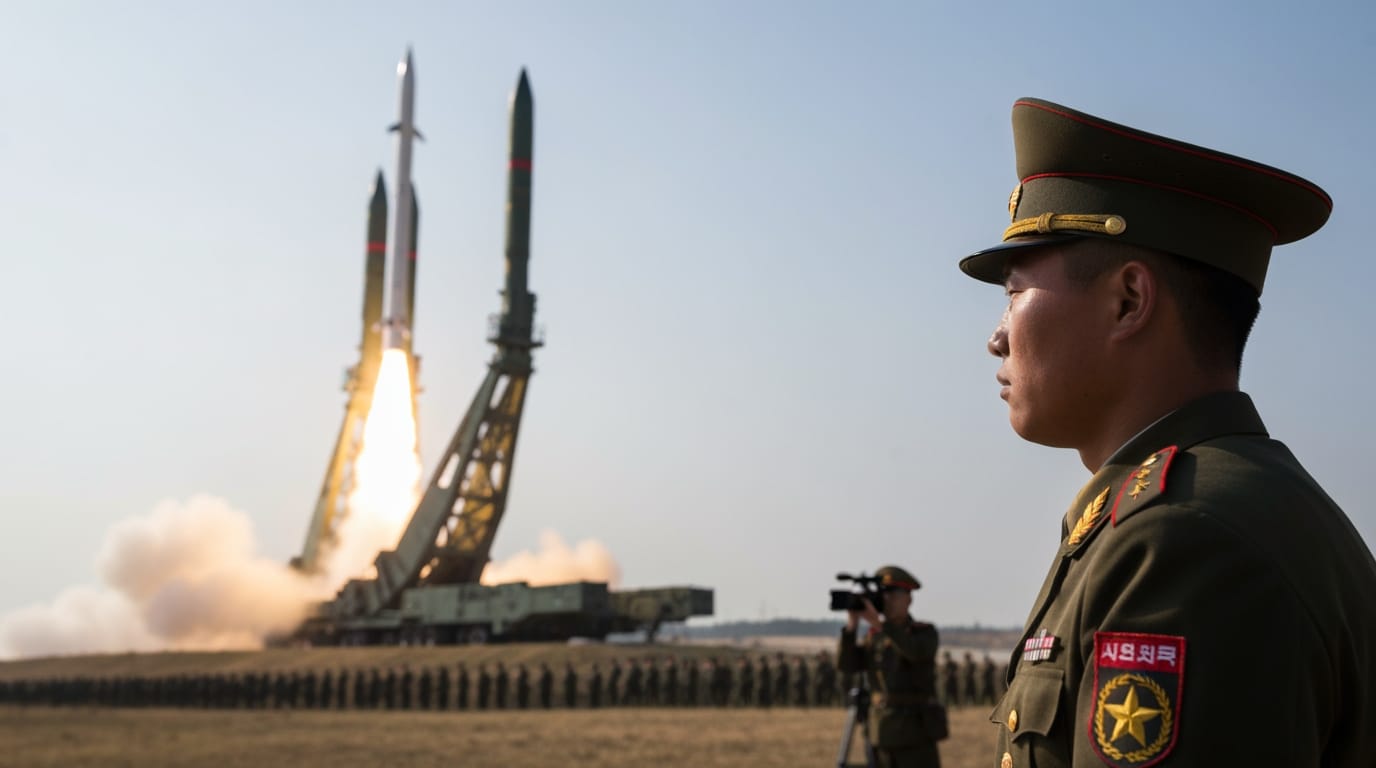
PYONGYANG – North Korea announced Monday it successfully test-fired new long-range strategic cruise missiles over the weekend, with leader Kim Jong Un personally overseeing the launch and calling for the "unlimited and sustained" development of the nation's nuclear combat forces. The latest demonstration of military might underscores Pyongyang's unwavering commitment to expanding its offensive capabilities amid heightened regional tensions and ongoing international scrutiny.
The exercise, conducted Sunday over the West Sea, involved the launch of multiple cruise missiles from the Sunan area near Pyongyang, according to North Korean state media. The missiles reportedly flew for over 10,000 seconds each, hitting a designated target and showcasing what Pyongyang described as the "absolute reliability and combat readiness" of its strategic counterattack capabilities. The test serves as a stark reminder of North Korea's rapidly advancing arsenal, which continues to pose significant security challenges to its neighbors and the global community.
The Latest Demonstration of Force
State media, specifically the Korean Central News Agency (KCNA), reported on Monday that Kim Jong Un expressed satisfaction with the outcome of the drill. He emphasized the necessity of regularly verifying the reliability and rapid response of North Korea's nuclear deterrent components, citing the "various security threats" faced by the country. The missiles were designed to review the "counter-offensive response posture and combat capability of long-range missile sub-units". This particular test highlights Pyongyang's focus on refining its strategic weapons systems, which are crucial to its stated defense doctrine. The precise flight times — 10,199 seconds and 10,203 seconds — suggest a meticulous evaluation of the missiles' performance and accuracy.
The Sunday launch follows a series of other high-profile military activities. Just last week, North Korea reportedly test-fired new long-range anti-air missiles in the East Sea. Kim also inspected the construction of an 8,700-ton "nuclear-powered strategic guided missile submarine," an inspection he reportedly undertook with his daughter, who is considered a potential successor. These sequential military events underscore a concentrated effort by Pyongyang to showcase a broad spectrum of its defense advancements.
Escalating Military Posture Ahead of Key Congress
The timing of these military exercises is particularly noteworthy as they precede a crucial Workers' Party of Korea congress scheduled for early 2026. This congress is expected to outline North Korea's development plans for the next five years. Leader Kim Jong Un has been actively touring military-related sites, seemingly in an effort to highlight the nation's accomplishments in the defense sector before this significant political event. This period of intensified military demonstrations appears to be a strategic move to project strength and unity both domestically and internationally.
Beyond the strategic posturing for the upcoming congress, North Korea's increased missile testing in recent years has been attributed by analysts to several objectives. These include improving precision strike capabilities, challenging the United States and South Korea, and testing weapons before potentially exporting them. The war in Ukraine has also played a role, with analysts noting that Kim has been "emboldened" by the conflict, securing critical support from Moscow after reportedly sending thousands of troops to fight alongside Russian forces. This perceived backing from a major power could be influencing Pyongyang's more assertive stance.
Strategic Implications and Regional Tensions
Long-range cruise missiles present a distinct threat due to their ability to fly at low altitudes and maneuver to evade missile defense systems, making them potentially more challenging to intercept than ballistic missiles. North Korea's continued development and testing of such weapons significantly enhance its ability to deliver both conventional and potentially nuclear payloads over extended distances. This capability directly impacts the security calculus of South Korea, Japan, and U.S. forces stationed in the region.
The South Korean military, which detected the launches from Sunan, has indicated that North Korea might conduct additional missile tests by year-end. This assessment reflects the ongoing state of vigilance and the anticipation of further provocations from Pyongyang. Moreover, North Korea has voiced strong objections to South Korea's plans to construct its own nuclear-powered submarines, viewing such initiatives as a direct threat to its security that "must be countered". This escalating rhetoric further fuels an arms race dynamic on the Korean Peninsula.
A Persistent Nuclear State
North Korea has consistently declared itself an "irreversible" nuclear state since the collapse of denuclearization talks with the United States in 2019. This self-proclamation signals a firm rejection of any future negotiations that might involve abandoning its nuclear weapons program. Instead, Pyongyang appears determined to solidify its status as a nuclear power, leveraging its arsenal as a deterrent against perceived external threats and as a tool for diplomatic leverage.
The international community, including the United Nations, has repeatedly condemned North Korea's missile tests as violations of UN Security Council resolutions, which prohibit the country from conducting any launches using ballistic missile technology. However, these condemnations and sanctions have largely failed to deter Pyongyang, which views its weapons development as a sovereign right essential for national defense. The latest cruise missile test reinforces this stance, indicating a sustained effort to modernize and diversify its strategic capabilities.
In conclusion, North Korea's recent long-range cruise missile test, personally overseen by Kim Jong Un, is a clear signal of Pyongyang's unwavering commitment to expanding its military prowess and solidifying its position as a nuclear-armed state. Occurring amidst a flurry of other significant military inspections and ahead of a key political congress, the test serves to underscore the nation's technical advancements and its determined posture against perceived security threats. As regional powers like South Korea monitor these developments closely, the continuous escalation of North Korea's strategic capabilities ensures that stability on the Korean Peninsula remains a precarious and complex challenge.