North Korea Escalates Support for Russia, Poised for Major Troop Surge in Ukraine War
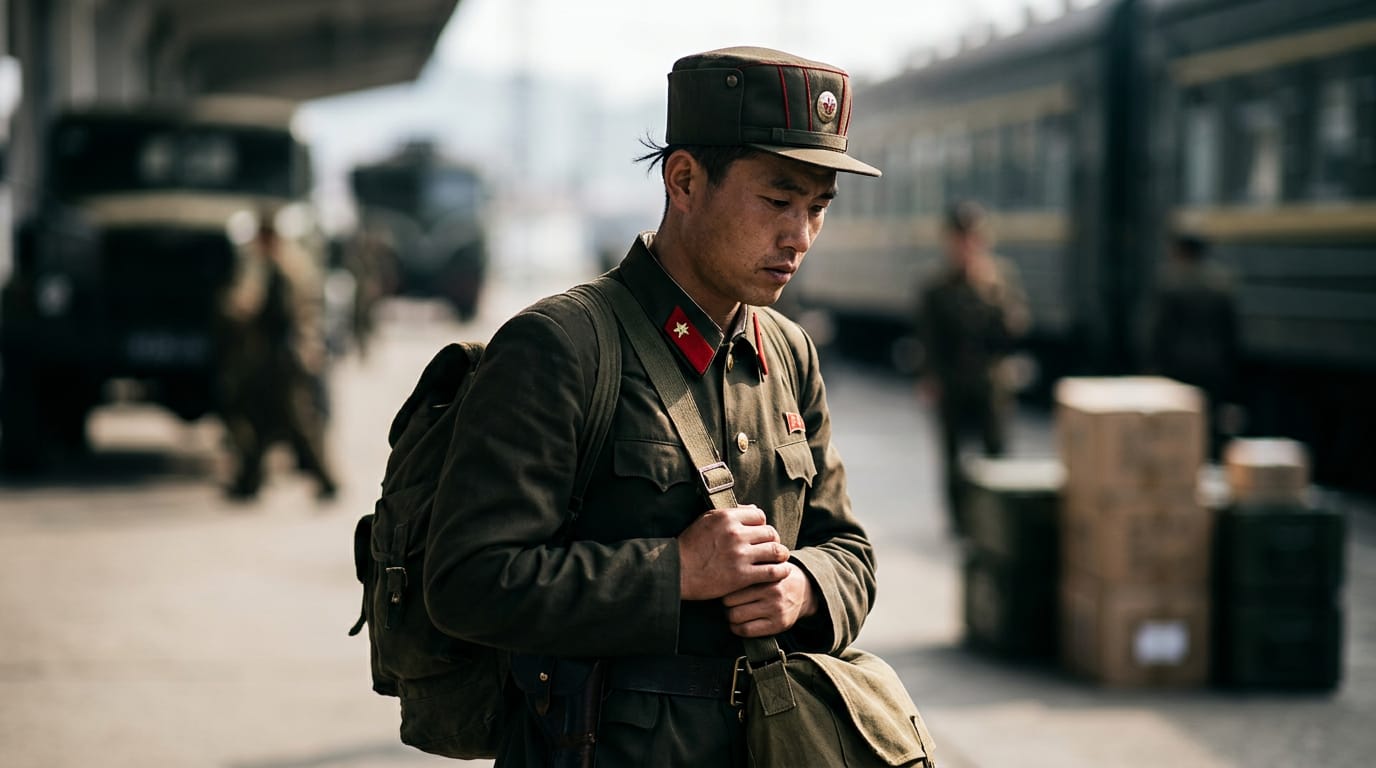
In a significant and escalating development, North Korea is preparing to deploy tens of thousands of additional troops to Russia, intensifying its military commitment to the ongoing conflict in Ukraine. This anticipated surge, potentially involving up to 50,000 personnel, follows previous deployments and substantial arms deliveries, marking Pyongyang's most substantial involvement in a foreign war since the 1950s. The move underscores a deepening strategic alliance between Moscow and Pyongyang, with profound implications for the battlefield dynamics in Eastern Europe and global geopolitical stability.
Escalation on the Eastern Front: New Deployments and Missile Units
The latest reports, emerging in August 2026, indicate a dramatic expansion of North Korea's military footprint in support of Russia. Ukrainian President Volodymyr Zelenskyy revealed that Russia is planning to integrate an additional 30,000 to 50,000 North Korean personnel into its forces. This comes after an initial deployment of approximately 14,000 to 15,000 North Korean soldiers to Russia's Kursk region in late 2024, which proved instrumental in repelling a Ukrainian ground incursion. Russia and North Korea officially confirmed in April 2025 that these troops had engaged Ukrainian forces in Kursk, with Russia's top military commander reportedly praising their role. As of August 2026, around 9,500 to 10,000 of these initial North Korean troops are estimated to remain in Kursk, though not directly involved in frontline operations against Ukraine.
Beyond infantry, North Korea is also bolstering Russia's long-range strike capabilities. A North Korean missile unit began deploying personnel and equipment to western Russia's Voronezh Oblast in August 2026. This unit is expected to be equipped with up to 120 ballistic missiles and six launchers, specifically intended for strikes against Ukraine. Ukrainian officials have explicitly warned that any North Korean launchers deployed on Russian territory would be considered legitimate military targets, highlighting the potential for direct engagement with these foreign assets. Earlier, in June 2025, North Korea committed 1,000 sappers and 5,000 military construction workers to Kursk for mine clearance and infrastructure rebuilding efforts. The deployment of these additional forces, particularly ground troops, is largely seen as a strategy to relieve Russian personnel for offensive operations in Eastern Ukraine by having North Koreans assume rear-area and border defense roles.
A Deepening Axis: Arms for Aid
The military cooperation between North Korea and Russia is rooted in a burgeoning strategic alliance that has intensified significantly since Russia's full-scale invasion of Ukraine in 2022. North Korea's support for Russia dates back to 2017 when it recognized the 2014 Russian annexation of Crimea, and further in July 2022 by recognizing the self-proclaimed Donetsk and Luhansk People's Republics, which led Ukraine to sever diplomatic ties with Pyongyang. Since 2023, this diplomatic backing has translated into substantial materiel support.
Pyongyang has become a critical supplier of munitions for Moscow, providing millions of artillery and mortar rounds, a significant number of ballistic missiles including KN-23 and KN-24 types, as well as long-range artillery and multiple-launch rocket systems. An analysis revealed 64 voyages by Russian-flagged cargo ships to North Korea's Rajin port between September 2023 and March 2025, transporting an estimated 16,000 containers of ammunition to Russian ports. Ukrainian officials claim North Korea is supplying roughly half of the munitions Russia requires on its front lines, with Ukraine's military intelligence reporting 4 million artillery shells delivered since mid-2023 and 148 ballistic missiles by early 2025.
This extensive military aid has yielded substantial economic benefits for North Korea, with arms sales to Russia generating over $10 billion between the summer of 2023 and the end of 2025, significantly boosting North Korea's economy. In return, North Korea has received critical resources, including food, energy, cash, and military technology, which could aid its space program and efforts to develop its naval capabilities. North Korean soldiers deploying to Russia also undergo operational training at various Russian military sites, receiving Russian uniforms and, in some cases, fake identities, illustrating the concerted effort to integrate and conceal their presence.
Global Repercussions and Battlefield Impact
The influx of North Korean military assets and personnel has tangible effects on the Ukrainian battlefield and has drawn strong international reactions. North Korean ballistic missiles, particularly the KN-23 and KN-24, have been utilized by Russia in attacks against Ukrainian cities, including a strike on Zaporizhzhia in August 2026 that resulted in casualties. While some initial reports indicated reliability issues with North Korean missiles, subsequent analyses suggest improvements, possibly due to Russian technical assistance and the invaluable real-world flight data gathered during their use in Ukraine.
For North Korea, participation in the conflict offers invaluable combat experience in modern warfare, including drone operations and missile system deployment, which can inform the development and refinement of its own military technologies. The United States has expressed serious concerns about the potential consequences of North Korean troops engaging in combat, while Ukraine has consistently criticized what it perceives as insufficient decisive action from Western allies in confronting this deepening autocratic alliance. South Korea, while urged by President Zelenskyy to provide air defense support, has maintained a policy of not supplying lethal weapons directly to Ukraine, seeking to preserve diplomatic options with its northern neighbor.
The escalating military ties between Pyongyang and Moscow contribute to a growing perception of a "CRINK" alliance—comprising China, Russia, Iran, and North Korea—which increasingly challenges Western democracies by leveraging their collective resources and geopolitical influence.
The Human Cost and Motivations
Beyond the strategic implications, the deployment of North Korean troops carries a human dimension. North Korean soldiers are reportedly motivated by opportunities for social advancement, financial improvement for their families, and the promise of Workers' Party membership—a crucial stepping stone for career progression in North Korean society. Reports suggest these soldiers receive a monthly salary of around $2,000. However, this comes at a steep price. The initial deployment to Kursk in late 2024 saw significant casualties, with estimates by mid-January indicating approximately 4,000 wounded and 1,000 deaths among North Korean forces.
Pyongyang has publicly acknowledged and even glorified its involvement, inaugurating a war memorial and museum in April 2026 to commemorate its participation. Leader Kim Jong Un reportedly lauded soldiers who "self-blasted" themselves with grenades to evade capture by Ukrainian forces, framing their sacrifices within the North Korean narrative of heroism and national duty.
An Unfolding Geopolitical Realignment
The expanding military partnership between North Korea and Russia represents a significant and evolving chapter in the Ukraine conflict. What began with materiel exchanges has escalated to the deployment of substantial troop contingents and advanced missile units, fundamentally altering the strategic calculus for both sides. This deepening alliance not only provides Russia with much-needed resources and manpower but also offers North Korea valuable military experience and critical economic and technological support, circumventing international sanctions. As this partnership continues to solidify, it poses increasing challenges to international security and highlights a growing alignment among states seeking to counter Western influence, foreshadowing a more complex and volatile global landscape.