North Korea Solidifies Nuclear Stance, Declares South Korea "Most Hostile State" Amid Escalating Tensions
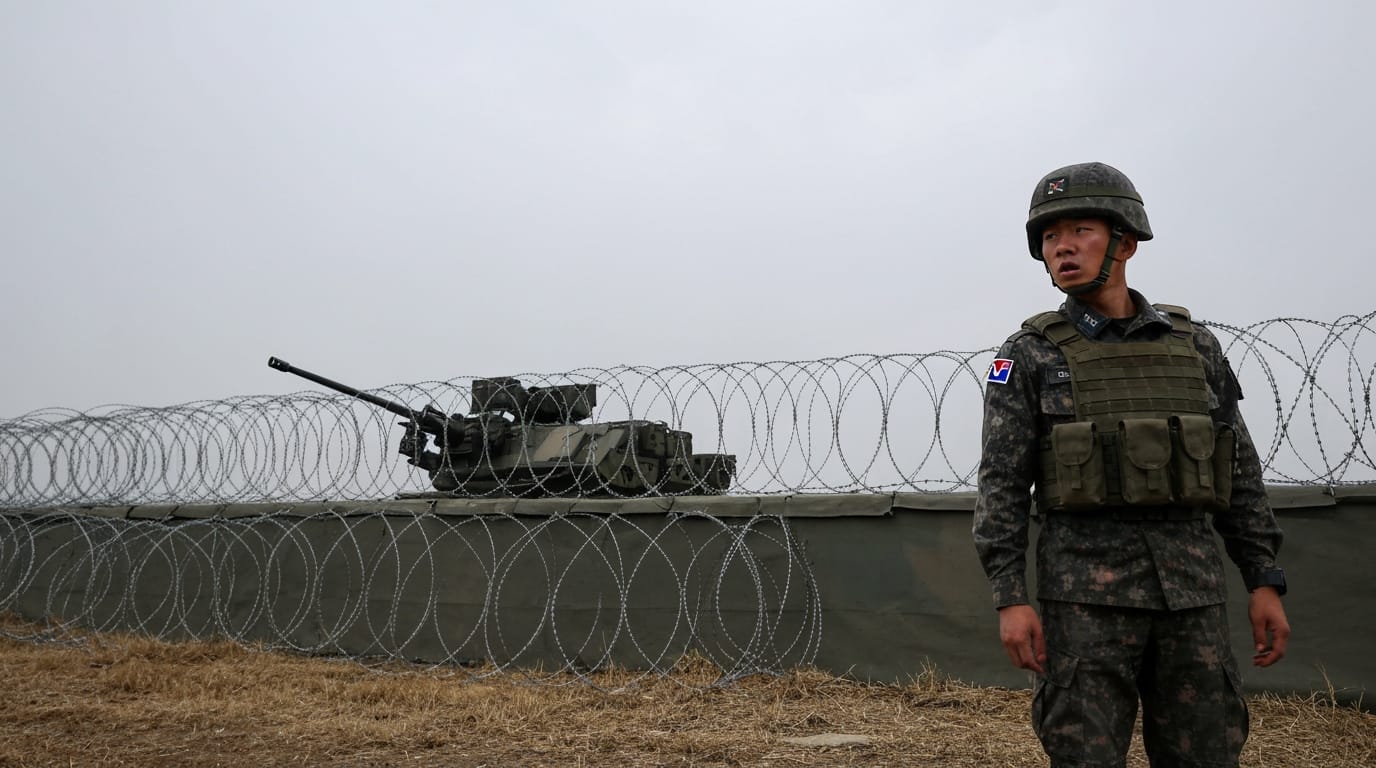
Pyongyang has dramatically heightened tensions on the Korean Peninsula, with North Korean leader Kim Jong Un unequivocally doubling down on his nation's nuclear weapons program and formally reclassifying South Korea as a "most hostile state." This profound shift marks a radical departure from decades of North Korean policy, which previously upheld the goal of eventual reunification, and signals a period of intensified military posturing and confrontational rhetoric. Kim's declarations, made through state media and at key Workers' Party meetings, underscore a commitment to developing an "overwhelming" war readiness against perceived threats, particularly from the United States and South Korea. The pronouncements are set to further destabilize an already volatile region and challenge the international community's efforts toward denuclearization.
An "Irreversible" Nuclear Ambition: A Permanent Fixture in Pyongyang's Doctrine
Kim Jong Un has consistently asserted that North Korea's status as a nuclear-armed state is "absolutely irreversible" and "permanent," a declaration enshrined in national policy. This resolute stance is accompanied by ambitious plans to expand the country's nuclear arsenal and delivery capabilities. North Korea aims to launch three additional military spy satellites, boost the production of fissile materials like weapons-grade plutonium and highly enriched uranium, and introduce modern attack drones in 2024. Further military modernization includes enhancing submarine capabilities and developing various unmanned combat equipment.
Kim's rhetoric extends beyond mere expansion; he has explicitly threatened to use nuclear weapons preemptively if provoked. During a visit to a special operations forces unit, Kim stated that his military "would use without hesitation all the offensive forces it possesses, including nuclear weapons," if South Korea were to encroach upon North Korea's sovereignty. He ominously warned that, under such circumstances, the "permanent existence of Seoul and the Republic of Korea would be impossible." These statements align with an escalatory nuclear doctrine adopted in 2022, though many foreign experts suggest a first use of nuclear arms remains unlikely given North Korea's military disadvantage against the U.S. and allied forces. Observers suggest Kim's nuclear buildup serves as leverage to potentially secure sanctions relief in future diplomatic engagements, especially anticipating a possible return of former President Donald Trump to the White House. For Kim, these weapons are his nation's "shield."
South Korea Reclassified: From Kin to "Most Hostile State"
Perhaps the most significant policy shift has been North Korea's formal abandonment of its decades-long pursuit of peaceful reunification with South Korea. In a radical ideological pivot, Kim Jong Un called for the revision of North Korea's constitution to designate South Korea as the country's "primary foe and invariable principle enemy." In 2024, Pyongyang officially recognized South Korea as the "most hostile state," pledging to "thoroughly reject and disregard it." The term "reunification" is reportedly no longer permissible in North Korea, with even the "Unification Station" in the Pyongyang subway system renamed simply "Station."
This break with past policy is further symbolized by Kim's order to demolish all monuments related to inter-Korean reunification, including the "Monument to the Three Charters for National Reunification" in Pyongyang, which he derided as an "eyesore." This aggressive stance reflects a view that Seoul is no longer a useful intermediary with Washington but rather an obstacle to Pyongyang's more assertive regional role. North Korea has rejected all of South Korea's recent overtures for dialogue and peaceful coexistence, with state media reporting that Pyongyang "has absolutely no business dealing with" its now "most hostile" enemy.
Military Posturing and Deepening Geopolitical Alliances
Alongside its nuclear ambitions and hostile rhetoric, North Korea has escalated its military activities. The country has continued its rapid pace of weapons tests, which observers expect to continue into 2024, despite international sanctions. Pyongyang has conducted combined arms assault drills, showcasing advanced weaponry such as new variants of main battle tanks equipped with active protection systems. These exercises, personally overseen by Kim Jong Un, focus on striking and occupying an adversary's anti-armor defense lines, suggesting a readiness for offensive operations. North Korea consistently denounces joint military exercises between South Korea and the United States, labeling them "invasion rehearsals" that justify its own military buildup.
In a move raising international concern, North Korea has significantly deepened its ties with Russia. The United States and South Korea allege that Pyongyang has supplied Russia with artillery and missiles for its war in Ukraine, likely in exchange for aid and military technology. Further solidifying this alignment, North Korea participated as an observer in Russia's "Ocean-2024" naval exercises, marking its first involvement in such drills. This growing military cooperation with Russia is seen as part of Kim's strategy to join a united front against Washington, in what he terms a "new Cold War."
A Region on Edge: International Response and Implications
The escalating rhetoric and military activities from North Korea have drawn sharp reactions from South Korea and its allies. South Korean President Yoon Suk Yeol has warned that if North Korea attempts to use nuclear weapons, it would face "the resolute and overwhelming response" of the South Korean-U.S. alliance, leading to the "end of the Kim government." The U.S. and South Korea continue to conduct joint military exercises and have updated their deterrence plans to counter North Korea's advancing nuclear program.
The international community, including the United Nations, views North Korea's nuclear program as a violation of Security Council resolutions. However, the U.S. has accused China and Russia of "shamelessly" protecting Pyongyang at the UN, emboldening North Korea to continue its illicit weapons programs. South Korea's Unification Ministry has expressed regret over Pyongyang's hostile stance and its rejection of efforts for peaceful coexistence. There are growing fears that by no longer recognizing South Koreans as compatriots, North Korea's leadership could more easily justify a nuclear attack against the South to its own population.
The current trajectory on the Korean Peninsula points to an increasingly dangerous standoff. Kim Jong Un's "irreversible" commitment to nuclear weapons and his official declaration of South Korea as an enemy fundamentally alter the geopolitical landscape. This radical shift eliminates a long-standing diplomatic premise and sets the stage for heightened confrontation, leaving little room for dialogue and posing significant challenges for regional stability and international security in the foreseeable future.