North Korea's Kim Jong Un Dismisses Vice Premier, Slams 'Incompetent' Officials Amid Economic Woes
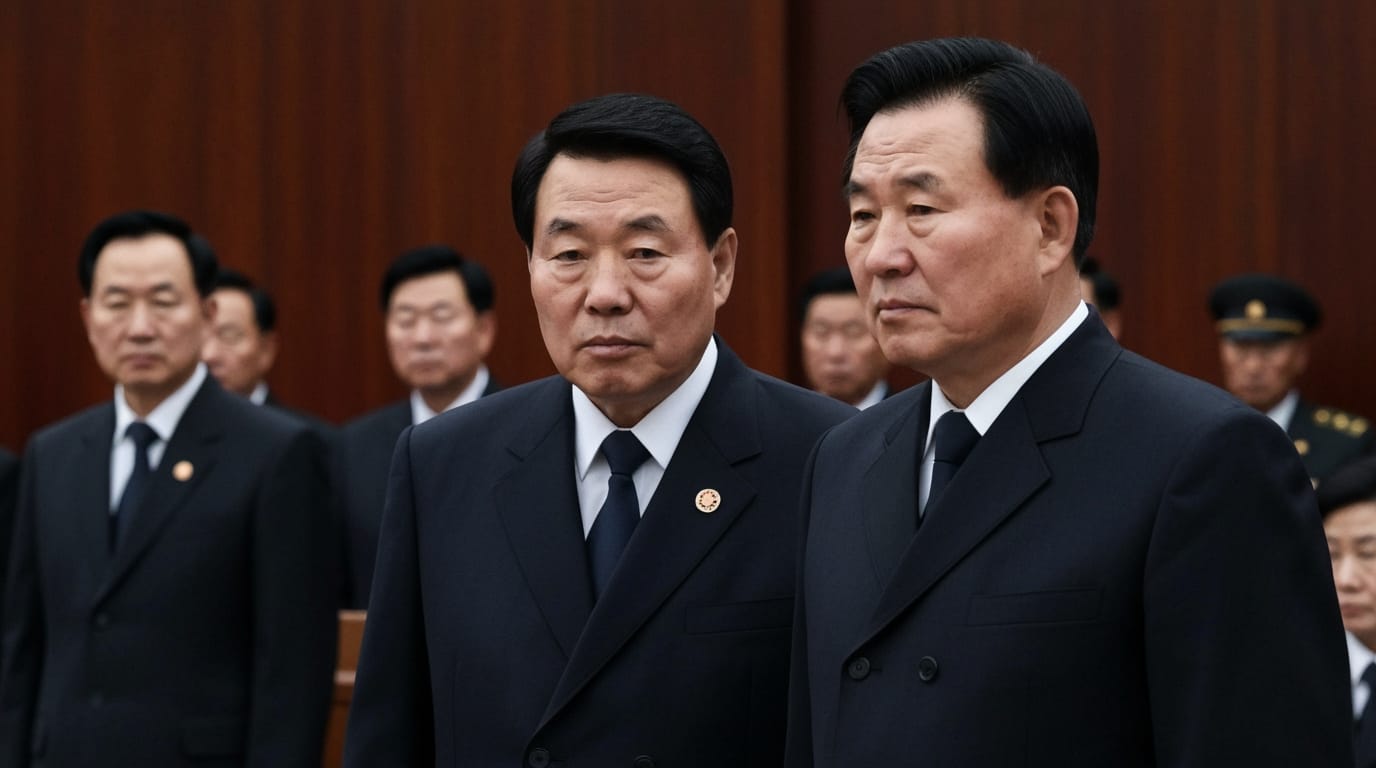
Pyongyang, DPRK – In a rare and striking public rebuke, North Korean leader Kim Jong Un has dismissed Vice Premier Yang Sung Ho, accusing him and other senior officials of "incompetence" and "irresponsibility" for significant economic losses in a key industrial project. The dramatic ouster, reported by state media on Tuesday, January 20, 2026, signals a renewed push for discipline within the Workers' Party leadership as the country grapples with persistent economic challenges and prepares for a crucial party congress.
The dismissal occurred on Monday during Kim Jong Un's inspection of the Ryongsong Machine Complex, a critical industrial facility in the northeast of the country. According to the Korean Central News Agency (KCNA), Kim blamed Yang Sung Ho for causing "unnecessary man-made confusion" and considerable economic setbacks during the first-stage modernization of the complex. The public shaming of a high-ranking official, described by state media as being "on the spot," underscores the North Korean leader's unwavering demand for accountability and performance from his cadre.
A Public Purge and Harsh Condemnation
Kim Jong Un's censure of Vice Premier Yang Sung Ho was delivered with unusual severity and public display. Speaking at the Ryongsong Machine Complex, which accounts for approximately 16% of North Korea's total machinery output, Kim lambasted officials for their "irresponsible, rude and incompetent" economic guidance. He specifically cited "not a small amount of economic loss" suffered by the project, attributing it to the mismanagement and lack of diligence among those in charge.
The North Korean leader reportedly expressed his dissatisfaction, stating that authorities had "wasted large amounts of funds and labor," consequently burdening the munitions industry. According to KCNA, Kim had previously criticized Yang during a party meeting in December and had been closely observing his performance, only to conclude that the vice premier lacked any real sense of responsibility. In a metaphor highlighting Yang's unsuitability for the role, Kim reportedly remarked, "Put simply, it was like hitching a cart to a goat - an accidental mistake in our cadre appointment process. After all, it is an ox that pulls a cart, not a goat." The final declaration of dismissal, "As of today, I declare you dismissed, comrade vice premier," leaves little doubt about the definitive nature of the leader's decision.
Context of Economic Struggle and Leadership Discipline
This public dismissal comes against a backdrop of deep-seated economic difficulties for North Korea. The nation has long grappled with its state-managed economy, compounded by stringent international sanctions over its nuclear weapons program and significant setbacks from the COVID-19 pandemic. While South Korea's central bank reported a 3.7% economic growth in 2024, many observers remain skeptical about the country's capacity for sustained rapid growth, given its resource allocation to military programs and the inherent inefficiencies of its economic system.
Kim Jong Un has consistently emphasized overcoming what he terms "defeatism, irresponsibility and passiveness" within economic sectors, viewing such attitudes as detrimental to addressing the country's chronic economic challenges. Publicly rebuking or firing senior officials has been an occasional tactic employed by Kim to restore discipline and assign blame for economic hardships or policy failures, a method that serves to reinforce his absolute authority. This move aligns with earlier pronouncements by Kim to "root out evil" and address "deviations" in discipline, often a euphemism for corruption or inefficiency, within the party ranks.
Signaling Ahead of the Party Congress
The timing of Vice Premier Yang Sung Ho's dismissal is particularly significant as it precedes the upcoming ruling Workers' Party congress, the first such gathering in five years. This congress is anticipated to be a pivotal event where new economic and state objectives will be established. Analysts suggest that the public reprimand and dismissal serve as a "shock tactic" by Kim Jong Un to warn party officials and ensure compliance and heightened performance ahead of the important policy-setting meeting.
The event sends a clear message throughout the North Korean hierarchy: loyalty and demonstrable competence are paramount, especially concerning economic development goals. With economic policy, defense, and military planning expected to dominate the congress agenda, Kim appears intent on fostering an environment where officials are acutely aware of the consequences of perceived failure or laxity.
A Pattern of Accountability and Control
While the public nature of Yang's dismissal is relatively rare, the act of removing officials deemed underperforming is not unprecedented in North Korean politics. Kim Jong Un's leadership has been characterized by a firm grip on power and a willingness to consolidate authority through purges and reshuffles. The extreme example of his uncle, Jang Song Thaek, who was executed in 2013 on charges of treason, illustrates the severe consequences that can befall high-ranking officials who fall out of favor or are perceived as a threat.
Though Yang Sung Ho's dismissal appears to be a matter of professional accountability rather than political purge in the vein of Jang Song Thaek, it nevertheless underscores Kim's consistent strategy of maintaining tight control over the political apparatus. By publicly holding officials responsible for specific project failures, Kim aims to deter similar shortcomings and ensure that his directives are implemented without obstruction or perceived "incompetence."
Conclusion
The abrupt dismissal of Vice Premier Yang Sung Ho marks a potent demonstration of Kim Jong Un's resolve to enforce discipline and extract performance from his administration amidst challenging economic conditions. As North Korea prepares for its crucial Workers' Party congress, this highly visible action serves as a stark warning to other officials. It signals that the leader expects unwavering loyalty and tangible results in achieving the nation's economic goals, and those who fail to meet these expectations face immediate and public consequences. The incident underscores the volatile nature of high-level politics in Pyongyang and highlights the regime's ongoing struggle to navigate economic development within its tightly controlled system.


