North Korea's Unlikely Football Dynasty: The Secrets Behind the Women's Success
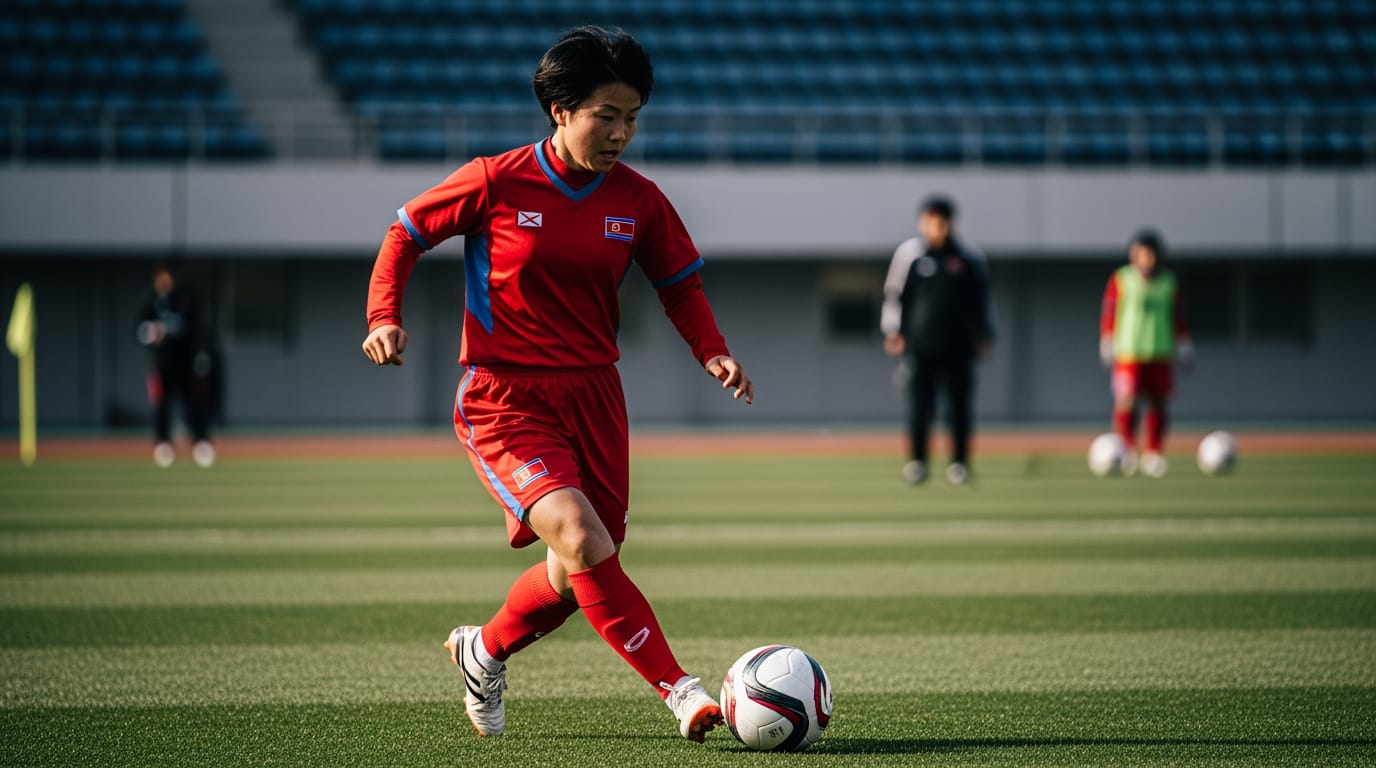
In an unexpected twist of global sports, North Korea has quietly forged a formidable dynasty in women's football, particularly at the youth level. Far removed from the usual spotlight of international sporting powerhouses, the Democratic People's Republic of Korea (DPRK) has repeatedly stunned the world with its teams' dominant performances, most notably in the FIFA U-17 and U-20 Women's World Cups. This remarkable success story, achieved by a nation often characterized by its isolation, prompts a deeper look into the unique mechanisms that have propelled these athletes to the pinnacle of youth football.
The North Korean women's teams have secured an impressive array of titles, including multiple U-17 World Cups in 2008, 2016, 2024, and 2025, alongside U-20 World Cup victories in 2006, 2016, and 2024. This consistent winning record in junior categories stands in stark contrast to the performance of their male counterparts, who have rarely achieved similar international renown. The sustained excellence of "Eastern Azaleas," as the national team is known, has sparked considerable curiosity about the system that cultivates such talent within a country operating largely outside conventional global norms.
Football as a National Imperative
North Korea's investment in women's football is deeply intertwined with its national objectives and propaganda. In a state where international recognition is highly valued, sports victories serve as a powerful tool to project an image of national strength and competence on the global stage. For the domestic audience, these triumphs are leveraged to bolster public morale, reinforce national pride, and enhance the prestige of the country's leadership.
The genesis of this strategic focus dates back to the late 1980s. Following a 1986 FIFA summit where a Norwegian delegate advocated for greater investment in women's football, North Korean officials reportedly recognized an opportunity. At a time when women's football was globally underdeveloped, they saw a pathway to achieving international standing with relatively modest investment. This vision was embraced by then-leader Kim Jong Il, and subsequently continued by Kim Jong Un, with both leaders actively supporting the development of women's sports. This early adoption, driven by a socialist ideology that encourages women's participation in sport as a means of promoting gender equality and national strength, laid the groundwork for future successes.
The Cradle of Talent: Elite Youth Development
The bedrock of North Korea's women's football dominance is an intensive, highly centralized youth development system. At the heart of this system are elite academies, such as the Pyongyang International Football School, established in 2013. These state-run facilities are designed to identify and nurture promising young footballers from an early age. Girls showing potential are often selected as early as sixth grade, leaving conventional schooling to dedicate themselves almost entirely to football training.
The curriculum at these academies combines academic education with rigorous athletic development. Players often live on-site, training full-time with their peers, fostering an environment of continuous improvement and deep understanding of team dynamics. This systematic approach ensures that talent is not only identified but also cultivated with unwavering focus, producing athletes with exceptional technical skills and football intelligence. Testimonies from former players and coaches indicate that the time and intensity devoted to training are vastly high compared to many other countries, emphasizing a blend of fighting spirit, physical conditioning, and skill acquisition.
Discipline, Dedication, and Powerful Incentives
The training philosophy underpinning North Korean women's football emphasizes extreme discipline, physical prowess, and tactical precision. Teams are characterized by their physicality and tactical discipline, a style often seen to reflect the militaristic ideals prevalent in North Korean society. While some external observers have focused on the "masculinization" of their training and presumed focus solely on stamina, recent performances, such as the 2025 U-17 Women's World Cup, have showcased significant flair, creativity, and technical ability, demonstrating a comprehensive approach to player development.
Beyond the training regimen, powerful incentives motivate these young athletes. Selection for the national team is not merely a sporting honor; it can be a life-changing opportunity. Players often receive privileged treatment and tangible rewards for their success. One significant incentive is the right to reside in Pyongyang, the capital, which offers better living conditions compared to more rural areas. Elite athletes and their families may also receive apartments and other benefits, providing a strong motivation to excel. This system creates an environment where personal ambition aligns with national duty, fostering an immense drive to succeed and bring honor to their families and country. Commentators often observe the overwhelming determination of North Korean players, who represent not just themselves, but their entire way of life, often viewing victories as a testament to their societal system.
Bridging the Gap to Senior Success
Despite their overwhelming dominance at the youth level, the North Korean women's national team has faced challenges in consistently replicating this success at the senior international stage. While they have qualified for the FIFA Women's World Cup four times and reached the quarterfinals in 2007, and have won multiple AFC Women's Asian Cups, their senior-level achievements have not always matched the consistent youth victories.
Several factors contribute to this discrepancy. A significant hurdle arose from a doping scandal in 2011, which saw five national team players test positive for steroids. This incident led to a FIFA ban from the 2015 World Cup and a loss of their FIFA ranking, disrupting the senior team's momentum. Furthermore, the country's isolation and international sanctions pose ongoing challenges. Unlike players from other leading football nations who often join competitive foreign leagues to further develop their skills, North Korean players are generally unable to do so. United Nations economic sanctions prevent homegrown North Korean footballers from signing contracts with foreign clubs, thus limiting their exposure to diverse playing styles and higher levels of competition critical for senior-level growth. This means that while North Korean youth teams benefit from a unified, intensive training environment, their players miss out on the advanced development pathways available to international peers as they transition to adult professional careers.
Nonetheless, the recent resurgence of their youth teams following a period of inactivity due to the pandemic indicates that the underlying system of talent identification and rigorous training remains robust. The North Korean women's football program continues to be a fascinating case study in how a unique societal structure, combined with a clear strategic vision and unwavering dedication, can produce remarkable sporting success, even against considerable odds.