Orban Vows Crackdown on Media, NGOs Amidst Conspiracy Claims
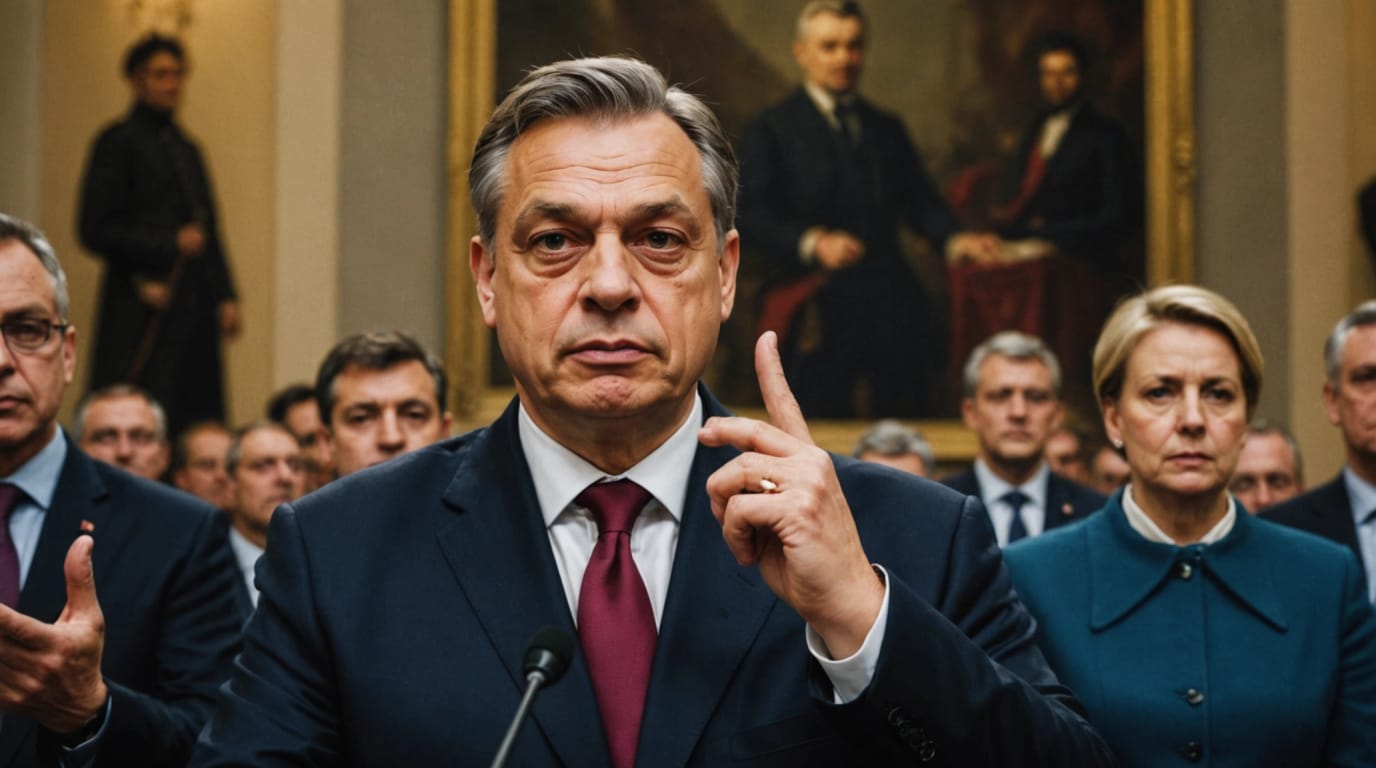
Hungary's Prime Minister Viktor Orban has pledged to intensify his government's efforts to target media outlets and non-governmental organizations (NGOs) that receive funding from abroad. In a speech delivered on Saturday, March 15, 2025, coinciding with Hungary's national holiday commemorating the 1848 revolution, Orban vowed to eliminate what he described as a "shadow army" serving foreign interests. His remarks have sparked concerns about the further erosion of democratic institutions and fundamental freedoms in Hungary.
Orban, who has been in power since 2010, has long been a vocal critic of the European Union and international organizations, accusing them of undermining Hungary's sovereignty. He has particularly focused on groups that receive financial assistance from the United States and billionaire George Soros, alleging that they are part of a global network seeking to destabilize his government.
"Easter Cleaning" of Critics
In his address, Orban told a crowd of supporters that Hungary would soon begin "uprooting" media outlets and organizations funded from abroad, comparing them to "insects" that have "overwintered." He promised to dismantle the "financial machine" that uses "corrupt dollars" to buy politicians, judges, journalists, pseudo-NGOs, and political activists. This rhetoric echoes previous statements in which Orban has accused these groups of working against Hungary's interests and serving foreign powers.
The prime minister's remarks have been interpreted as a clear signal that his government intends to ramp up its efforts to suppress dissent and silence critical voices. Critics fear that the crackdown could further restrict freedom of the press, limit the ability of NGOs to operate effectively, and undermine the rule of law in Hungary.
Echoes of Trump
Orban's stance aligns with the policies of former U.S. President Donald Trump, with whom he has a close relationship. Orban has applauded the Trump administration's efforts to dismantle the U.S. Agency for International Development (USAID), claiming, without evidence, that it was used to fund organizations seeking to undermine his government. He has also expressed support for Trump's moves to freeze funds disbursed by USAID and task Elon Musk with scaling down the agency.
Following Trump's example, Orban's government is drafting legislation to protect national sovereignty and uncover foreign funding channeled to Hungarian media. He stated that his government has "abundant information" on foreign funding channels and intends to pass laws to address the issue.
EU Membership for Ukraine Opposed
In addition to his crackdown on media and NGOs, Orban reiterated his opposition to Ukraine's membership in the European Union. He criticized the EU's military support for Ukraine and argued that the country should not be granted fast-track membership. Orban's stance on Ukraine has been a source of tension within the EU, where he has often clashed with other leaders over the bloc's response to the conflict.
Orban has maintained a softer stance on Vladimir Putin's Russia, vetoing an EU push to replace U.S. military aid for Ukraine earlier this month. He has also echoed a list of demands from Brussels, including a "strong veto" for national governments, halting migration, the removal of "Soros agents" in the European Commission, and peace in Europe.
Concerns Over Democratic Backsliding
Orban's policies have drawn criticism from international organizations and human rights groups, who accuse him of undermining democratic institutions and eroding fundamental freedoms in Hungary. The EU has withheld billions in funding to the country due to concerns about democratic backsliding.
Critics argue that Orban's government has systematically weakened the independence of the judiciary, restricted freedom of the press, and curtailed the rights of civil society organizations. They also point to the government's use of propaganda and disinformation to demonize its opponents and consolidate its power.
Election on the Horizon
Hungary is scheduled to hold a general election next year, and Orban's recent rhetoric may be aimed at mobilizing his base and consolidating his support. He faces a potential challenge from the Tisza party, led by Péter Magyar, a former ally who has emerged as a rival. Magyar's party has gained significant traction in recent polls, posing a threat to Orban's Fidesz party.
Orban's inflammatory comments and crackdown on critics could be seen as an attempt to distract from domestic challenges and rally his supporters around a nationalist agenda. By portraying his opponents as foreign agents and enemies of the state, he seeks to delegitimize their criticisms and maintain his grip on power.
Implications for Hungary and Beyond
Orban's crackdown on media and NGOs has significant implications for Hungary's democratic future. By silencing critical voices and restricting the flow of information, his government risks creating an environment where dissent is stifled and accountability is diminished. This could further erode public trust in institutions and undermine the rule of law.
The situation in Hungary also raises broader concerns about the rise of authoritarianism and the erosion of democracy in other parts of the world. Orban's policies have been praised by far-right and populist leaders in Europe and beyond, who see him as a model for how to challenge the established order and assert national sovereignty.
As Hungary prepares for elections in 2026, the future of its democracy hangs in the balance. The outcome of the election will determine whether the country continues down the path of authoritarianism or returns to a path of democratic reform and respect for fundamental freedoms.