Pakistan Supreme Court Orders Imran Khan's Transfer to Hospital Amid Mounting Health Concerns
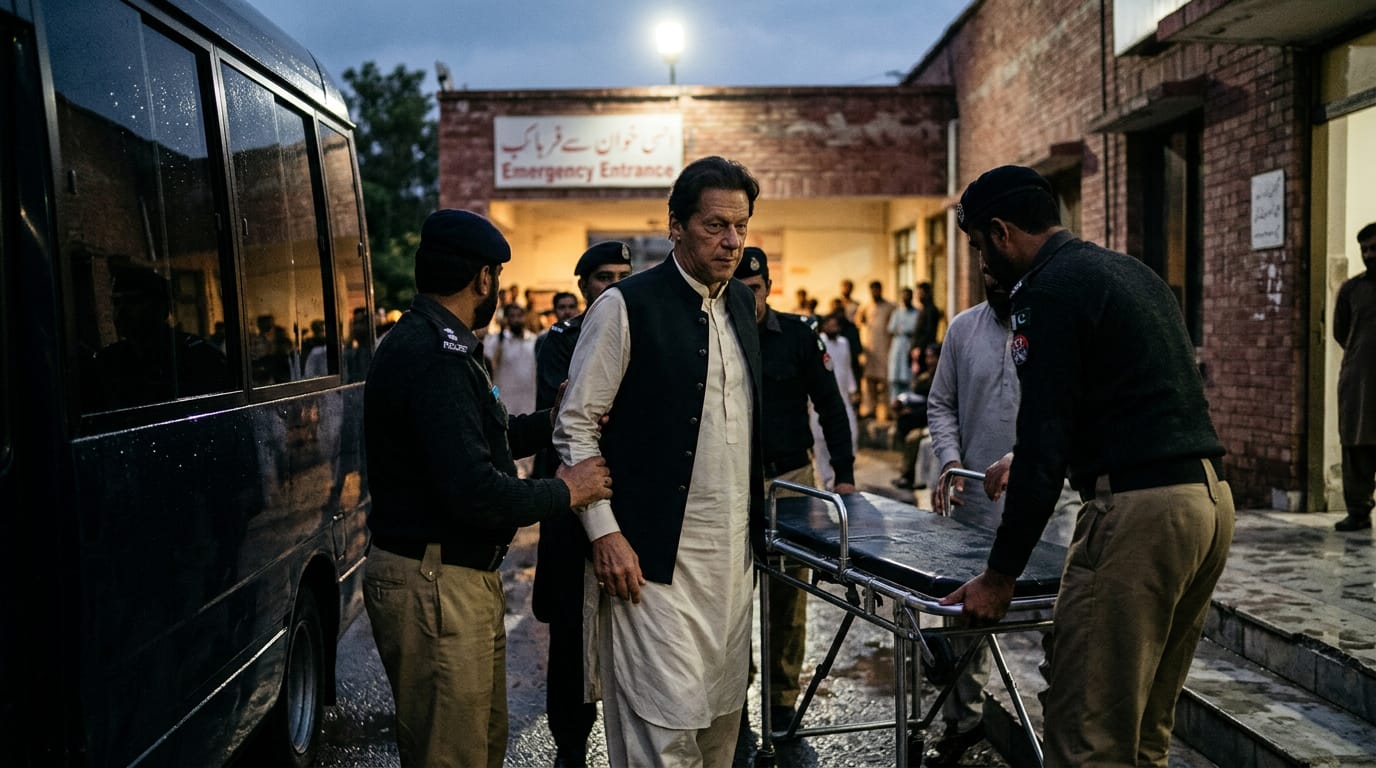
Islamabad, Pakistan – In a significant development, Pakistan's Supreme Court on Tuesday ordered the immediate transfer of former Prime Minister Imran Khan from Adiala Jail to Shifa International Hospital in Islamabad for comprehensive medical examinations and treatment. The directive comes after months of escalating concerns from Khan's family and his Pakistan Tehreek-e-Insaf (PTI) party regarding his deteriorating health, particularly an alarming eye condition and fluctuating blood pressure. This judicial intervention marks a pivotal moment in the ongoing political and legal saga surrounding the 73-year-old former cricket star, who has been incarcerated since August 2023.
The Apex Court's Decisive Intervention
The three-member bench of the Supreme Court, headed by Justice Shahid Waheed, issued the order on Tuesday, August 18, 2026, mandating Khan's transfer to Shifa International Hospital within 48 hours. The court stipulated that Khan is to remain hospitalized at least until September 16, the date of the next hearing. Crucially, the Supreme Court also directed the formation of a medical board to oversee Khan's treatment, which will include his sister, Dr. Uzma Khan, and his personal physician, Dr. Faisal Sultan, addressing a long-standing demand from his legal team. Furthermore, the court granted permission for Khan's family to meet him at the hospital and for him to communicate with his sons, who reside abroad. This ruling follows previous rejections of similar transfer requests by lower courts, including the Islamabad High Court, which had opted for medical board assessments within prison facilities.
Khan's Health Crisis and Conditions of Incarceration
Concerns about Imran Khan's health have been a persistent feature of his imprisonment. His legal team and family have consistently highlighted his declining well-being, particularly a severe retinal condition. Reports indicated that Khan developed symptoms of a blockage in the retinal vein of his right eye in October 2025, leading to a significant loss of vision, reportedly up to 85%, by February 2026. While jail authorities claimed Khan's eyesight had improved to "almost normal" after treatment at the Pakistan Institute of Medical Sciences (PIMS) and Alshifa Trust Eye Hospital, his party expressed dissatisfaction with the adequacy of care provided at government facilities.
Beyond the ocular issues, recent medical reports submitted to the Supreme Court by the Adiala Jail superintendent revealed that Khan was experiencing fluctuating blood pressure, anxiety, and stress. These reports, reviewed by a cardiac board in early August, noted "anxiety +++," palpitations, and head heaviness, explicitly recommending more frequent interaction with his family to help manage his mental and physical state. Conditions inside Adiala Jail, a high-security facility, have also been a point of contention. Despite official assertions of proper care, reports from February 2026 highlighted challenges such as extreme heat, humidity, mosquitoes, insects, and instances of food poisoning. Access for family and lawyers has also been severely restricted, leading to accusations of "complete isolation."
A Politicized Imprisonment Amidst Legal Battles
Imran Khan's journey from revered cricket captain to political leader and now incarcerated former prime minister has been fraught with controversy. After serving as prime minister from 2018 to 2022, he was ousted through a no-confidence vote in April 2022. Since his removal, Khan has faced an unprecedented number of legal cases, reportedly over 100, which he and his PTI party vehemently contend are politically motivated attempts to sideline him.
He was first arrested in August 2023 and has since been convicted in multiple cases, including corruption charges related to state gifts (Toshakhana case) and the Al-Qadir Trust, as well as charges for leaking state secrets (Cypher case) and an unlawful marriage. While some convictions have been suspended or overturned, appeals remain pending, and he has continued to serve various sentences. For his supporters, Khan's imprisonment has transformed him into a powerful symbol of resistance, known as "Prisoner No. 804," further galvanizing his large support base.
Political Ramifications and Public Discourse
The Supreme Court's order has been widely welcomed by the PTI and Khan's family, albeit with a sense of regret that it did not come sooner. PTI spokesperson Zulfikar Bukhari noted that the party wished the order had happened earlier to prevent the deterioration of Khan's health. Pakistan's President Arif Alvi had also publicly voiced "alarming" concerns over Khan's medical reports, particularly highlighting his anxiety, stress levels, palpitations, and high blood pressure, and calling for his immediate hospitalization.
This judicial directive is seen as a significant victory for Khan's legal team and his party, who have been campaigning tirelessly for his appropriate medical care outside of prison. The decision underscores the judiciary's role in addressing the welfare of prisoners, even in highly politicized cases, and could potentially ease some of the intense political tensions that have gripped Pakistan. While it provides a temporary reprieve for Khan's health, it also highlights the persistent challenges surrounding human rights, due process, and the treatment of political prisoners in the country. The formation of an independent medical board, including his family members, aims to build trust and transparency around his health status.
A Temporary Reprieve with Broader Implications
The Supreme Court's order to transfer Imran Khan to Shifa International Hospital offers a crucial, albeit temporary, resolution to the pressing concerns surrounding his health. This decision not only ensures access to specialized medical care for the former prime minister but also signals a responsiveness from the judiciary to the persistent demands for humane treatment of high-profile prisoners. As Khan prepares for his transfer and subsequent medical evaluation, the eyes of the nation, and indeed the international community, will remain fixed on the proceedings. The period leading up to the next court hearing on September 16 will be critical, not only for Khan's personal health but also for its broader implications on Pakistan's delicate political landscape and the ongoing struggle for perceived justice and human rights. The development marks a moment where the legal system has directly intervened to address welfare concerns, potentially influencing future discussions on due process and political detention in Pakistan.