Pope Leo XIV Embarks on Historic First Africa Tour, Emphasizing Peace, Dialogue, and Continent's Vitality
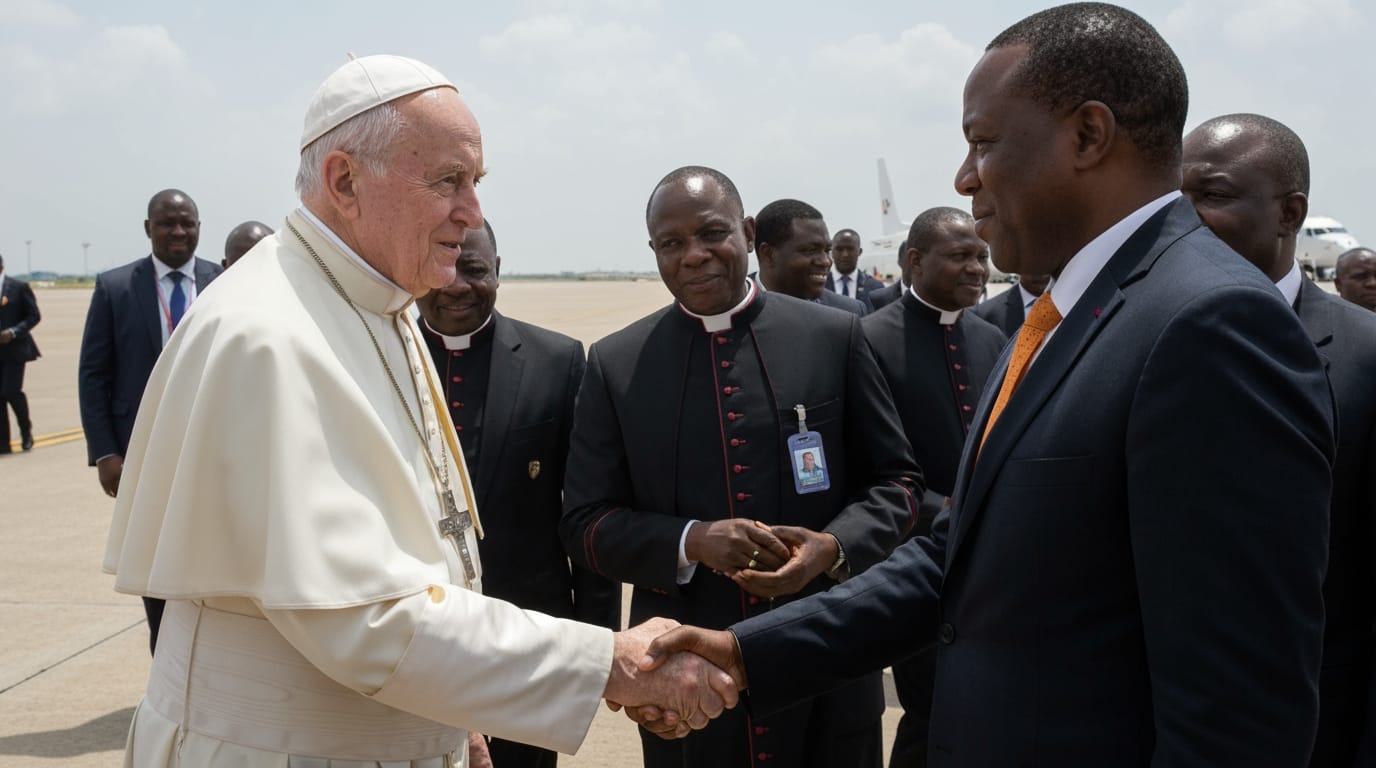
VATICAN CITY – Pope Leo XIV commenced a landmark 11-day apostolic journey to Africa on Monday, April 13, marking his first visit to the continent as pontiff and a significant early focus of his papacy on a region experiencing profound Catholic growth. The ambitious tour, spanning four nations – Algeria, Cameroon, Angola, and Equatorial Guinea – underscores the Vatican's commitment to fostering interfaith dialogue, promoting peace, and addressing pressing social justice issues across a continent where more than a fifth of the world's Catholics reside.
The American-born Pope, elected in May 2025, departed Rome for Algiers, Algeria, beginning a demanding itinerary that will see him travel approximately 18,000 kilometers (11,000 miles) across 11 cities via 18 flights before his return on April 23. This comprehensive visit signals a strong papal engagement with Africa, aiming to spotlight the continent's needs and its burgeoning Catholic population.
A New Chapter in Papal Diplomacy: First Stop in Algeria
Pope Leo XIV's tour opened with a historic visit to Algeria, making him the first pontiff to ever visit the predominantly Muslim North African nation. This leg of the journey, from April 13-15, is deeply infused with themes of interfaith understanding and historical reverence. Upon arrival, the Pope was welcomed by Algerian President Abdelmadjid Tebboune and paid tribute to the victims of Algeria's 1954-1962 war of independence at the Martyrs Memorial overlooking Algiers. A central aim of this initial stop is to "build bridges between the Christian and Muslim worlds," a sentiment echoed by Archbishop of Algiers Jean-Paul Vesco.
The Pope's itinerary in Algeria included visits to the Great Mosque of Algiers and the Basilica of Our Lady of Africa, demonstrating a visible commitment to interreligious dialogue. A deeply personal dimension to this visit stems from Pope Leo XIV's membership in the Augustinian order. He traveled to Annaba, formerly the ancient Roman city of Hippo, the one-time home of Saint Augustine, whose influential fifth-century writings laid the foundations for the Augustinian order. This connection highlights the historical roots of Christianity in North Africa and the Pope's intellectual and spiritual lineage, as he has previously presented himself as a "son" of Augustine. While in Annaba, he also met with members of his order and prayed privately in a chapel dedicated to 19 priests and nuns murdered during Algeria's 1992-2002 civil war, acknowledging the complexities of the nation's past and present.
From Conflict Zones to Economic Hubs: Cameroon's Call for Peace
Following Algeria, Pope Leo XIV journeyed to Cameroon, a nation where a call for peace and reconciliation is expected to dominate his engagements from April 15-18. This central African country, with its Christian majority, faces ongoing conflict in its English-speaking northwest region. In Bamenda, located in this restive area, the Pope planned an "encounter for peace" with both Christian and Muslim communities at St. Joseph's Cathedral, followed by an open-air Mass "for justice and peace" for an estimated 20,000 people.
The Pope's visit also extended to Douala, Cameroon's largest city and economic hub, where he celebrated Mass at the Japoma Stadium and visited a hospital. His engagements in Cameroon are anticipated to address the need for healing and unity in a society grappling with internal strife, while also acknowledging the vibrant faith life of its people. Upon returning to Yaoundé, he was scheduled to speak at the Catholic University of Central Africa, likely emphasizing the role of education and intellectual pursuit in peacebuilding and societal development.
Confronting Inequality and Upholding Human Dignity: Angola and Equatorial Guinea
The third leg of the papal tour brought Pope Leo XIV to Angola from April 18-21, a former Portuguese colony rich in oil and minerals but still scarred by poverty and a long civil war that ended in 2002. Here, the Pontiff is expected to focus on social themes close to his heart, including the equitable distribution of natural resource wealth and the fight against corruption. His arrival in Luanda, the capital, was met with a state welcome by President João Manuel Gonçalves, marking his presence as the third Pope to visit this oil-rich nation after John Paul II and Benedict XVI.
In Saurimo, one of the world's diamond hubs, the Pope visited a home for the elderly and celebrated Mass for 30,000 people. His messages are anticipated to challenge the disparities prevalent in resource-rich nations and advocate for governance that prioritizes the well-being of all citizens. Before departing Angola, he was slated to address bishops, priests, religious women and men, and pastoral workers, reinforcing the Church's pastoral mission in the face of economic and social challenges.
Concluding his African pilgrimage, Pope Leo XIV arrived in Equatorial Guinea, from April 21-23. This visit presents a delicate balancing act, as the Pope aims to support the country's overwhelmingly Catholic population (over 70% are Catholic) while navigating the complexities of its long-standing authoritarian rule. He is the second Pope, after John Paul II in 1982, to visit this Spanish-speaking nation. The Pontiff's engagements are expected to include strong messages on human rights and social justice, advocating for greater transparency and respect for human dignity in a country that has been under President Teodoro Obiang Nguema Mbasogo's rule since 1979. His visit to Malabo, on the island of Bioko, aims to provide encouragement and spiritual guidance to the local Catholic community.
Africa: A Growing Heart of the Catholic Church
Pope Leo XIV's first African tour highlights the continent's pivotal role in the global Catholic Church. With 288 million members, Africa accounts for 20.3 percent of the world's total Catholic population, and the Church is growing faster here than anywhere else. Vatican officials emphasize that by undertaking this trip so early in his pontificate, Pope Leo XIV demonstrates that "Africa matters" and seeks to ensure the continent is not overlooked amidst global concerns. Cardinal Michael Czerny, a close adviser to the Pope, stated that the mission is "to help turn the world's attention to Africa."
The tour also follows in the footsteps of modern predecessors who recognized Africa's spiritual vitality. Pope Paul VI made the first papal visit to Africa in 1969, traveling to Uganda, followed by John Paul II with 15 visits, Benedict XVI with two, and Pope Francis with five. This consistent engagement underscores the continent's importance. The vibrant African Church, characterized by numerous vocations to religious life and priesthood, is a source of hope and renewal for the global Catholic community.
A Message of Hope and Global Awareness
Pope Leo XIV's inaugural African tour is more than a series of diplomatic engagements; it is a profound pastoral visit aimed at spiritual encouragement, fostering dialogue, and advocating for a more just and peaceful world. By traversing thousands of miles and engaging with diverse communities, the Pontiff seeks to amplify the voices of the African people, drawing international attention to their challenges and triumphs. His messages on interfaith harmony, peace, equitable resource distribution, and human rights are expected to resonate far beyond the borders of the visited nations, shaping the discourse on Africa's future within the global Catholic Church and international community. This tour solidifies Africa's position as a dynamic and indispensable force within global Catholicism, reinforcing the Church's dedication to accompanying its people in their journey of faith and development.


