Qatar Denies Iranian Claims of Held Pilots Amid Escalating Regional Tensions
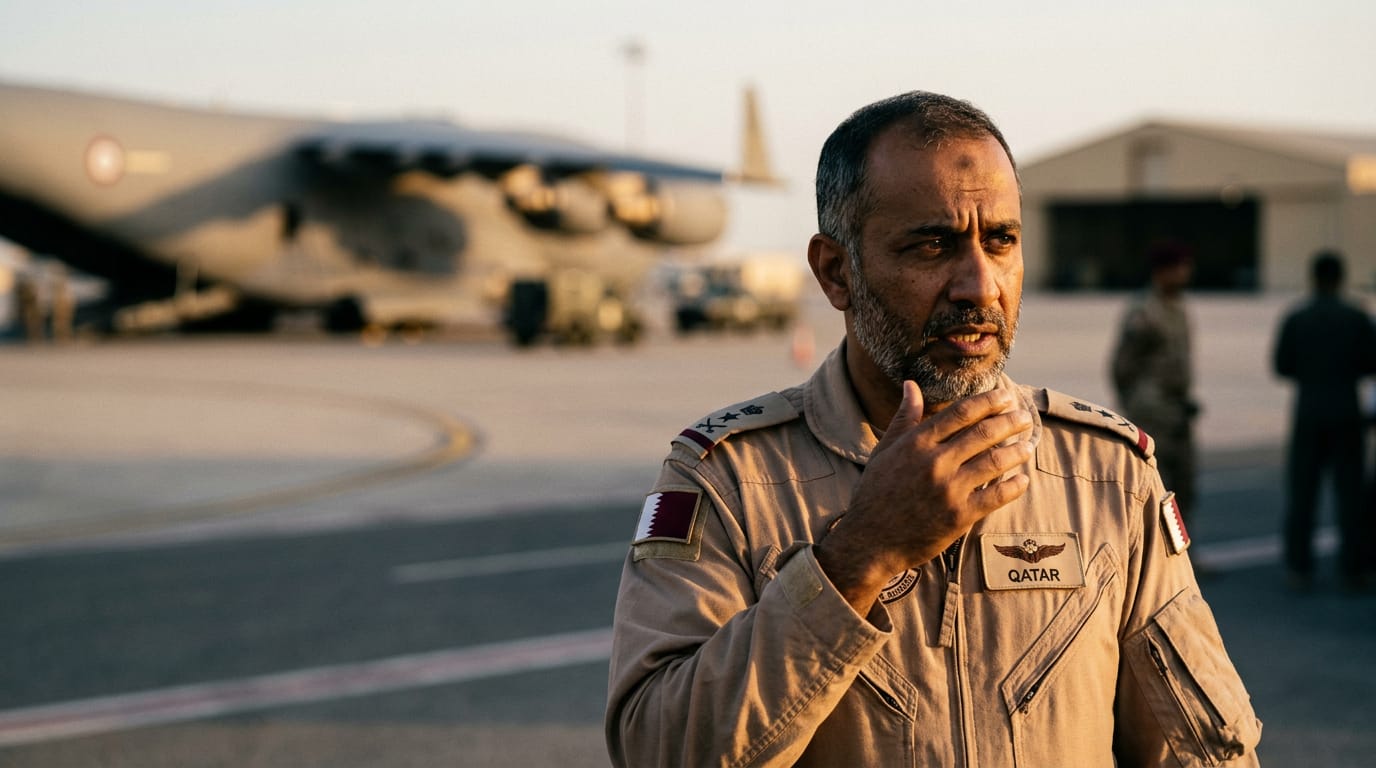
Doha, Qatar – A fresh diplomatic flashpoint has erupted in the Persian Gulf as Qatar vehemently denied accusations from Iran that it is holding three Iranian fighter pilots captured alive after their jets were shot down nearly six months ago. The categorical rejection by Doha on Saturday came after a senior Iranian military official dramatically altered Tehran's long-standing account of the pilots' fate, escalating an already tense regional standoff.
The dispute centers on the disappearance of three pilots whose Sukhoi Su-24 tactical bombers were downed by Qatari forces in March. For months, Iran had stated it was unaware of the airmen's whereabouts, having only confirmed the recovery of one pilot's body. However, Lieutenant Colonel Mohammad Bakarzadeh, head of an Iranian committee tasked with locating missing personnel, now claims the trio survived the crash and have been held incommunicado by Qatar, prompting an urgent appeal to the International Committee of the Red Cross (ICRC).
The Shifting Narrative and Doha's Firm Rebuttal
The genesis of this diplomatic row traces back to March when two Iranian Su-24 aircraft reportedly approached Qatari airspace, with intelligence suggesting their target was Al Udeid Air Base, a critical U.S. military installation in the region. Qatari defense forces reported shooting down both aircraft after the pilots allegedly violated their airspace and failed to respond to repeated communication attempts.
Initially, Iranian officials stated that one pilot's body, identified as Majid Kazemi, had been recovered and repatriated, while the fate of the other three remained unknown. This account shifted significantly on Saturday. Mohammad Bagherzadeh, speaking on behalf of Iran's Armed Forces General Staff's committee for missing personnel, identified the pilots as Javad Salehi, Abdolmajid Dashtian, and Omran Behraveshian. He asserted that these pilots were captured alive by Qatari forces and have since been denied contact with their families or Iranian officials, a claim he underscored in a letter sent to the ICRC.
Qatar's Foreign Ministry Spokesperson Majed Al Ansari swiftly issued a forceful denial, expressing "surprise" at Iran's "misleading statements," especially amidst ongoing diplomatic efforts to de-escalate regional tensions. Al Ansari reiterated that Qatari search and rescue teams had thoroughly searched for survivors and coordinated with Iran on the handover of the one recovered body. He further revealed that Qatar had extended an invitation in April for an Iranian team to visit and review the details of their search and rescue operations, an invitation he stated Tehran had yet to accept.
Geopolitical Undercurrents and Regional Instability
The incident involving the missing pilots is not an isolated event but rather a symptom of broader, simmering tensions across the Middle East. The downing of the Iranian jets in March occurred within a wider context of regional conflict, with Iran reportedly engaging in retaliatory strikes following what it described as "US and Israeli attacks" that began in late February. This specific confrontation marked the first instance of a Gulf nation publicly confirming the downing of Iranian military aircraft during this period of heightened hostilities.
The presence of Al Udeid Air Base, home to the largest U.S. military contingent in the region and a forward component of U.S. Central Command (CENTCOM), makes Qatar a strategically vital, yet vulnerable, player in any regional conflict. Iran's alleged targeting of this base in March underscores the readiness of various actors to engage military assets in what has become a complex and unpredictable geopolitical landscape.
The ongoing accusations and denials between Tehran and Doha further complicate efforts to maintain stability in a region already grappling with significant security challenges. The Strait of Hormuz, a critical global shipping lane, remains a point of contention and potential flashpoint, with pronouncements from international powers further contributing to an atmosphere of uncertainty.
Appeals to International Humanitarian Law
Iran's formal appeal to the International Committee of the Red Cross highlights a shift in its strategy regarding the missing pilots. By invoking humanitarian law and seeking the ICRC's intervention, Tehran aims to put international pressure on Qatar to account for the airmen. Lieutenant Colonel Bakarzadeh's letter explicitly requested the ICRC to interview the alleged detainees, ascertain their condition and whereabouts, and facilitate their release, emphasizing that the pilots had been held without family or official contact for six months.
The Geneva Conventions, to which both Iran and Qatar are signatories, stipulate the rights of prisoners of war, including the right to communicate with family and receive visits from humanitarian organizations like the ICRC. However, Qatar's unwavering denial that any Iranian pilots are in its custody fundamentally challenges the premise of Iran's appeal. Doha maintains that it has upheld its international obligations by recovering the remains of one pilot and inviting Iranian authorities to review search operations.
The Path Forward
The contrasting narratives from Tehran and Doha create a significant diplomatic challenge and underscore the deep mistrust permeating regional relations. Without independent verification of Iran's claims, the fate of the three missing pilots remains shrouded in uncertainty. The appeal to the ICRC may open a channel for investigation, but its effectiveness will depend on the cooperation of both parties.
The current escalation adds another layer of complexity to the already fragile peace in the Persian Gulf. As both nations continue to navigate intricate diplomatic waters, the humanitarian aspect of the missing pilots' fate is now inextricably linked to broader geopolitical struggles, with regional stability hanging in the balance. The international community will be closely watching for any developments that could either de-escalate or further inflame this critical situation.