Rains Offer Crucial Reprieve in Battle Against Belgium's Historic High Fens Wildfire
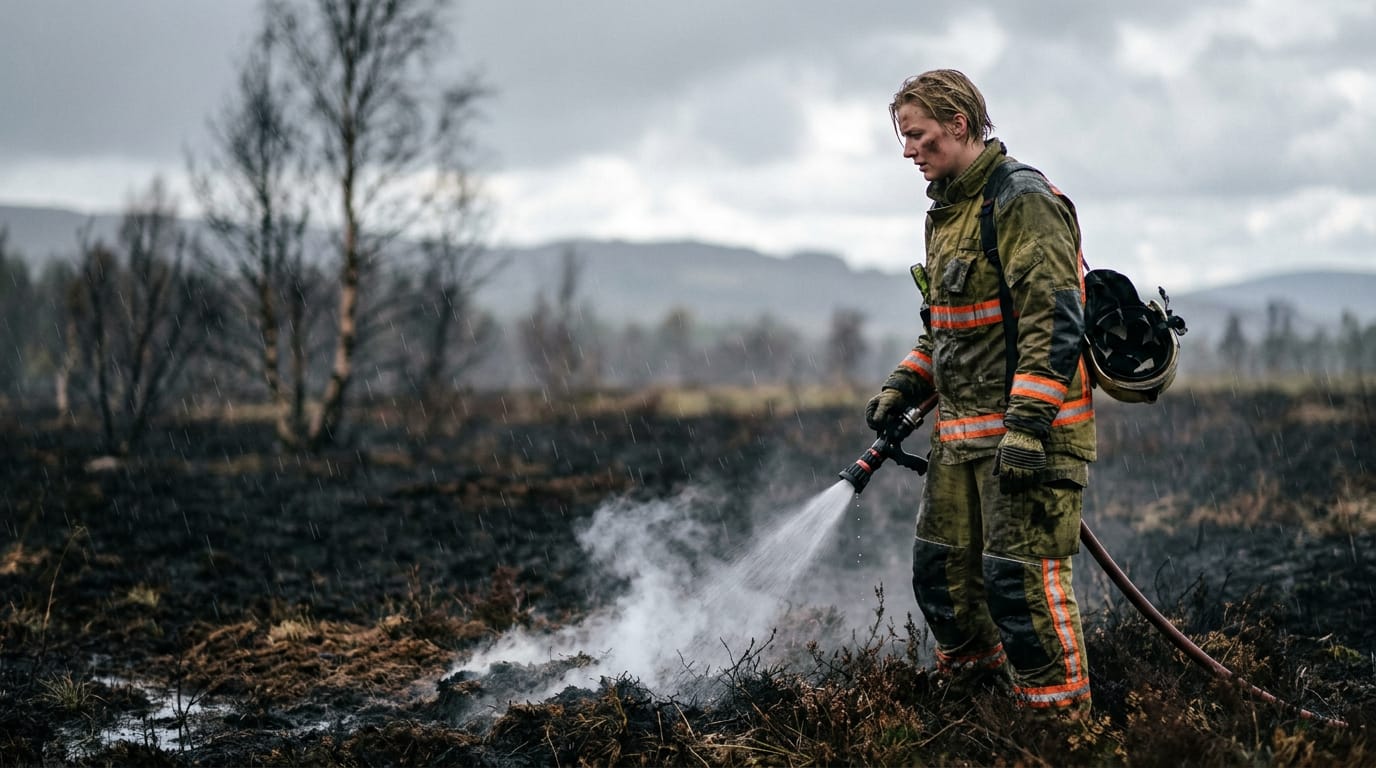
ROBERTILLE, Belgium – Much-needed rainfall, coupled with a significant drop in temperatures, brought a critical turning point this week in the arduous fight against Belgium's largest wildfire in a century. The blaze, which has scorched approximately 3,000 hectares of the ecologically vital High Fens Nature Reserve, had threatened to spread across the German border before nature intervened, offering a glimmer of hope to exhausted firefighters and concerned residents.
A Fragile Ecosystem Under Siege
The High Fens, or Hautes Fagnes, a unique plateau of boggy peatlands, heathland, and pine forests nestled in eastern Belgium near the German frontier, has been ravaged since the fire ignited on Friday, August 14. This biodiverse landscape, renowned for its wetlands, peat bogs, and as a habitat for species like the protected black grouse, has seen vast sections reduced to charred ground, releasing thick plumes of smoke that drifted as far as eastern France, prompting air-pollution alerts. The fire's rapid spread, fueled by weeks of unprecedented dry conditions and a severe heatwave that saw Belgian temperatures soar above 37 degrees Celsius, quickly escalated into Belgium's most disastrous wildfire on record. The scale of destruction far surpasses the previous record, a 2011 fire that consumed 1,400 hectares in the same reserve.
Herculean Efforts Against an Unrelenting Foe
For days, around 500 firefighters and emergency personnel from Belgium, Germany, and Luxembourg have mounted a strenuous offensive against the inferno. Their efforts were supported by water-bombing aircraft, helicopters from Belgium's federal police and the Netherlands, and even local farmers deploying tractors to create firebreaks. The challenging terrain, characterized by hard-to-reach areas and deeply embedded peat fires that burn beneath the surface, significantly complicated containment efforts. "The fire engines sink in when they try to reach the flames, so we need more aerial resources," explained Nathalie Thönnissen, Mayor of Baelen, on Saturday. Shifting winds constantly altered the fire's direction, making it difficult to predict its path and exacerbating the threat to nearby communities.
As the flames advanced, approximately 600 residents in the Belgian municipalities of Waimes and Bütgenbach were evacuated, with tourists in the area also advised to leave. Across the border, authorities in the German town of Monschau ordered evacuations in certain streets as smoke and fire approached. While no homes had been directly affected by Sunday morning, the persistent threat and widespread smoke maintained a tense atmosphere, with evacuated residents unable to return home.
Nature's Timely Intervention
The turning point arrived on Monday, August 17, when a welcome change in weather brought much-needed relief. Rainfall, measured between 5 and 9 millimeters across the affected zone, combined with a significant drop in temperatures to around 20°C from previous highs, dramatically aided firefighting operations. Crucially, increased humidity levels further restricted the fire's ability to spread. Tony Hosmans, a crisis management spokesman, confirmed on Monday that the blaze was no longer advancing towards the German border, a critical development after days of concern.
While the rain proved instrumental in halting the fire's expansion and allowed firefighters to gain significant ground in partial containment, officials caution that the battle is far from over. The deeply burning peat fires continue to pose a challenge, and experts warn that fully extinguishing the blaze could take several weeks. Despite the wind and rain occasionally hampering air support operations, ground crews are pushing for a decisive encirclement of the remaining fire fronts.
Broader Context and Lingering Concerns
The High Fens wildfire is not an isolated incident but rather a stark local manifestation of a broader European crisis. This summer has witnessed devastating wildfires across the continent, fueled by successive heatwaves and prolonged drought conditions. Countries like Greece, Spain, and France have also battled major blazes, resulting in casualties, mass evacuations, and extensive property damage. Data from the European Forest Fire Information System indicates that nearly 1.4 million acres have burned continent-wide this year, an area double the average over the past 15 years.
As the immediate crisis subsides in the High Fens, the long-term ecological impact on the fragile peatlands and wildlife remains a significant concern. The reserve, a crucial carbon sink, will require years, if not decades, to recover from the extensive damage. The incident underscores the increasing vulnerability of natural environments to climate change and highlights the urgent need for enhanced climate resilience and emergency response frameworks across Europe to mitigate future environmental disasters.
The heroic efforts of emergency services and the unexpected assistance from the weather have prevented a worse catastrophe, but the High Fens now stands as a powerful symbol of nature's delicate balance and the escalating challenges posed by a warming climate. Though the flames may be receding, the lessons from this historic blaze will undoubtedly endure.