Renaissance Masterpieces Vanish in Bold Sicilian Heist, Sparking Outcry
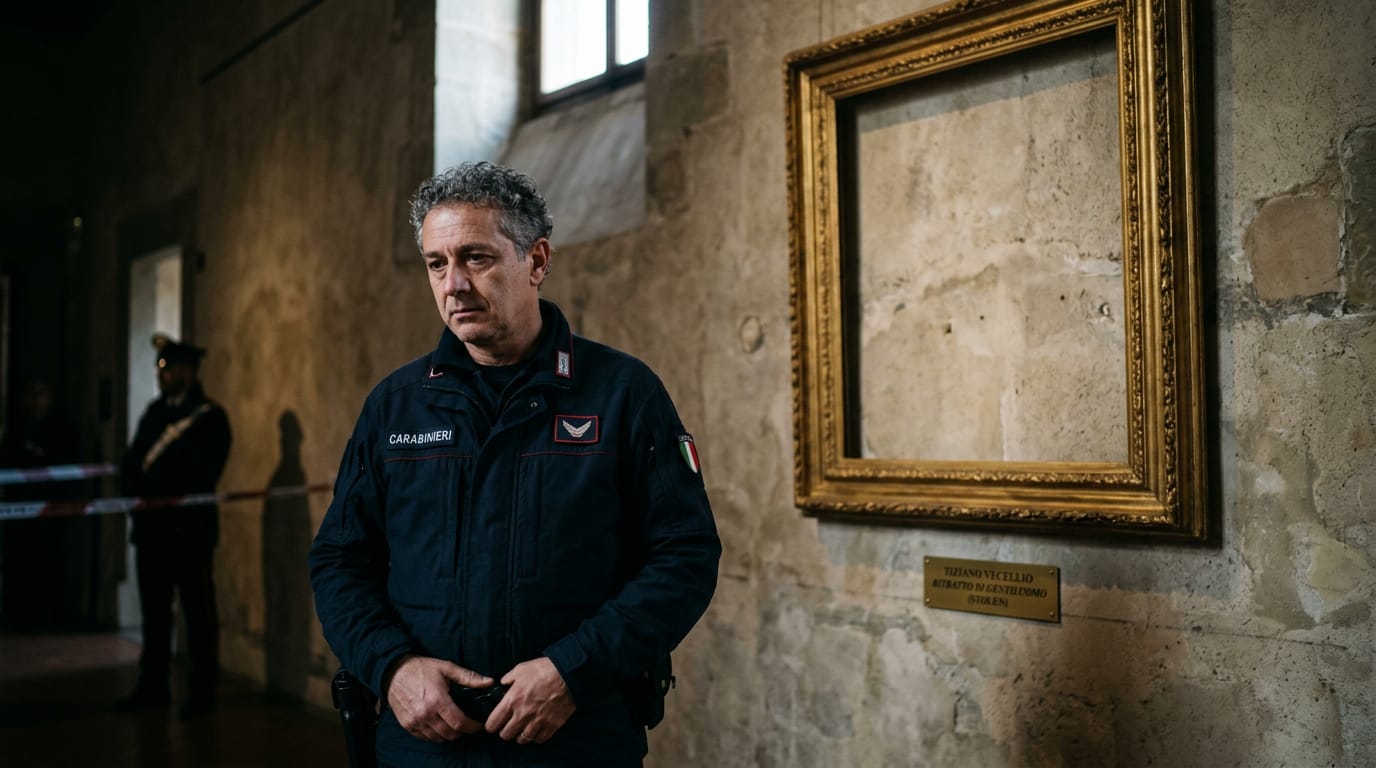
MESSINA, Sicily – Four invaluable works by 15th-century Renaissance master Antonello da Messina have been brazenly stolen from the Regional Museum of Messina (MuMe) in Sicily, plunging the Italian art world into shock and despair. The audacious heist, which occurred Saturday evening amidst the country's national Ferragosto holiday celebrations, has been described by authorities as a profound wound to Italy's cultural heritage. Experts estimate the stolen paintings, including three panels from the renowned "San Gregorio Polyptych," to be worth upwards of 70 million euros, immediately placing them among the most significant art thefts in recent memory.
The Audacious Heist Under the Cover of Festivities
The theft unfolded on the evening of Saturday, August 15, 2026, a date marked by the Ferragosto holiday, a major national observance celebrating the Assumption of Mary. As the city of Messina focused its attention on traditional celebrations, including the annual procession of La Vara, thieves exploited the distraction to target the MuMe museum.
Authorities reported that the perpetrators skillfully bypassed the museum's alarm and security systems, gaining entry to the exhibition halls. The gang then broke into a security display box, specifically targeting and removing the precious wooden panels. Museum director Marisa Mercurio confirmed the theft occurred shortly before 10 p.m., stating that despite the working alarms and on-site guards, the criminals managed to execute their plan.
Evidence at the scene suggests a hasty escape; although six panels were initially removed from their frames, two were inexplicably abandoned on a low wall just outside the museum. These recovered pieces, depicting St. Gregory the Great and St. Benedict from the polyptych, were reportedly noticed by passersby shortly after the robbery. This detail has led investigators to consider whether the thieves were disturbed or if their escape plan encountered an unforeseen obstacle. Local councilor Enzo Caruso, responsible for culture, remarked on the cinematic nature of the crime, suggesting the recent high-profile acquisition of an Antonello da Messina artwork by the Italian state for $14.9 million earlier this year might have inadvertently drawn attention to the museum's prized collection.
Irreplaceable Losses: The Masterpieces Stolen
The stolen artworks represent a significant loss for both Italian and global art history. Among them are three of the five surviving panels that constituted Antonello da Messina’s "San Gregorio Polyptych," dated to 1473. This altarpiece, originally composed of six panels for the Monastero di San Gregorio (destroyed in the 1908 Messina earthquake), held immense local significance as the only work by the renowned Sicilian painter that had never left his hometown.
Additionally, a small, double-sided painting depicting the Virgin and Child with a Franciscan monk on one side and Christ in Pietà on the other was also stolen from a secured display case. This particular piece, which had belonged to the Wilhelm Soldan collection, was purchased by the Sicilian regional government from Christie's in 2003 after being attributed to Antonello da Messina.
Antonello da Messina (c. 1430–1479) is widely recognized as a pivotal figure in the Early Renaissance, credited with transforming the course of Italian art through his innovative use of oil painting and detailed Flemish influences. His works are celebrated for their psychological depth and technical mastery, making the loss of these pieces particularly devastating. Art expert Alberto Fiz estimated the collective value of the stolen works at 70 million euros ($81 million) to 80 million euros ($92 million). Museum director Marisa Mercurio lamented the theft as "an extremely serious and significant loss," emphasizing their cultural, artistic, and symbolic importance not just for Messina but for all of Sicily. Minister of Culture Alessandro Giuli expressed his "dismay and regret," underscoring the "extraordinary value for our cultural heritage" these pieces represent.
The Hunt Begins: Investigation and Implications
Italian law enforcement, specifically the Carabinieri's art recovery squad, has launched a full-scale investigation. Investigators are examining several lines of inquiry, including the possibility that the paintings were stolen for the illicit art market or even on commission for a specific art dealer. The high value and distinctiveness of the artworks make them virtually unsellable through legitimate channels. Lynda Albertson, an art-crime analyst and chief executive of ARCA, noted that "Stealing an Antonello may be far easier than selling one." She added that such famous stolen artworks often circulate among criminals, serving as collateral in other illicit activities, rather than being openly sold.
The mayor of Messina, Federico Basile, condemned the theft as a "heinous criminal act" and an "intolerable affront to universal cultural heritage," vowing that Messina "will not let its history be stolen." The museum remained closed on Sunday as forensic teams meticulously collected evidence, striving to reconstruct the sequence of events and gather clues that might lead to the perpetrators and the recovery of the masterpieces.
A Broader Context of Art Crime in Italy
This Sicilian heist follows closely on the heels of another significant development in Italy's fight against art crime. Just days before, Italian police announced the recovery of three valuable paintings by French masters Paul Cézanne, Pierre-Auguste Renoir, and Henri Matisse. These works, stolen earlier this year from a private museum near Parma in northern Italy, were valued at millions of euros, with five suspects detained in connection with that theft.
While there are no apparent links between the two incidents, the Messina theft underscores the persistent vulnerability of Italy's vast and rich cultural heritage to organized art crime. The illicit trade in art is a global phenomenon, with an estimated $6 billion worth of plundered art reportedly traded on the black market annually. Italy, home to an unparalleled collection of artistic treasures, often finds itself at the forefront of efforts to combat this complex and secretive criminal enterprise. The Carabinieri's specialized art recovery unit is globally recognized for its dedication and success in retrieving stolen cultural artifacts, though the recovery of works like Caravaggio's "Nativity with St. Francis and St. Lawrence," stolen from Palermo in 1969, illustrates the enduring challenge of bringing all such treasures back home.
The disappearance of Antonello da Messina's masterpieces represents a significant blow, not only in monetary terms but in the profound loss of irreplaceable cultural touchstones. As the investigation unfolds, the art world and the people of Sicily hold a collective breath, hoping for the swift return of these cherished symbols of their identity and history. The incident serves as a stark reminder of the constant threat facing invaluable artworks and the critical need for robust security measures to protect humanity's shared artistic legacy.