Russian Spacecraft Delivers New Crew to International Space Station
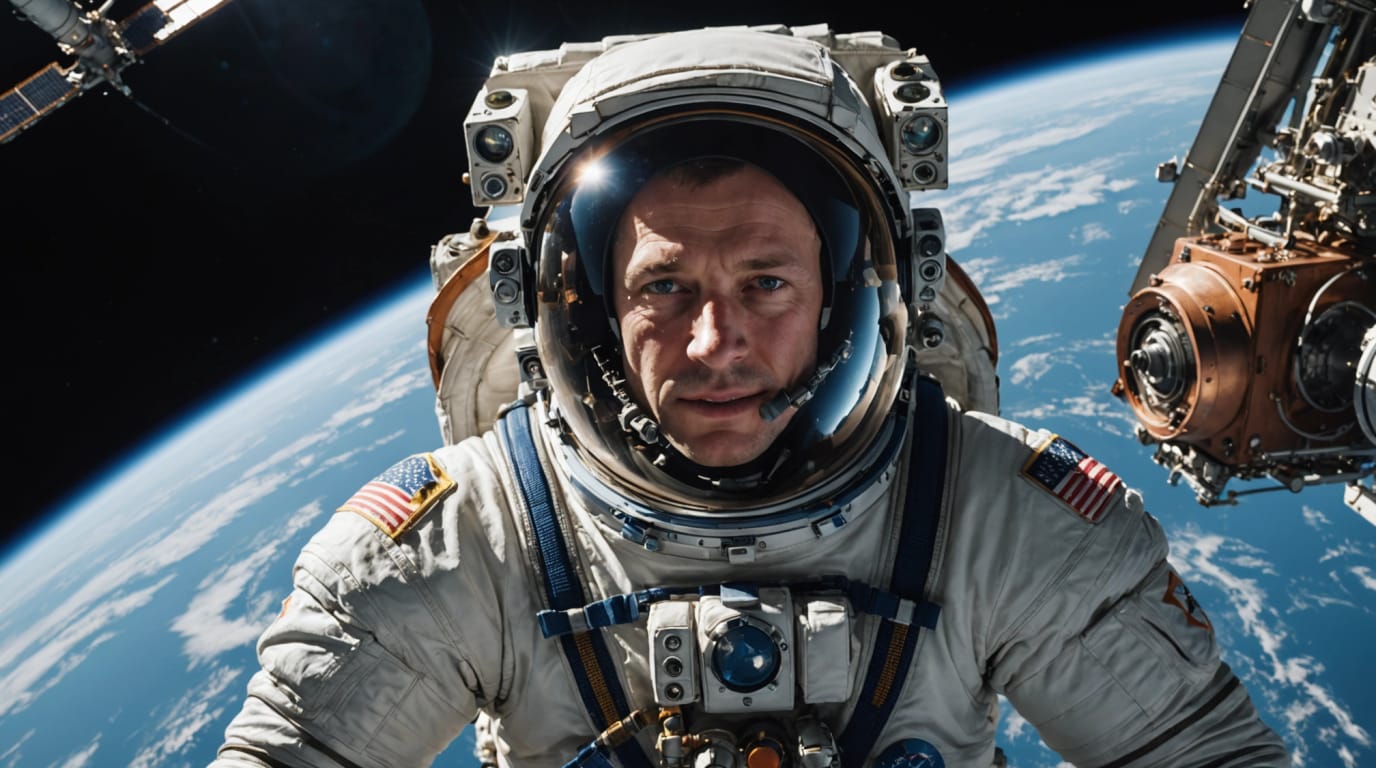
A Russian Soyuz spacecraft successfully launched and docked with the International Space Station (ISS) Tuesday, delivering a fresh crew of astronauts and cosmonauts to the orbiting laboratory. The mission, Soyuz MS-27, marks the continuation of international cooperation in space despite ongoing geopolitical tensions.
Liftoff from Baikonur
The Soyuz MS-27 spacecraft lifted off from the Baikonur Cosmodrome in Kazakhstan early Tuesday morning. Aboard the spacecraft were NASA astronaut Jonny Kim and Roscosmos cosmonauts Sergey Ryzhikov and Alexey Zubritsky. The launch proceeded as scheduled, with the Soyuz rocket propelling the spacecraft into orbit. The event was broadcast live by NASA and Roscosmos, showcasing the precision and reliability of the Soyuz launch system.
Journey to the ISS
Following a roughly three-hour journey, the Soyuz MS-27 successfully docked with the ISS's Prichal module. The docking was carefully monitored by flight controllers in Russia and the United States, ensuring a secure connection. The hatches between the Soyuz and the ISS were then opened, allowing the new crew members to enter the station.
Crew Composition and Mission Objectives
The arrival of Kim, Ryzhikov, and Zubritsky brings the total number of crew members on the ISS to ten. They join NASA astronauts Don Pettit, Anne McClain, and Nichole Ayers, Japan Aerospace Exploration Agency's astronaut Takuya Onishi, and Russian cosmonauts Alexey Ovchinin, Ivan Vagner, and Kirill Peskov. The new arrivals are scheduled to spend approximately eight months on the space station, participating in Expeditions 72 and 73.
During their mission, the crew will conduct a variety of scientific experiments and technology demonstrations. These experiments cover a wide range of fields, including biology, physics, and materials science. The research conducted on the ISS helps to advance our understanding of the universe and develop new technologies that can benefit people on Earth. NASA has stated that Kim will be involved in scientific investigations and technology demonstrations to prepare for future space missions.
International Collaboration in Space
The Soyuz MS-27 mission highlights the ongoing collaboration between Russia and the United States in space exploration. Despite political disagreements, the two countries have maintained a strong partnership on the ISS for more than two decades. The ISS serves as a symbol of international cooperation, bringing together astronauts and cosmonauts from around the world to work towards common goals.
This collaboration extends beyond just the United States and Russia. The ISS is a joint project involving five space agencies: NASA (United States), Roscosmos (Russia), JAXA (Japan), ESA (Europe), and CSA (Canada). These agencies work together to operate the station and conduct research in space.
Change of Command and Future Operations
With the arrival of the new crew, a change of command ceremony will take place. The current commander of Expedition 71, Roscosmos cosmonaut Oleg Kononenko, will hand over the keys of the ISS to NASA astronaut Suni Williams. Williams and fellow NASA astronaut Butch Wilmore arrived on Boeing's Starliner capsule in June for what was initially planned as a week-long stay. However, due to technical issues with the Starliner, their mission has been extended until February 2025.
Kononenko and cosmonaut Nikolai Chub are preparing to return to Earth aboard the Soyuz MS-25 spacecraft on September 23, along with NASA astronaut Tracy C. Dyson. Kononenko and Chub will have spent 374 days on the station, setting a new record for a single ISS mission. Kononenko already holds the record for the most total time spent in space, with 1,111 days. Dyson arrived at the station aboard Soyuz MS-25 in March, along with Russian cosmonaut Oleg Novitskiy and spaceflight participant Marina Vasilevskaya of Belarus. Dyson's mission will last 184 days. Novitskiy and Vasilevskaya stayed in orbit for 12 days, returning in April aboard the Soyuz MS-24 spacecraft with NASA astronaut Loral O'Hara.
Continuing Research and Exploration
The International Space Station remains a vital platform for scientific research and exploration. The arrival of the Soyuz MS-27 crew ensures that this important work will continue. The experiments conducted on the ISS are helping to advance our understanding of the universe, develop new technologies, and prepare for future missions to the Moon and Mars. The ongoing international collaboration on the ISS demonstrates the power of cooperation in achieving ambitious goals in space.