Serbian Students Lead Unprecedented Protests, Challenging Government Amidst Rising Tensions
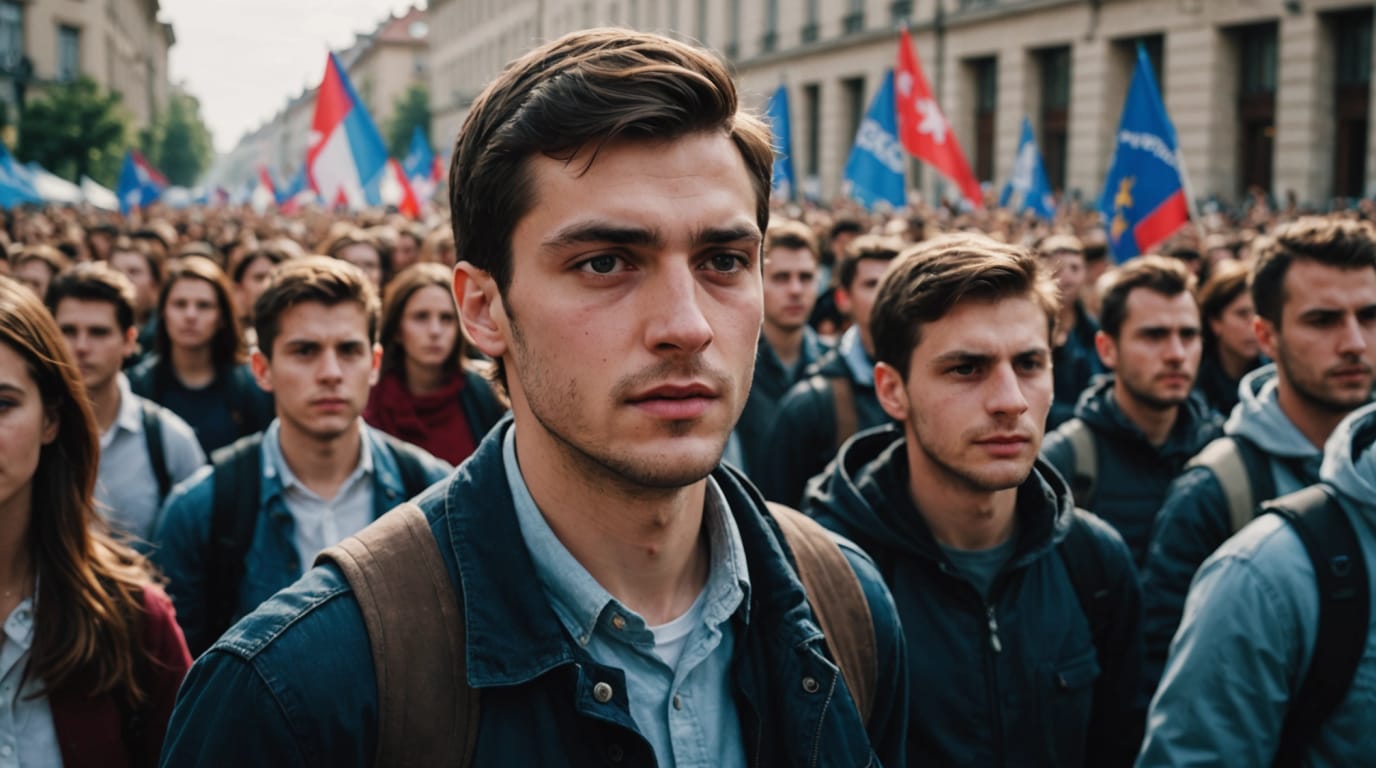
BELGRADE, Serbia – Serbia is bracing for what could be its largest protest in decades, as student-led demonstrations against government corruption and authoritarian rule reach a critical juncture. Sparked by a tragic railway accident in November 2024 that claimed 15 lives, the protests have evolved into a widespread movement demanding accountability, transparency, and fundamental democratic reforms. As tensions escalate, with both protesters and government supporters mobilizing in the capital, concerns are growing about potential clashes and the future of Serbia's political landscape.
Tragedy Ignites National Outrage
The catalyst for the current wave of protests was the collapse of a newly constructed canopy at the Novi Sad railway station on Nov. 1, 2024. The incident, which resulted in the deaths of 15 people and injuries to others, ignited public outrage over alleged corruption and negligence in state infrastructure projects. Students quickly mobilized, organizing demonstrations to demand accountability for the tragedy and to expose what they see as systemic corruption within the government.
The protesters accuse President Aleksandar Vučić's Serbian Progressive Party (SNS), which has been in power since 2012, of eroding democratic principles and capturing state institutions for its own benefit. They argue that the Novi Sad railway station collapse is a direct consequence of this corruption and a disregard for the rule of law. Their demands include the publication of all documents related to the railway station reconstruction, the prosecution of those responsible for the collapse, and an increase in the budget for higher education.
A Movement Gains Momentum
What began as a local student protest in Novi Sad has rapidly spread across Serbia, encompassing over 400 cities and towns. The movement has attracted support from a broad spectrum of society, including university professors, researchers, high school students, workers, farmers, and even some members of the Serbian diaspora. This diverse coalition reflects a deep-seated dissatisfaction with the current political climate and a shared desire for change.
Students have employed various tactics to amplify their message, including peaceful marches, blockades of university buildings and roads, and the occupation of public spaces. They have also demonstrated media savvy, using modern communication channels to effectively organize and mobilize supporters. A poignant symbol of the protests is the daily 15 minutes of silence observed at 11:52 a.m., the time of the Novi Sad railway station collapse, to honor the victims and underscore the demand for justice.
Government Response and Escalating Tensions
The Serbian government's response to the protests has been multifaceted, ranging from concessions and promises of reform to accusations of foreign interference and threats of repression. Initially, authorities launched an investigation into the Novi Sad railway station collapse and made several arrests, including the former Minister of Construction, Transport, and Infrastructure. The government also approved a 20% increase in the budget for university education, seemingly meeting one of the students' key demands.
However, protesters remain skeptical of the government's sincerity, viewing these actions as mere attempts to appease public anger and deflect attention from deeper systemic issues. They point out that those responsible for the tragedy have not been properly charged and prosecuted, and that corruption and impunity continue to plague the country.
In recent weeks, tensions have escalated as President Vučić has accused the protesters of being part of a Western-backed "color revolution" aimed at destabilizing Serbia. He has warned of potential violence during the planned mass rally in Belgrade on March 15, threatening mass arrests if protesters turn to violence. These warnings have raised concerns about a potential crackdown on the demonstrations.
Adding to the volatile atmosphere, government supporters have mobilized in Belgrade, setting up a tent camp in front of the presidential palace. This counter-protest, which includes veterans of paramilitary units and figures from Serbia's criminal underworld, has been interpreted as an attempt to intimidate the protesters and create a "human shield" for President Vučić.
Echoes of the Past, Uncertain Future
The current protests in Serbia evoke memories of previous student-led movements that have played a significant role in the country's history. In 1968, students in Belgrade rose up against economic inequality and political repression in what was then socialist Yugoslavia. In the 1990s and 2000s, the "Otpor" ("Resistance") movement, largely composed of students, was instrumental in toppling Slobodan Milošević, who was later tried for war crimes.
These historical precedents underscore the potential for student activism to effect political change in Serbia. However, the current situation is fraught with uncertainty. The government's control over state institutions and the media, coupled with the risk of violence and repression, pose significant challenges to the protest movement.
A Nation at a Crossroads
As Serbia stands on the brink of what could be a pivotal moment in its history, the student-led protests represent a powerful expression of public dissatisfaction and a yearning for a more democratic and accountable government. Whether this movement will succeed in achieving its goals remains to be seen.
The international community is closely watching developments in Serbia, with the European Union urging the government to protect protesters and conduct swift investigations into incidents of violence. The future of Serbia as a free and democratic country may well depend on the outcome of this ongoing struggle.