South Korea Battles Raging Wildfires; At Least 16 Dead
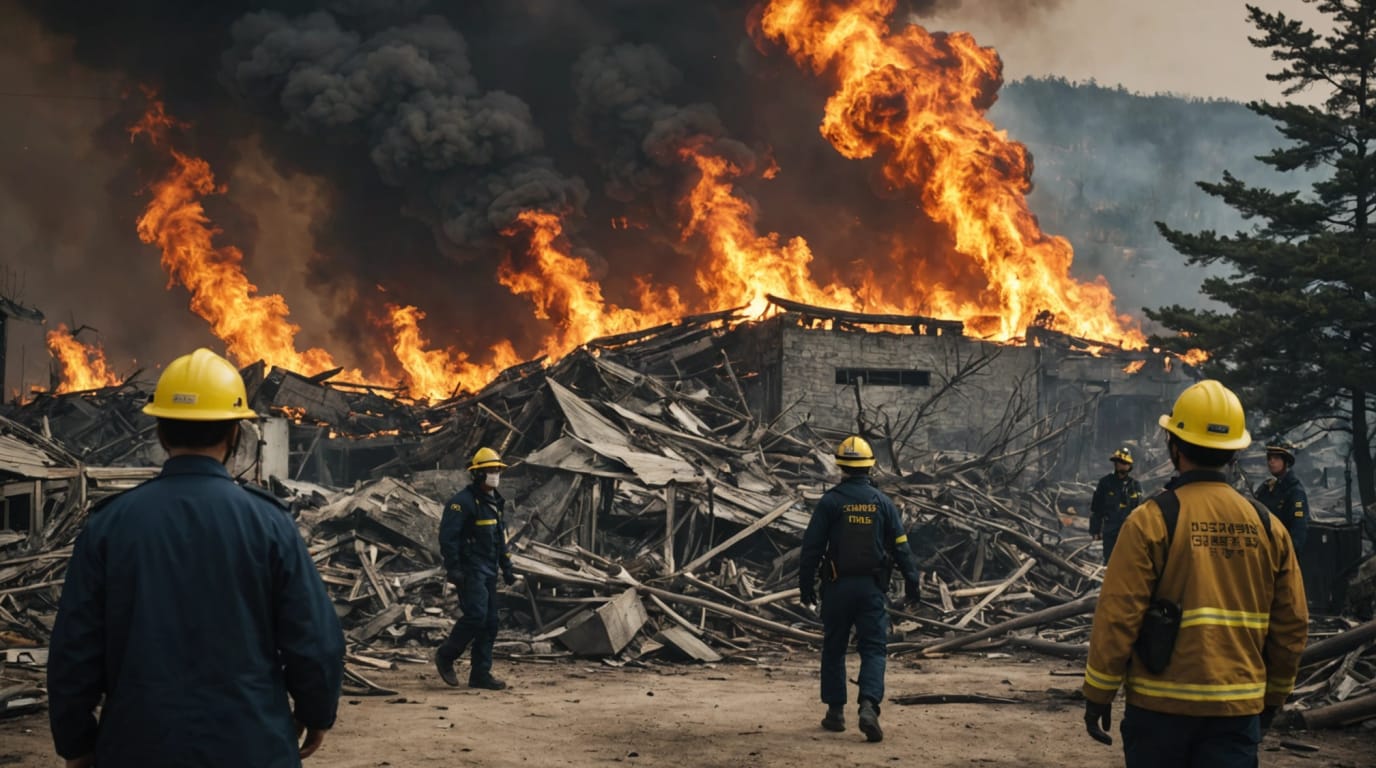
South Korea is grappling with a severe wildfire outbreak that has claimed the lives of at least 16 people, including three firefighters and one government employee, and injured 11 others. The blazes, fueled by strong winds, dry conditions, and unusually high temperatures, have ravaged thousands of hectares across the country, prompting mass evacuations and straining firefighting resources. The disaster is being called the third-worst of its kind in South Korea since the 2000 East Coast wildfires and the 2022 Uljin forest fire.
Widespread Devastation
More than 20 separate wildfires ignited across South Korea beginning on March 21, 2025. The most significant fires broke out in Sancheong County and Uiseong County, quickly spreading due to mountainous terrain and strong winds. By the evening of March 22, the Sancheong County fire had consumed approximately 490 hectares (1,200 acres) of land. Fires in North Gyeongsang Province burned approximately 300 hectares (740 acres), while Gimhae experienced additional significant fires requiring evacuations. A wildfire also broke out in Ulsan, Ulju County. In total, the fires have burned at least 8,700 hectares (34 square miles). Acting Interior and Safety Minister Ko Ki-dong stated that the wildfires have affected approximately 14,694 hectares (36,310 acres), with damage continuing to grow.
Heroic Efforts and Tragic Losses
Over 6,700 firefighters have been deployed to battle the wildfires, with nearly two-fifths of the personnel dispatched to Uiseong. Despite their efforts, containment has been challenging due to the difficult terrain and persistent winds. Tragically, three firefighting personnel and one public sector worker perished while combating the Sancheong County fire. Five other emergency personnel sustained injuries during firefighting operations and required medical treatment. Two civilians were found dead while evacuating from the Uiseong fire in Cheongsong and Andong, respectively. Three civilians in Yeongdeok and five in Yeongyang were also found dead.
Climate Change and Human Negligence
Unseasonably high temperatures have swept across South Korea and Japan, contributing to dangerous wildfire conditions. Temperatures in South Korea climbed 4.5°C to 10°C (8.1°F to 18°F) above the 1991-2020 average. Human-caused climate change has significantly amplified the likelihood of this heat, further intensifying fire risks in areas already grappling with severe drought. Severe drought conditions continue to persist following drier-than-average conditions that emerged late in 2024, driven by dry continental winds from the north and a lack of winter snowfall. Officials attribute the high fire risk in part to dry vegetation, particularly an abundance of leaves on forest floors. In South Korea, westerly spring winds grow hotter and drier as they cross the Taebaek and Sobaek mountain ranges. This allows for rapid wildfire growth amid low humidity. The fire in Uiseong was reportedly caused by an individual visiting a family grave. The person told emergency services, "I accidentally started the fire while cleaning the grave site." Prime Minister Han Duck-soo stated that most wildfires are caused by human negligence and the public should strictly follow wildfire prevention guidelines.
State of Emergency and International Impact
The government has declared a state of emergency in several affected regions, mobilizing all available resources to combat the fires. More than 3,000 people have been evacuated to shelters. The government declared a state of emergency in four regions, citing "the extensive damage caused by simultaneous wildfires across the country". South Korea's neighboring Japan was also experiencing wildfires, with hundreds of firefighters battling a blaze in Imabari city of western Ehime region since Sunday (March 23, 2025). Another wildfire, which also started on Sunday, was affecting the city of Okayama, burning around 250 hectares and damaging six buildings.
Protecting Cultural Heritage
The rapid spread of the fires has threatened not only lives and property but also cultural heritage sites. In Uiseong, workers at a local temple were attempting to move historical artifacts and cover up Buddhist statues to protect them from possible damage. The Korea Forest Service said the containment rate for the fire in Uiseong decreased from 60- to 55-% by Tuesday (March 25, 2025) morning.
Looking Ahead
As of March 24, many of the fires had been extinguished, according to officials cited in news reports, and the large blazes in Uiseong and Sancheong counties were each about two-thirds contained. The scars left behind are significant enough to prompt a state of disaster declaration. The wildfires serve as a stark reminder of the increasing threat of wildfires in a warming climate and the importance of preventative measures and responsible behavior to mitigate the risk of future disasters. The nation mourns the loss of life and property and begins the long process of recovery and rebuilding.