Spain Claims Second World Cup Title in Tense 1-0 Victory Over Argentina
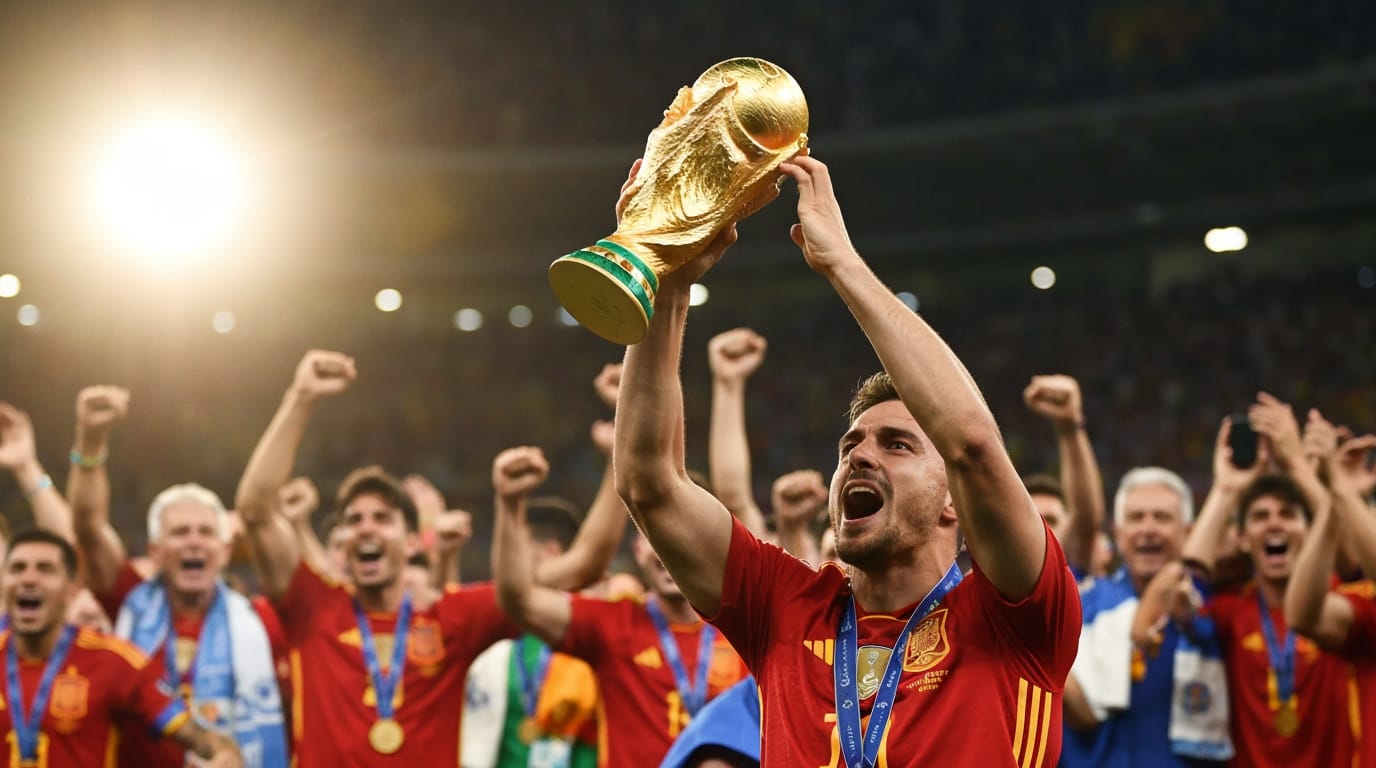
New York/New Jersey, July 19, 2026 – Spain has once again etched its name into footballing immortality, securing their second FIFA World Cup title with a hard-fought 1-0 victory over defending champions Argentina in a gripping final held at MetLife Stadium. In a match defined by tactical discipline, moments of individual brilliance, and unwavering defensive resolve, La Roja delivered a performance worthy of champions, ending Argentina's bid for back-to-back glory and igniting celebrations across the Iberian Peninsula.
The climax of the 2026 FIFA World Cup, co-hosted across the United States, Canada, and Mexico, saw two of football's titans lock horns in a high-stakes encounter. The lone goal, a testament to Spain's patient build-up and clinical finishing, arrived in the second half, silencing a fervent sea of blue and white and sending the Spanish contingent into raptures. This triumph marks a significant milestone for Spanish football, adding a second star above their crest, a fitting complement to their historic 2010 success.
The Decisive Encounter at MetLife Stadium
The final itself was a masterclass in tension and tactical chess, played out in front of a capacity crowd at the New York/New Jersey Stadium, which served as the grand stage for the tournament's finale. From the opening whistle, both sides exhibited a cautious respect for their opponent's strengths. Spain, true to their renowned philosophy, dominated possession, meticulously moving the ball across the midfield, probing for openings against a disciplined Argentine defense. Argentina, in turn, relied on their formidable counter-attacking prowess, spearheaded by the enduring brilliance of Lionel Messi and the youthful dynamism of their attacking lineup.
The first half was a cagey affair, with chances at a premium. Spain’s midfield maestro, a veteran of numerous international campaigns, orchestrated play with composure, while Argentina’s defensive midfielders diligently broke up attacks and shielded their backline. The breakthrough finally arrived in the 68th minute. Following a series of incisive passes that dissected Argentina’s compact formation, a precise through-ball found Spain’s rising star, 19-year-old Lamine Yamal, in space on the right wing. Yamal, who has electrified the tournament with his audacious skill, delivered a perfectly weighted cross into the penalty area. The Argentine goalkeeper, despite a valiant stretch, could only parry the ball into the path of an onrushing Spanish forward, who calmly slotted it into the net from close range. The identity of the goal scorer, a testament to Spain's depth and collective effort, immediately became the subject of ecstatic celebration and future legend.
For the remainder of the match, Argentina pressed with increasing urgency, throwing everything they had at the Spanish goal. Lionel Messi, in what could potentially be his final World Cup appearance, rallied his teammates, creating several dangerous opportunities. However, Spain’s defense, marshaled by an experienced backline and a commanding goalkeeper, held firm, repelling wave after wave of Argentine attacks. The final whistle was met with an explosion of emotion – unbridled joy for Spain, and profound disappointment for an Argentina side that had fought valiantly but ultimately fallen short.
A Campaign of Resilience and Strategic Brilliance
Spain's journey to their second World Cup title was characterized by a blend of tactical flexibility and unwavering determination. Their campaign saw them navigate a challenging group stage and overcome formidable opponents in the knockout rounds. The team, a harmonious blend of seasoned internationals and exciting young talent, consistently showcased their signature possession-based football while also demonstrating a newfound defensive solidity. They adapted their approach when necessary, proving they could grind out results in tight contests, a quality crucial for World Cup success.
Argentina, the reigning champions from 2022, had embarked on a challenging path to the final, aiming to secure an unprecedented fourth title and defend their crown. Their journey was marked by a relentless pursuit of victory, with Lionel Messi once again serving as the inspirational fulcrum of their attack. Despite their eventual defeat, Argentina's performance throughout the tournament, especially in overcoming several strong contenders, underscored their status as one of the world's premier footballing nations. The prospect of Messi facing off against Spain's burgeoning talent like Lamine Yamal had been a major storyline leading into the final, creating a generational clash that captivated fans worldwide.
Etching History: Spain's Second Star
This victory is particularly resonant for Spain, marking their first World Cup triumph since their maiden win in 2010. That memorable tournament in South Africa saw Andrés Iniesta score the winning goal in extra time against the Netherlands, securing Spain's first-ever star. The intervening years have seen Spanish football endure periods of rebuilding and reinvention, but this 2026 squad has successfully recaptured the magic, blending the technical prowess of past generations with a renewed physical and mental fortitude.
For Argentina, this final represents another chapter in a storied, yet sometimes heartbreaking, World Cup history. La Albiceleste had already claimed three World Cup titles in 1978, 1986, and most recently in 2022. However, they have also experienced significant disappointment in finals, including losses in 1930, 1990, and 2014. The 1-0 defeat to Spain adds another painful memory, denying them the rare achievement of consecutive World Cup victories and leaving fans to ponder what might have been. The defensive masterclass displayed by Spain in containing Argentina's potent attack was a key factor in securing their triumph.
Global Echoes and Future Horizons
The jubilant scenes in MetLife Stadium quickly spread across Spain, with millions taking to the streets to celebrate their nation’s monumental achievement. From Madrid to Barcelona, cities erupted in a cacophony of cheers, car horns, and fireworks, as fans basked in the glory of their team's second world title. The victory is expected to have a profound impact on Spanish football, inspiring a new generation of players and further cementing the country's status as a dominant force on the international stage.
The 2026 FIFA World Cup, hosted across 16 venues in the United States, Canada, and Mexico, concluded as a resounding success, setting new benchmarks for attendance and global engagement. The final in New York/New Jersey showcased the organizational capabilities of the host nations and the universal appeal of football. As the dust settles on this historic tournament, the world looks forward to the continued evolution of the beautiful game, undoubtedly shaped by the performances and narratives created on this North American stage.
In securing their second World Cup title, Spain has reaffirmed its place among football’s elite, demonstrating that strategic vision, collective effort, and a dash of individual brilliance are the hallmarks of true champions. While Argentina will reflect on a valiant effort that fell just short, the 2026 final will forever be remembered as the day Spain added another glorious chapter to its footballing legacy.