Starlink Enters Vietnam Under Strict Controls, Unlikely to Unfurl Uncensored Internet
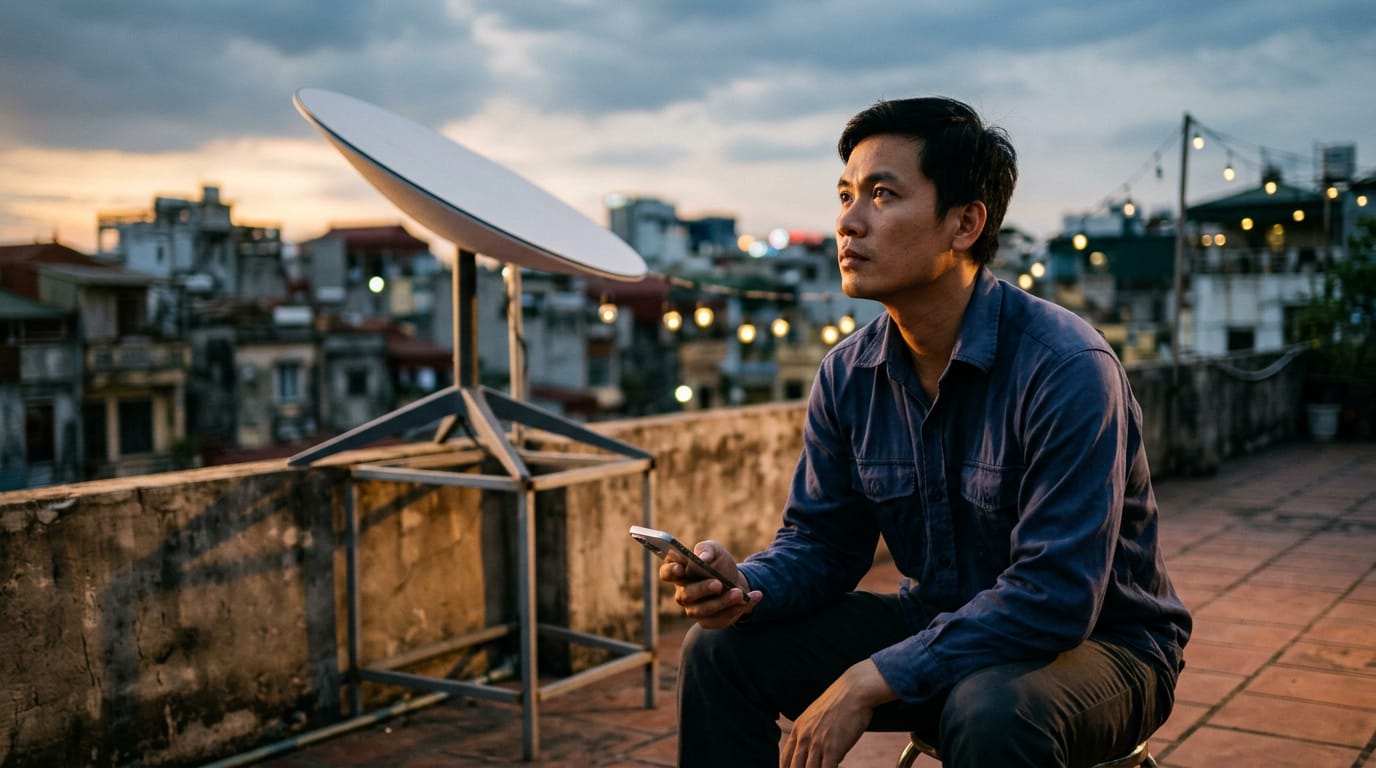
Hanoi, Vietnam – Satellite internet provider Starlink, a subsidiary of Elon Musk’s SpaceX, has officially commenced operations in Vietnam, marking a significant entry into a market historically characterized by stringent internet censorship. While Starlink's arrival could enhance connectivity in underserved regions, its operations are deeply integrated into Vietnam's existing regulatory framework, ensuring the government maintains its tight grip on online information and effectively preventing the service from becoming a conduit for uncensored internet access.
Vietnam, a one-party communist state, has long employed a sophisticated "Bamboo Firewall" to regulate internet access, blending legal restrictions with technical enforcement. The nation's decision to permit Starlink, which began accepting orders on August 13, 2026, represents a strategic move by Hanoi to bolster its digital infrastructure while reaffirming its commitment to digital sovereignty. This intricate balancing act means that the perception of Starlink "opening" Vietnam's heavily censored internet is largely unfounded.
The Regulatory Green Light: A Strategic Concession
Starlink's entry into Vietnam follows a methodical regulatory journey. In March 2025, the Vietnamese government approved a five-year pilot program for low-Earth-orbit (LEO) satellite telecommunications services, signaling a readiness to embrace new connectivity solutions. This was followed by the issuance of necessary licenses in February 2026 to Starlink Services Vietnam Co., Ltd., a local entity established by SpaceX in September 2025. The pilot program is set to run until the end of 2030 and includes a cap of 600,000 subscribers.
Crucially, Vietnam made an unprecedented concession by allowing SpaceX to maintain 100% foreign ownership of its local business, a significant departure from previous rules that typically limited foreign companies to a maximum 49% stake in telecommunications joint ventures. This policy shift, reportedly influenced by broader trade considerations and a desire to acquire cutting-edge technology, paved the way for Starlink to operate directly. Under the initial deployment plan, Starlink is authorized to operate four gateway stations located in Phu Tho, Da Nang, and Ho Chi Minh City, with potential for up to 15 ground stations nationwide.
Vietnam's Enduring "Bamboo Firewall" Remains Intact
Despite Starlink's advanced technology, its operations in Vietnam will be firmly subjected to the country's existing internet control mechanisms, often referred to as the "Bamboo Firewall." This system is characterized by a comprehensive legal framework, including the Cybersecurity Law of 2018 and subsequent decrees. These regulations mandate that telecommunications and internet companies operating in Vietnam must place servers within the country and be prepared to provide all user data when requested by the state.
Internet censorship in Vietnam aims to block content deemed "anti-state," subversive, or politically sensitive. Foreign internet service providers, including major global platforms, have historically complied with government requests to remove or geo-block content to avoid service disruptions or outright bans. Starlink will be no exception. The requirement for local ground stations and routing all Vietnamese traffic through these government-controlled gateways is a critical element in maintaining state oversight. This ensures that, regardless of the satellite-based nature of the service, the data flow remains within the jurisdictional boundaries of Vietnamese law.
Limited Impact on General Censorship and Access
The notion that Starlink can inherently bypass state-imposed censorship is significantly diminished by Vietnam's regulatory approach. Unlike scenarios in some other authoritarian regimes where smuggled Starlink terminals might offer a pathway to uncensored internet by operating outside legal frameworks, Vietnam has proactively integrated Starlink into its control architecture.
The establishment of local ground stations means that internet traffic from Starlink users in Vietnam will enter the country's national network at specific points. This allows the Ministry of Information and Communications (MIC) to enforce content filtering and monitoring, mirroring the controls applied to traditional internet service providers. Any attempt by Starlink to operate outside these mandates would risk its license and commercial viability in the country.
Furthermore, the cost of Starlink service in Vietnam is considerably higher than local fiber optic and mobile internet services, which are already widely available and affordable in urban areas. Residential plans start around 1.13 million Vietnamese dong per month (approximately $43), with hardware costing around 8.66 million dong (about $329). This pricing strategy positions Starlink as a premium service primarily targeting niche markets such as remote areas, maritime operations, and businesses requiring backup connectivity, rather than the mass consumer market. Given that Vietnam's terrestrial network already covers about 85% of households with fiber connections and boasts high fixed broadband speeds, Starlink's competitive advantage lies in geographical reach, not necessarily in offering unrestricted internet.
Strategic Intent: Connectivity Over Freedom
Vietnam's approval of Starlink is driven by pragmatic considerations of enhancing connectivity, particularly in areas difficult to reach with traditional infrastructure. The government aims to improve internet access in rural, mountainous, and island regions, as well as to increase resilience during natural disasters or disruptions to undersea cables. Such incidents, like the simultaneous disruption of three of Vietnam's five active submarine cables in June 2024, underscore the need for diverse network options.
However, these infrastructural goals are pursued without compromising digital sovereignty. Vietnamese authorities consistently prioritize national defense and security in cyberspace, emphasizing the need to manage and protect its internet system under all circumstances. For Vietnam, digital sovereignty means having control over data flows, user information, and the content accessible to its citizens. By requiring Starlink to comply with its regulatory framework, including data localization and content management, Vietnam ensures that technological advancement aligns with its national interests and ideological controls.
Conclusion
Starlink's official launch in Vietnam marks an important step in expanding high-speed satellite internet access, particularly benefiting remote communities and critical sectors. However, it does not herald an era of unfettered internet freedom. The Vietnamese government has meticulously crafted a regulatory environment that integrates Starlink into its existing "Bamboo Firewall," ensuring continued control over online content and user data. Through local licensing, mandated ground stations, and the enforcement of its Cybersecurity Law, Hanoi has demonstrated its capacity to embrace advanced technology while maintaining its strict stance on digital sovereignty. For Vietnamese internet users, Starlink offers a new, albeit costly, avenue for connectivity, but one that operates firmly within the confines of the state's censored digital landscape.