Strait of Hormuz Declared Open Amid Lingering Doubts, Europe Mobilizes for Maritime Security
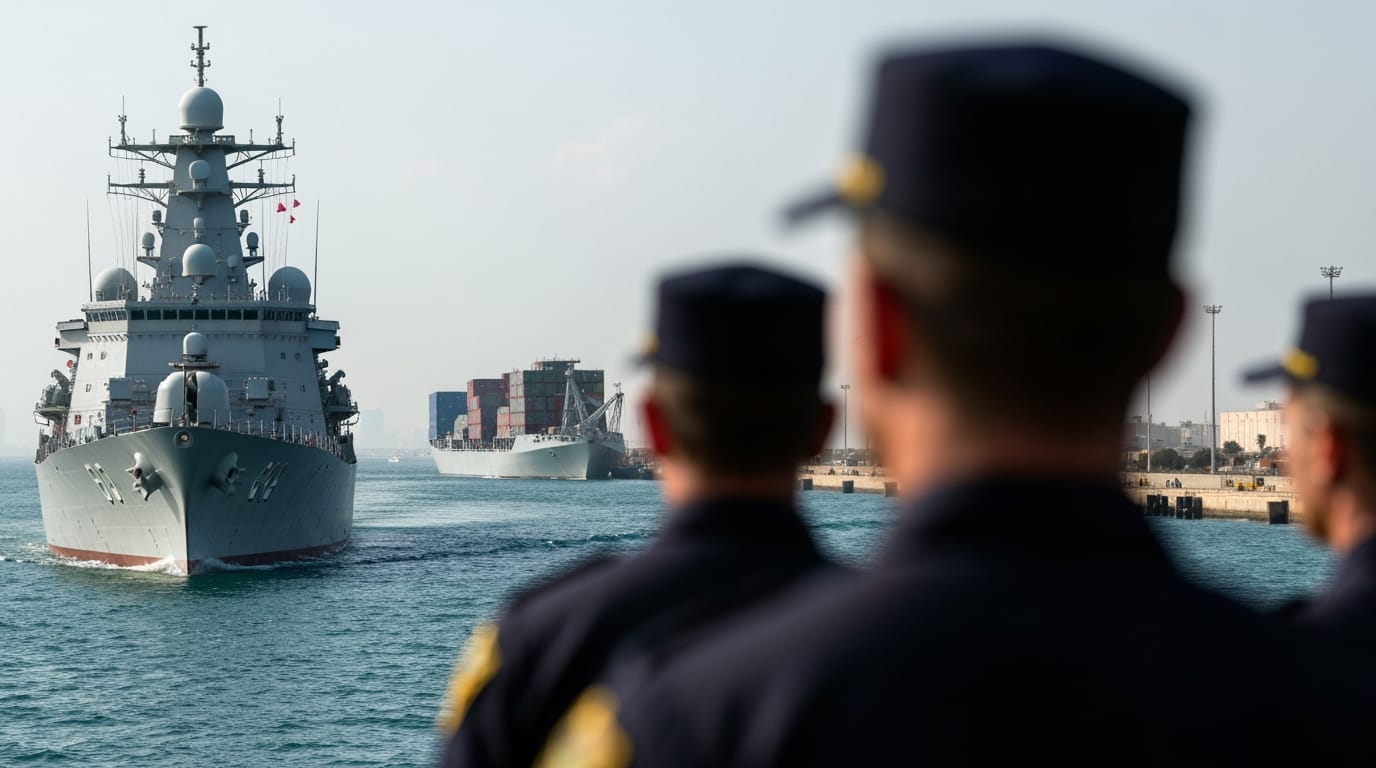
The vital Strait of Hormuz has been officially declared open to commercial shipping by both Iran and the United States, following a period of unprecedented closure that sent shockwaves through global energy markets. However, the announcement comes with significant caveats and warnings from the international shipping industry, prompting European nations to rapidly advance plans for a robust, defensive maritime security mission aimed at restoring genuine freedom of navigation and reassuring a wary global economy. The fragile "reopening" unfolds against a backdrop of the recent US-Israeli air war against Iran and the assassination of its supreme leader, which triggered Iran's retaliatory blockade of the critical waterway since late February 2026. This crisis has caused oil prices to surge dramatically and severely disrupted the supply chains for a host of essential commodities, driving European leaders to underscore the necessity of a "lasting and workable" solution for the strait's safe passage.
The Crisis Unfurls: A Global Chokepoint Shut Down
The Strait of Hormuz, a narrow passage between the Arabian Peninsula and Iran, is arguably the world's most critical maritime chokepoint, through which approximately 25% of the world's seaborne oil trade and 20% of global liquefied natural gas (LNG) passed prior to the recent conflict. Its effective closure by Iran, which began on February 28, 2026, was a direct response to a US-Israeli air campaign targeting Iran. This escalating geopolitical tension quickly translated into concrete threats to shipping, with Iran's Islamic Revolutionary Guard Corps (IRGC) issuing warnings, conducting confirmed attacks on at least 21 merchant ships, and reportedly laying sea mines. The IRGC further declared the strait closed to vessels "to and from" ports of the US, Israel, and their allies.
The economic fallout was immediate and severe. Oil prices experienced their fastest surge in recent history, with Brent crude surpassing $100 per barrel in early March and peaking at $126 per barrel. The disruption extended far beyond crude oil and LNG, impacting the supply of critical non-oil commodities such as fertilizers, aluminum, helium, methanol, jet fuel, diesel, and ammonia, leading to widespread supply chain anxieties and price hikes globally. Major shipping companies, including Maersk and Hapag-Lloyd, suspended transits, forcing many vessels to reroute via the Cape of Good Hope, adding weeks to transit times and significantly increasing costs. Hundreds of thousands of container units were reported trapped in the Gulf region, underscoring the immense logistical challenges. The International Maritime Organization (IMO) condemned the attacks and closure, emphasizing the threat to seafarers' safety and the critical need for coordinated security.
A Fragile "Reopening" Met with Industry Skepticism
On April 17, 2026, a glimmer of hope emerged as Iran's Foreign Minister Abbas Araghchi announced the strait was "completely open" for commercial vessels for the duration of a ceasefire in Lebanon. Simultaneously, US President Donald Trump affirmed the strait was open but stressed that the US naval blockade on Iranian ports and vessels would remain "UNTIL SUCH TIME AS OUR TRANSACTION WITH IRAN IS 100% COMPLETE." This dual declaration, however, has been met with considerable caution and skepticism from the global shipping industry.
Industry bodies, including the International Maritime Organization and BIMCO, swiftly warned that conditions are "far from normal" and that the narrative of a "fully open" strait is inaccurate. Concerns persist over unresolved mine threats in the internationally recognized Traffic Separation Scheme, overlapping military controls, and the continued US enforcement regime targeting Iran-linked trade. Iran's stipulation that commercial vessels must follow a "coordinated route" along its coastline, rather than the established international lanes, further complicates matters and creates a legal and operational "gray zone" for shipowners. Furthermore, Iran explicitly stated that military vessels remain prohibited and require authorization from the IRGC Navy for transit. This contradictory environment means that despite political pronouncements, the key shipping lanes through the strait "are not declared safe for transit at this point," with operators advised to consider avoiding the area until clearer guidance emerges.
Europe's Concerted Effort to Secure Sea Lanes
For Europe, the stability of the Strait of Hormuz is not merely an abstract geopolitical concern but a direct economic imperative. While a larger share of the strait's oil transits are destined for Asian markets, Europe relies on the waterway for 12% to 14% of its liquefied natural gas (LNG) imports from Qatar. The disruption has underscored Europe's energy vulnerabilities and the critical need to safeguard its supply chains.
In response, European leaders have swiftly convened and intensified efforts to secure maritime passage. France, the United Kingdom, Italy, and Germany have taken a leading role, hosting multilateral meetings involving over 50 nations from Europe, Asia, and the Middle East. These nations are planning a "defensive naval mission" specifically designed to restore maritime security and ensure the free flow of goods, particularly once a lasting ceasefire is firmly in place. This mission, which explicitly excludes the direct involvement of the US, Israel, and Iran to maintain its non-belligerent stance, aims to reassure the shipping industry. Military planners are set to meet in London next week to finalize details, with mine-clearing operations identified as a key priority. Italy has already pledged naval units to the initiative.
These efforts build upon existing European initiatives like the French-led European Maritime Awareness in the Strait of Hormuz (EMASoH) mission, known militarily as Operation AGENOR, which has been operational since 2020. Comprising nine participating European countries, EMASoH focuses on de-escalation, transparency, and upholding freedom of navigation in the Arabian Sea, Persian Gulf, Gulf of Oman, and the Strait of Hormuz itself. France has notably deployed its nuclear-powered aircraft carrier, a helicopter carrier, and several frigates to the region, signaling Europe's commitment to protecting its interests. The European Union is also fostering deeper cooperation with Gulf states through strategic partnership agreements and has even proposed the creation of a humanitarian corridor through the strait to the United Nations, drawing parallels to the Black Sea grain initiative. These diplomatic and military endeavors underscore a coordinated European resolve to protect vital trade routes independently, even as US President Trump has publicly criticized European allies for their perceived lack of involvement in the broader conflict.
Long-Term Implications and Energy Resilience
The Strait of Hormuz crisis serves as a stark reminder for Europe of the fragility of global supply chains and the imperative to enhance energy security. Beyond immediate security measures, the long-term implications necessitate a fundamental re-evaluation of Europe's energy strategy. Calls are growing for accelerated diversification away from fossil fuels, emphasizing renewables, securing alternative LNG supplies, expanding nuclear energy, and reducing overall oil dependence. This strategic pivot is seen as crucial for bolstering Europe's industrial base and overall economic resilience in an increasingly volatile geopolitical landscape.
The recent instability in the Strait of Hormuz, while offering a temporary reprieve with the "reopening" declaration, has irrevocably altered the calculus for global trade and energy flows. The ongoing, albeit nuanced, presence of US and Iranian blockades, coupled with the shipping industry's concerns, ensures that the situation remains fluid and precarious. Europe's proactive and collective engagement in securing these vital maritime arteries signals a significant step toward safeguarding its economic interests and asserting its role as a key player in international maritime security, adapting to a new era where global chokepoints are increasingly susceptible to geopolitical turmoil.


