Supreme Court Unleashes Unprecedented Presidential Authority, Redefining Executive Power
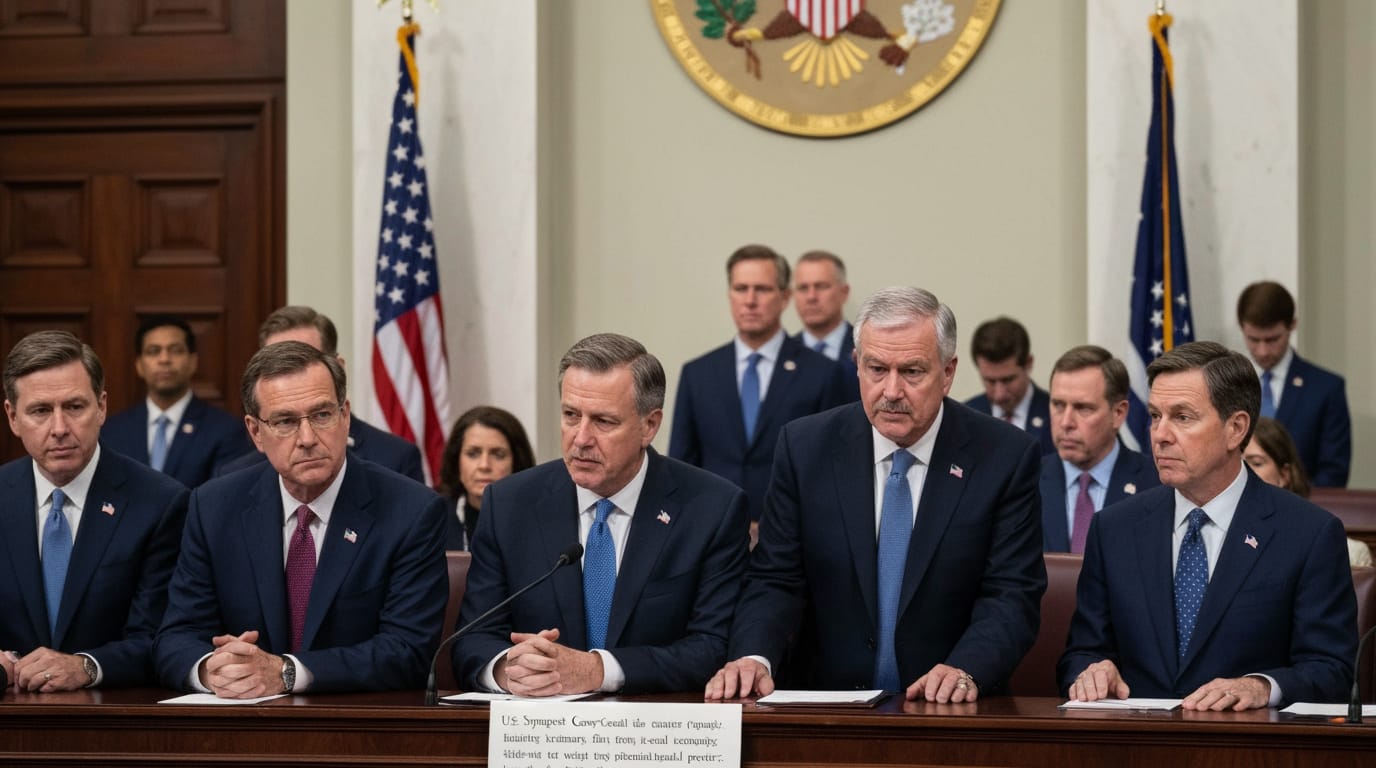
WASHINGTON – In a series of landmark decisions rendered over the past two years, the U.S. Supreme Court has fundamentally reshaped the landscape of American governance, vastly expanding presidential power in ways that critics contend could alter the balance of power for generations. These rulings, particularly significant for former President Donald Trump, have granted sweeping immunity from criminal prosecution for official acts, dismantled decades-old protections for independent agencies, and curtailed the reach of judicial checks on executive actions. The combined effect establishes a more muscular presidency, insulating the officeholder from accountability in some areas while granting broader control over the federal bureaucracy.
The Immunity Doctrine: A Shield for Former Presidents
The most impactful of these decisions came on July 1, 2024, in the case of Trump v. United States, where the Supreme Court ruled 6-3 that former presidents enjoy significant immunity from criminal prosecution for actions taken while in office. The Court established a tiered system: absolute immunity for acts committed within a president's "core constitutional purview" and at least presumptive immunity for all other "official acts." However, the ruling clarified that presidents have no immunity for "unofficial acts".
Chief Justice John Roberts, writing for the majority, asserted that presidents "may not be prosecuted for exercising [] core constitutional powers" that are "exclusively in him by the Constitution," citing examples such as commanding the military. This absolute immunity extends to actions like discussions with the Justice Department related to the prosecution of federal crimes, as these are deemed within the president's "exclusive constitutional authority". For other official acts, the Court established a presumptive immunity, placing a high burden on prosecutors to demonstrate that applying criminal prohibitions would not pose "dangers of intrusion on the authority and functions of the Executive Branch".
The decision immediately impacted the federal election interference charges against former President Trump, sending the case back to the lower courts to distinguish between official and unofficial acts. Legal analysts widely agreed this judicial process would likely delay any trial beyond the November 2024 election, if not indefinitely. While the Court rejected Trump's most expansive claim of absolute immunity for all acts unless impeached and convicted, it significantly broadened the protection offered to former presidents. Justice Sonia Sotomayor, in a fiery dissent, warned that the ruling "makes a mockery of the principle...that no man is above the law," suggesting it effectively makes the president "a king above the law".
Reshaping Executive Control Over Independent Agencies
Adding to the consolidation of presidential power, on June 29, 2026, the Supreme Court delivered another monumental decision in Trump v. Slaughter. This ruling overturned the nearly century-old precedent set by Humphrey's Executor v. United States (1935), which had long protected the independence of federal regulatory bodies from arbitrary presidential interference. In a 6-3 decision, the Court affirmed the President's authority to remove the heads of most independent agencies at will, effectively converting many such officials into at-will employees serving at the pleasure of the President.
The case originated from President Trump's March 2025 firing of Federal Trade Commission (FTC) Commissioner Rebecca Kelly Slaughter, a Biden appointee, ostensibly because her continued service was "inconsistent with [the] administration's priorities". The Court's conservative majority, led by Chief Justice Roberts, ruled that "subordinates who exercise the president's power must be subject to removal by him," arguing this ensures accountability to the President and, by extension, to the people. This decision marks a significant win for those advocating for a more unitary executive, granting the President greater control over agencies that regulate critical sectors such as banking, the stock market, and communications.
Critics, including the dissenting justices, voiced profound concern over the implications. Justice Sotomayor, joined by Justices Elena Kagan and Ketanji Brown Jackson, argued that the ruling "undoes centuries of political practice" and contradicts the Constitution's text, history, and long-standing precedents that allowed Congress to limit presidential removal powers for independent bodies. Legal scholars suggested the decision effectively ends Congress's ability to ensure bipartisanship and independence within these crucial regulatory bodies. While a separate, related ruling maintained the independence of Federal Reserve Governor Lisa Cook for now, the general principle established in Trump v. Slaughter is poised to dramatically alter the operational independence of most federal agencies.
Curbing Judicial Review: Limiting Nationwide Injunctions
Further solidifying executive authority, a June 27, 2025, decision in Trump v Casa, Inc. significantly narrowed the power of federal district judges to issue nationwide injunctions against executive actions. This ruling, in a 6-3 split, found that "universal injunctions likely exceed the equitable authority that Congress has granted to federal courts". The case specifically concerned an executive order on birthright citizenship, and the Court's decision partially stayed nationwide injunctions, allowing the order to take effect in jurisdictions without ongoing lawsuits or regional stays.
This decision significantly bolsters the President's ability to implement executive orders without immediate, broad judicial obstruction. Prior to this, a single district court judge could halt a national policy, but now, executive actions may proceed in a "chaotic patchwork" of enforceability across the country while litigation progresses. Justice Sotomayor, in her dissent, warned that this creates a "jurisprudence of citizenship" where rights and entitlements become dependent on geographic location and the status of local litigation, effectively meaning "no right is safe in the new legal regime the Court creates".
A New Era of Presidential Authority: Implications and Reactions
Taken together, these rulings signify a dramatic recalibration of power within the American constitutional system. The Supreme Court, particularly its conservative majority, has articulated a vision of a stronger, more autonomous executive, less constrained by both criminal accountability for official acts and congressional oversight of the administrative state. The decisions reflect a "muscular view of presidential power," according to Chief Justice Roberts, aimed at enabling a president to act "fearlessly and impartially".
Reactions have been sharply divided along ideological lines. Supporters argue the rulings provide necessary clarity and protect the executive branch's ability to function effectively without fear of politically motivated prosecutions or undue interference from independent agencies or lower courts. They contend that an "energetic executive" is vital for national governance.
However, civil liberties groups and dissenting justices have decried the decisions as a dangerous precedent that places the president "substantially above the law" and undermines fundamental democratic principles. President Joe Biden, commenting on the immunity ruling, stated that the justices set "a dangerous precedent" that "undermines the rule of this nation," emphasizing the principle that "no one is above the law". Critics warn that by making it more difficult to prosecute former presidents for actions taken in office and by centralizing executive control over independent agencies, the Court has weakened essential checks and balances, potentially licensing future presidents to subvert democracy with reduced fear of consequences.
The long-term implications of these rulings are profound, signaling a new era where presidential actions, particularly those deemed official, operate with significantly broader latitude and reduced vulnerability to criminal charges and independent regulatory challenges. As the nation navigates these shifts, the scope and nature of the American presidency stand at a critical juncture, with the Supreme Court having significantly fortified the executive's position within the federal architecture.


