Swiss Glaciers Lose Over Five Percent of Ice Volume in 2026
Rapid ice melt across the Alps threatens European freshwater networks and hydropower systems as regional warming continues to outpace long-term averages.
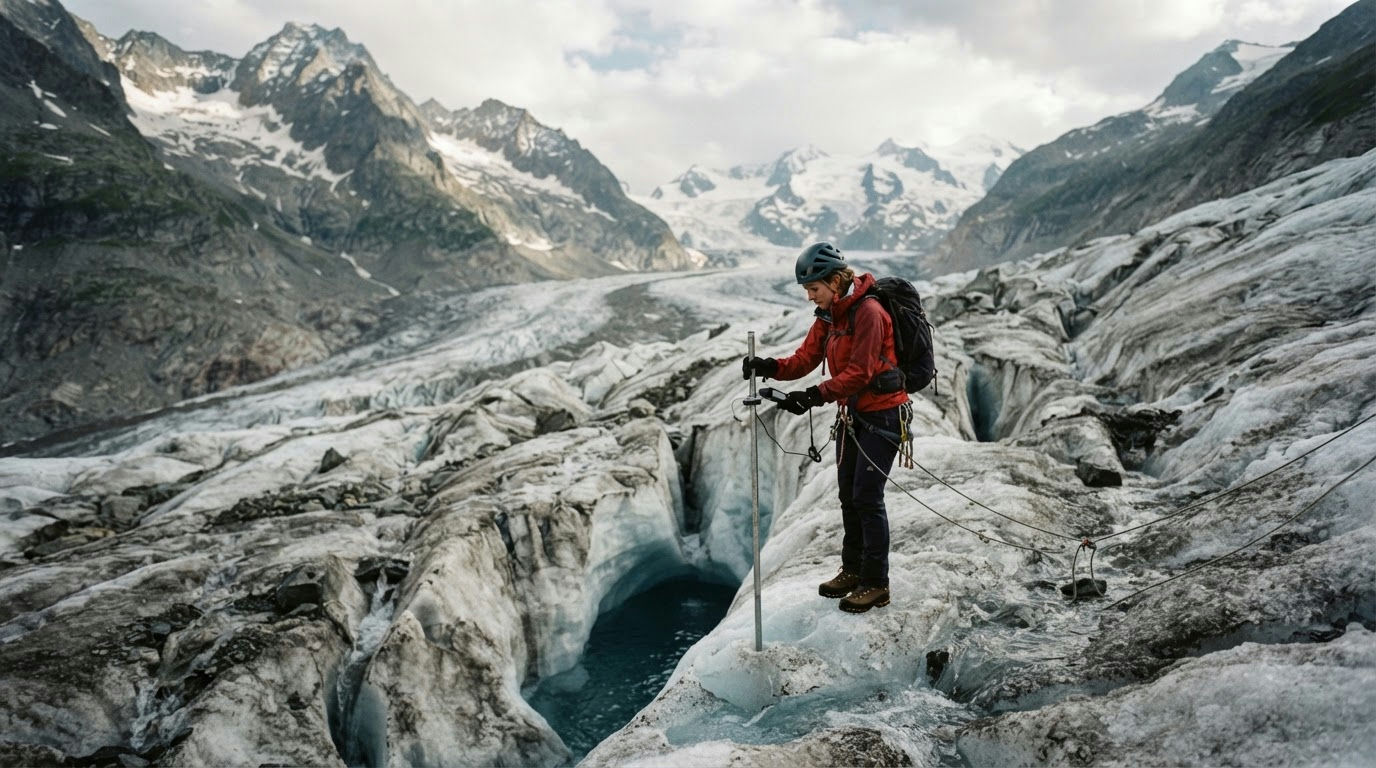
Swiss glaciers lost 5.5% of their total volume during the 2026 hydrological year, the second-largest annual drop on record. The findings were released Thursday in a joint report by the Glacier Monitoring in Switzerland network and the Swiss Academy of Sciences. Scientists attributed the sharp decrease to low winter snow accumulation followed by repeated summer heatwaves.
The annual melt rate trails only the record drop set in 2022, when Swiss ice volume fell by 6%. Over the past five years, the country has lost nearly one-fifth of its remaining glacial ice. Melt rates during this five-year period were more than double any other five-year span since systematic records began.
Matthias Huss, the director of the glacier monitoring service, stated that alpine glaciers cannot survive in the long term under prevailing climate trends. Huss noted that the warming driving the retreat is entirely anthropogenic. He added that certain lower-elevation formations, including the Scex Rouge glacier, could lose all remaining ice within 10 to 15 years.
Measurements showed average glacial thickness fell by 2.5 to 4 meters across Switzerland over the past 12 months. Tongues on several glaciers retreated by up to 10 meters. Major systems including the Aletsch, Clariden and Rhône glaciers recorded their largest single-season melts on record. Smaller glaciers, such as the Bella Tola in the canton of Valais and the Griessfirn in the canton of Glarus, disappeared completely.
Winter snowfall between 2025 and 2026 ranked among the ten lowest on record in Switzerland. Because little snow remained to reflect sunlight, bare ice was exposed to solar radiation as early as June. Summer temperatures between June and August broke national warmth records, which further accelerated the thaw.
The losses affect Europe beyond Switzerland's borders. Swiss glaciers function as headwaters for major continental waterways, including the Rhine, Rhone, Po and Danube rivers. More than half of Switzerland's domestic electricity generation relies on hydropower. Diminished ice reserves reduce river runoff during dry late-summer periods, which affects navigation, agricultural irrigation and energy output across central Europe.
The monitoring network plans to publish its consolidated multi-year alpine mass balance assessment in November.