Taiwan Vows Unwavering Defense of Sovereignty Following Chinese Military Drills
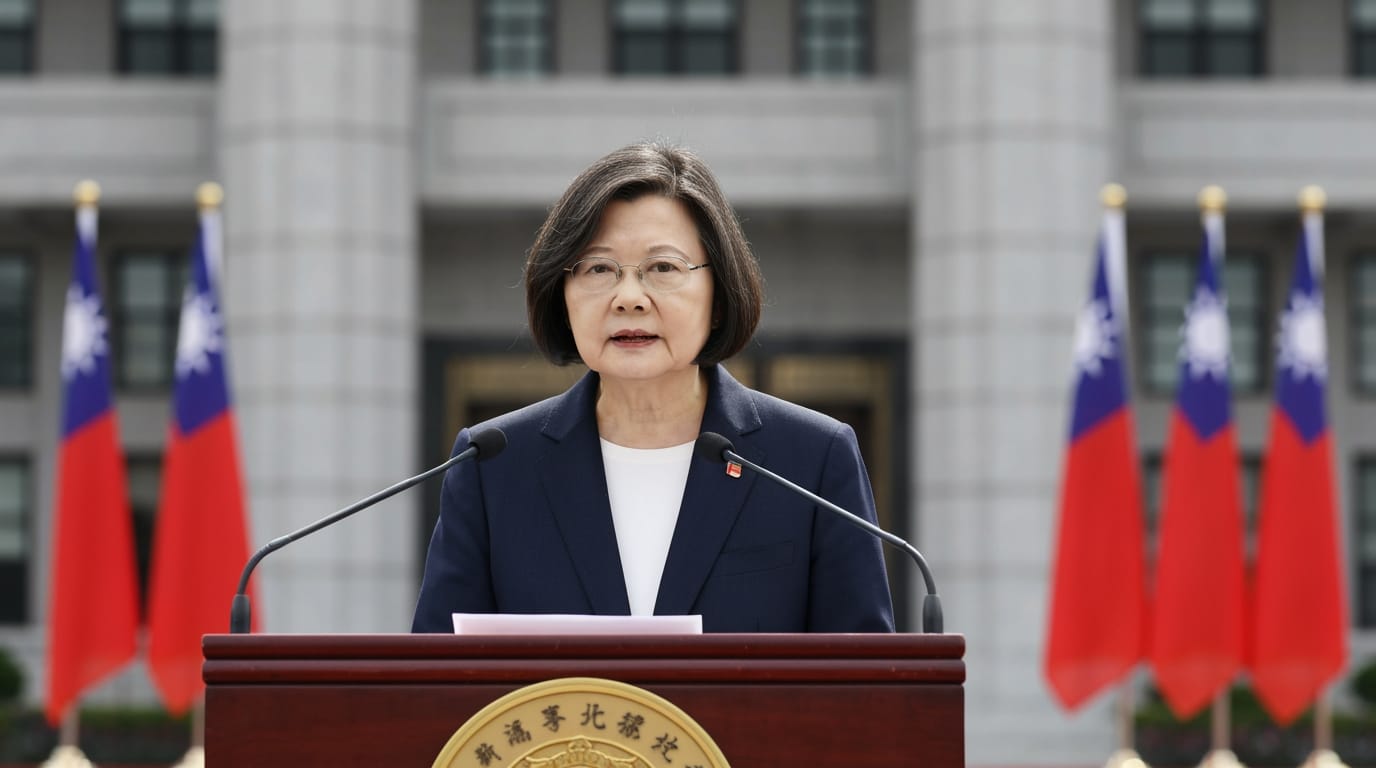
Taipei, Taiwan – In the wake of extensive military exercises conducted by Beijing, Taiwan's President Lai Ching-te has delivered a resolute message to the world, vowing to "steadfastly defend" the island's sovereignty and strengthen its defense capabilities. The pronouncements, made during a New Year's address and subsequent statements, underscore Taiwan's determination to maintain its democratic autonomy amidst escalating pressure from mainland China, which claims the self-governed island as its territory.
The recent "Justice Mission 2025" drills, described by Taipei as "highly provocative and reckless," saw China deploy a formidable array of military assets, including missiles, fighter jets, navy ships, and coastguard vessels, in a simulated encirclement and blockade of Taiwan. These maneuvers have reignited international concerns over regional stability and drawn sharp condemnation from numerous democratic nations.
Beijing's Show of Force: "Justice Mission 2025"
China's People's Liberation Army (PLA) launched its large-scale "Justice Mission 2025" military drills around Taiwan, executing live-fire exercises aimed at simulating a blockade of key ports and assaults on maritime targets. The drills, which spanned two days, involved naval destroyers, frigates, fighter planes, bombers, drones, and long-range missiles. Notably, some of the 27 missiles fired landed within Taiwan's 24-nautical-mile contiguous zone, marking the closest such activity to Taiwan's main island to date. The PLA Eastern Theater Command, which announced the successful completion of the drills, stated their purpose was a "stern warning to 'Taiwan independence' separatist forces."
These exercises represent the sixth round of major war games conducted by China since 2022, when heightened tensions followed a visit by then-U.S. House Speaker Nancy Pelosi to Taiwan. Beijing explicitly cited a recent U.S. arms sale package to Taipei, valued at approximately $11.1 billion, as a catalyst for the latest maneuvers. The U.S. package includes critical systems such as HIMARS rocket systems, ATACMS missile systems, M109A7 self-propelled howitzers, and unmanned loitering munitions, intended to bolster Taiwan's defensive capabilities.
Taiwan's Resilient Stance and Defense Strategy
In response to the Chinese aggression, President Lai Ching-te affirmed Taiwan's resolve to safeguard its national security. In a televised address, he outlined a clear stance: "to steadfastly defend national sovereignty, strengthen national defense and whole-of-society resilience, comprehensively establish effective deterrence capabilities, and build robust democratic defense mechanisms." He urged unity among Taiwanese citizens and emphasized that the government would "build a safer and more resilient Taiwan." Lai also highlighted that China's "authoritarian expansion and escalating coercion" are not isolated incidents and pose significant risks to regional stability, global shipping, trade, and peace.
Taiwan's Ministry of National Defense (MND) reported that its armed forces responded calmly and professionally, deploying "appropriate forces" and putting outlying islands on heightened alert. Despite the scale of the drills, Taipei maintained that China "failed to impose a blockade" on the self-ruled island. The MND also stated that it is adjusting its plans to maintain an "appropriate response mechanism" and remains vigilant, with military aircraft and vessels continuing to patrol around Taiwan.
Taiwan's long-term defense strategy increasingly centers on an "asymmetric defense" approach, often referred to as the "porcupine strategy." This strategy focuses on making any potential invasion prohibitively costly for an adversary like China. Instead of attempting to match China's conventional military might, Taiwan aims to invest in mobile, survivable, and cost-effective capabilities. This includes high-tech investments in drones, surface-to-air missiles, and land-based anti-ship missiles, designed to disrupt amphibious landings and strike Chinese vessels and aircraft. The recent U.S. arms package directly supports this shift, providing precision munitions and unmanned systems crucial for deterrence by denial.
International Condemnation and Calls for Restraint
The international community has largely reacted with alarm to China's military posturing. Numerous countries and international bodies expressed "serious concern" and called for de-escalation and dialogue. The European Union, United Kingdom, France, Germany, Australia, New Zealand, Japan, South Korea, and the Philippines all issued statements emphasizing the critical importance of peace and stability in the Taiwan Strait.
The EU's diplomatic service stated that China's actions "further increases cross-strait tensions and endangers international peace and stability," urging restraint and a resolution through dialogue. Germany called for any change to the status quo to occur "peacefully and by mutual agreement." Japan expressed "concerns" that the exercises "increase tensions" across the Strait. While the U.S. made a substantial arms sale to Taiwan, U.S. President Donald Trump appeared to downplay the exercises, though congressional lawmakers from both parties called for urgent action to support Taiwan's defense.
China, however, swiftly protested these international statements, with its foreign ministry spokesman asserting that Beijing's actions were "necessary and just... to defend its national sovereignty and territorial integrity," and accusing critics of "distorting facts and confusing right and wrong."
A Precarious Future for Cross-Strait Relations
The recent drills and Taiwan's steadfast response highlight the ongoing, deeply entrenched tensions across the Taiwan Strait. China views Taiwan, a democratic island of 23.4 million people, as an inalienable part of its territory that must be reunified with the mainland, by force if necessary. Taiwan, however, has maintained self-rule since 1949 and rejects Beijing's sovereignty claims.
President Lai Ching-te has signaled a willingness to engage in dialogue with China on an equal and dignified basis, promoting a peaceful environment, but only if China acknowledges the existence of the Republic of China (Taiwan) and respects the Taiwanese people's democratic way of life. Beijing severed official communication with Taipei in 2016, making such dialogue challenging.
The "Justice Mission 2025" drills underscore China's increasing military capabilities and its willingness to use them to project power and pressure Taiwan. For Taiwan, the commitment to defending its sovereignty and democratic freedoms remains paramount, backed by an evolving defense strategy and growing international support. The intricate dynamics of cross-strait relations continue to demand careful navigation from all parties, with the global community keenly observing whether peace and stability can be maintained in this geopolitically sensitive region.