The Battle for Germany's Net: Navigating Life After Neuer
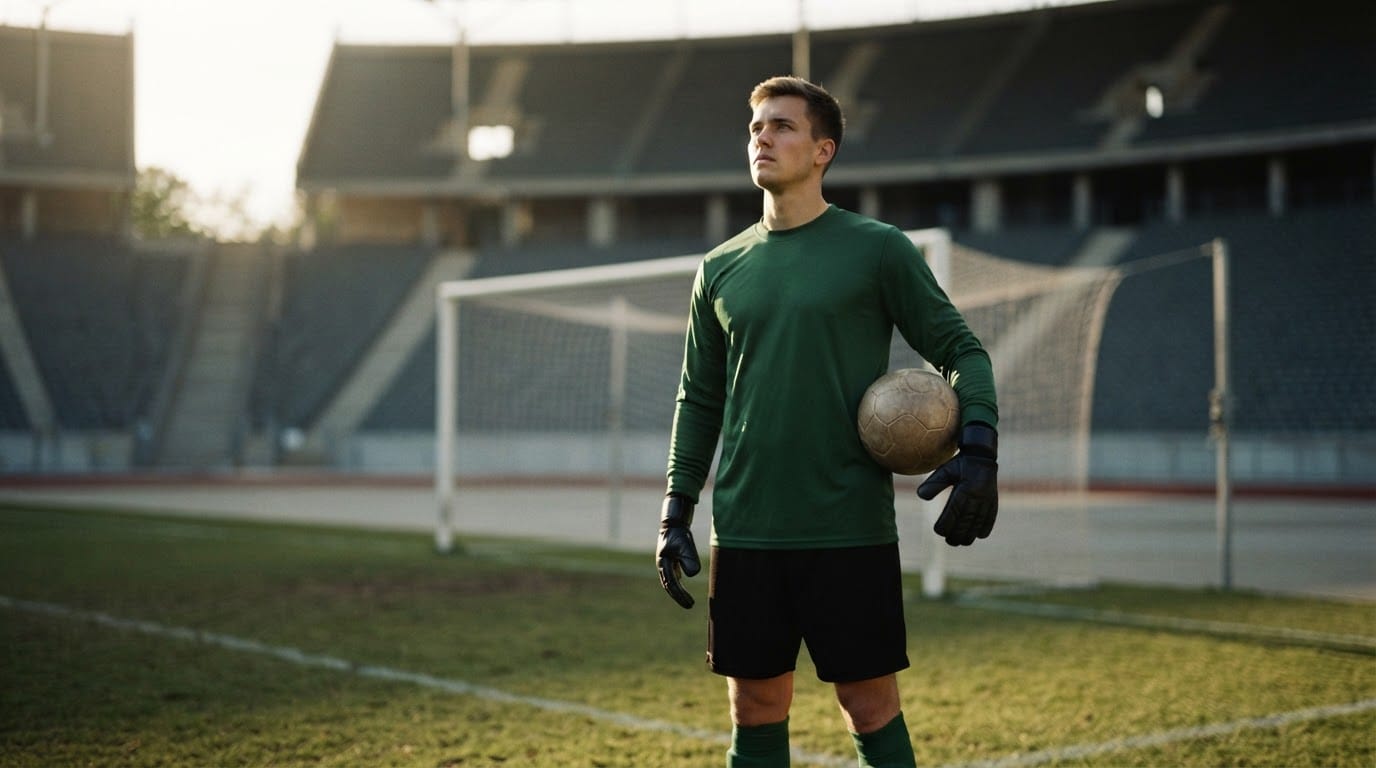
For more than a decade and a half, the question of who would stand between the posts for Germany never required debate. Manuel Neuer anchored the national team through 124 appearances, four World Cups, and four European Championships, redefining the goalkeeper position as the quintessential modern sweeper-keeper. His international retirement marked the formal end of an era that brought the 2014 World Cup trophy to Berlin. Yet rather than a smooth transition of power, Neuer’s departure created one of the most turbulent roster debates in modern European soccer.
Germany’s quest to solidify its long-term defensive spine has evolved into an ongoing struggle among seasoned veterans, emerging contenders, and relentless bad luck. What once seemed like an orderly line of succession has shifted into a fluid contest shaped by injuries, sudden tactical shifts, and rising domestic talent.
The Long-Awaited Heir and an Unforgiving Stumble
For years, Barcelona’s Marc-André ter Stegen stood as the clear and patient successor. Despite assembling a decorated club career highlighted by multiple Spanish league titles and a Champions League trophy, ter Stegen spent his prime international years in Neuer’s shadow. He collected more than 40 caps during friendlies and off-peak fixtures, yet he spent every major tournament watching from the technical area.
When the top job finally opened, fortune turned cruel. Only weeks into his tenure as Germany’s designated No. 1, ter Stegen sustained a severe knee tendon tear during a club fixture. The subsequent surgical rehabilitation cost him nearly an entire season and dismantled the succession plan that the national coaching staff had designed.
Recurring muscular problems and shifting club roles in recent campaigns continued to interrupt his momentum. Ter Stegen has repeatedly fought back to regain both his form and the starting shirt, bringing extensive high-stakes experience to the national side. Even so, the physical setbacks disrupted what was expected to be a seamless multiyear reign, opening the door for domestic candidates who had long operated under the radar.
Steady Hands and the Rise of the Domestic Contenders
The primary beneficiary of the sudden goalkeeping vacuum was Oliver Baumann. A fixture in the German Bundesliga with well over 500 top-flight matches, the longtime TSG Hoffenheim captain had frequently joined national team camps as an emergency reserve without seeing game action.
When forced into duty during qualification matches and tournament cycles, Baumann delivered exceptional stability. Operating with disciplined positional awareness and reliable shot-stopping, he posted four clean sheets during six World Cup qualifying starts, outperforming nearly every peer across European confederation qualifying groups.
Baumann’s rise proved that consistency could overcome a lack of international pedigree. At the same time, his emergence put pressure on the next generation of German talent. At 35, Baumann represented a dependable bridge rather than a decade-long solution, intensifying the scrutiny on younger goalkeepers vying for their chance.
The Next Wave: From Nübel to Youth Prospects
Directly behind the veteran pair, Alexander Nübel has remained a persistent candidate in the conversation. After a developmental arc that included an extended loan stint with VfB Stuttgart, Nübel proved his ability to organize defensive lines and execute distribution under pressure. Having posted 11 clean sheets during a standout domestic league campaign that helped Stuttgart secure European qualification, he earned a permanent place within the national team pool.
However, competition beneath Nübel is accelerating. The national setup has widened its net to evaluate promising talents across both domestic and continental leagues.
Freiburg’s Noah Atubolu, a standout for the German under-21 program, offers elite athleticism and demonstrated remarkable composure during deep continental tournament runs. Augsburg goalkeeper Finn Dahmen also earned recent roster consideration following performances where he regularly faced high shot volumes and kept his team competitive against top-tier attacks. With younger stoppers like Jonas Urbig gaining regular domestic minutes, the national coaching staff has begun assessing long-term profiles capable of maintaining Neuer’s proactive defensive philosophy.
Tactical Demands and the Modern German Profile
Replacing a generational figure involves far more than merely tracking save percentages. Modern international competition requires the German goalkeeper to function as an eleventh outfield player during possession phases, demanding high technical proficiency with both feet, accurate long-range passing, and sharp decision-making outside the penalty area.
Neuer mastered these responsibilities, allowing Germany to position its backline near midfield to compress opponent counterattacks. Neither Baumann nor the younger generation plays with the identical swashbuckling aggression that Neuer invented, but each candidate must operate comfortably within high-pressing setups.
Tactical demands vary based on tournament matchups. Ter Stegen provides superior precision in short build-up passing, honed through years in fluid possession systems. Baumann brings calculated penalty-box command and mistake-free handling. Meanwhile, younger stoppers like Nübel and Atubolu offer greater physical range to deal with transition play. The coaching staff must continually weigh stylistic fit against current form and locker room presence.
A New Chapter for German Goalkeeping
Germany’s historic legacy at the position—from Sepp Maier and Toni Schumacher to Oliver Kahn, Jens Lehmann, and Neuer—has always set an unusually high standard for whoever wears the primary jersey. The post-Neuer transition has illustrated that sustaining elite goalkeeping is rarely a linear progression.
With tournament cycles intensifying and competitive demands mounting, Germany’s technical staff can no longer rely on automatic answers at the position. Ter Stegen’s resilience remains the emotional center of the transition, Baumann’s reliability provides an immediate anchor, and a crowded field of young hopefuls continues to apply pressure from behind. While the era of a single undisputed titan has paused, the resulting competition has produced a deeper, more fiercely contested battle for the most prestigious gloves in German soccer.