The Drone Dilemma: How Cheap Attack Drones Are Piercing Israel's Advanced Air Defenses

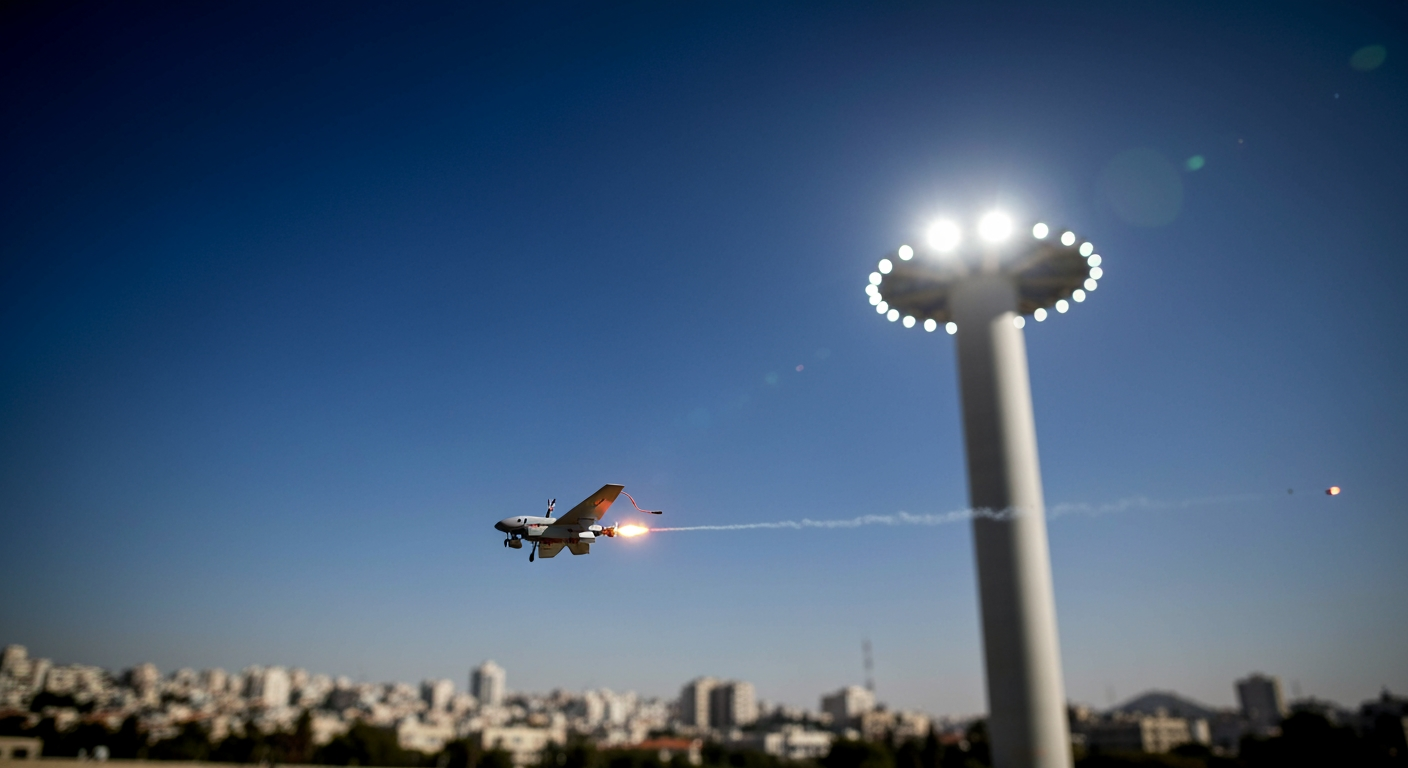
In a significant and evolving shift in modern warfare, inexpensive, mass-produced attack drones are increasingly challenging and at times penetrating Israel's highly sophisticated, multi-layered air defense systems, including the vaunted Iron Dome. This development marks a pivotal moment, exposing a new vulnerability for even the most advanced military defenses and underscoring a critical asymmetry where low-cost offensive tools are effectively confronting multi-million dollar defensive infrastructure. The implications extend far beyond the immediate battlefields, reshaping strategic calculations and driving an urgent global race for counter-drone technologies.
The Rise of Asymmetric Drone Warfare
The proliferation of advanced yet readily available drone technology has fundamentally altered the threat landscape in the Middle East. Iran and its various proxy groups, including Hezbollah in Lebanon, Hamas in Gaza, and Houthi rebels in Yemen, have demonstrably embraced and expanded their use of unmanned aerial vehicles (UAVs) as a core component of their offensive strategy. This arsenal ranges from larger, more sophisticated attack drones to small, off-the-shelf commercial drones adapted for military use.
Among the most concerning developments are the widespread deployment of one-way attack drones, often referred to as "kamikaze drones" or loitering munitions, such as the Iranian-designed Shahed-136 and Arash-2. These drones are characterized by their simplicity, low manufacturing cost (estimated between $20,000 and $50,000 for a Shahed-136), and ability to carry significant explosive payloads. Their design enables them to fly at low altitudes and with small radar cross-sections, making them inherently difficult for conventional air defense systems to detect and track. Iran has not only supplied these drones to its proxies but has also facilitated their local manufacturing and provided training for their operators, further decentralizing and democratizing this potent offensive capability.
A particularly vexing threat has emerged in the form of First-Person View (FPV) drones. These small, agile drones, often controlled with consumer-grade virtual reality headsets, offer operators precise control and the ability to maneuver directly towards targets. Critically, some FPV drones utilized by Hezbollah are reportedly hardwired with fiber-optic cables, rendering them immune to electronic jamming and signal interference, thereby bypassing a common counter-drone tactic. The sheer quantity and varied capabilities of these drones allow adversaries to launch them in swarms, aiming to overwhelm air defenses through sheer numbers and persistence rather than advanced individual capability.
Iron Dome Under Strain: A New Kind of Penetration
Israel's Iron Dome system has long been lauded as one of the world's most effective short-range air defense systems, boasting a success rate often exceeding 90% against rockets and mortars. Its operational success has saved countless lives and prevented widespread damage from thousands of projectiles. However, the advent of cheap, agile drones presents a novel challenge that pushes the Iron Dome's design parameters to their limits.
The Iron Dome was primarily designed to intercept ballistic threats like rockets, which follow predictable trajectories. Small, low-flying drones, especially those designed to hug terrain or approach targets at tree-top altitude, can exploit the radar horizon and ground clutter, significantly complicating their early detection and classification. Military analysts note that these drones can often be mistaken for birds on radar screens, further impeding identification.
Recent incidents have highlighted these vulnerabilities. Hezbollah has claimed and provided video evidence of FPV drone strikes directly impacting Iron Dome batteries in northern Israel, causing damage and reportedly injuring Israeli soldiers. Such attacks demonstrate a tactical evolution where the drones are not merely targeting strategic sites but actively seeking to degrade the very air defense systems designed to stop them. Furthermore, Iranian Arash-2 drones have reportedly struck targets as significant as Ben Gurion Airport, and Houthi drones have successfully reached the southern city of Eilat, injuring individuals and underscoring the expanded reach and effectiveness of these inexpensive weapons.
Beyond technical limitations, the economic asymmetry between offensive drones and defensive interceptors poses a critical strain. Each Iron Dome interceptor missile costs approximately $60,000, while more advanced systems like the Patriot PAC-3 and Arrow-3 missiles can cost between $3 million and $4 million per shot. Countering a $20,000-$50,000 drone with a million-dollar interceptor creates an unsustainable cost-exchange ratio, effectively turning warfare into a battle of economic attrition where the defender's resources are depleted far faster than the attacker's. This imbalance risks exhausting missile stockpiles and forces difficult operational decisions regarding which threats warrant an expensive interception.
Strategic Implications and the Cost of Defense
The successful penetration of Israel's air defenses by cheap attack drones carries profound strategic implications. It empowers non-state actors by providing them with a relatively low-cost means to bypass sophisticated conventional military power, effectively challenging established military doctrines and escalating regional tensions. This shift enables groups to project power and inflict damage on par with capabilities previously reserved for state actors.
The constant pressure exerted by drone attacks forces Israel to maintain a heightened state of alert, diverting significant resources and attention to round-the-clock air defense operations. The cumulative effect of these persistent, low-grade threats can be mentally and economically taxing for a nation. While individual drone strikes may not always result in catastrophic damage, their sustained application, particularly against military infrastructure or strategic civilian targets, can have a debilitating psychological effect and cause significant economic disruption through airspace closures and altered trade routes.
This new era of drone warfare redefines the concept of deterrence and highlights the vulnerability of even the most technologically advanced nations. The traditional advantage of superior air power and advanced missile defense is being eroded by the accessibility and adaptability of drone technology, compelling military planners worldwide to re-evaluate their defensive strategies.
Israel's Urgent Response and the Future of Air Defense
Recognizing the gravity of this evolving threat, Israel is actively engaged in an urgent and comprehensive effort to develop and deploy advanced counter-drone technologies. The Israeli Ministry of Defense (IMOD), with direct involvement from Prime Minister Benjamin Netanyahu, has initiated accelerated programs to fast-track solutions.
Central to Israel's response is the further development and integration of its multi-layered air defense architecture. While Iron Dome continues to be optimized for its primary role, new systems are being brought online to specifically address the drone challenge. The Iron Beam, a high-powered laser system, is a significant part of this future defense. Declared operational in late 2025, the Iron Beam is designed to shoot down drones and other aerial threats at an incredibly low cost per shot (mere dollars for electricity compared to tens of thousands for interceptor missiles), offering an economically viable solution to the cost-exchange problem.
Beyond directed energy weapons, Israel is exploring a range of kinetic and non-kinetic counter-drone solutions. These include advanced radar and electro-optic sensors for improved detection and tracking, electronic warfare capabilities to disrupt drone control, and even physical countermeasures such as counter-drones designed to intercept and capture hostile UAVs with nets. Israeli defense companies are rapidly developing systems like integrated 30mm cannons and smart rifles (e.g., IWI's Arbel) to enable soldiers to more accurately engage tactical drones. The focus is on creating a comprehensive "dome" of defenses that can adapt to the diverse characteristics of different drone threats, from large attack drones to small, fiber-optic controlled FPV units. The Israeli defense industry is prioritizing accelerated production and deployment, aiming for initial operational capabilities within weeks and broader deployment within months.
This intense research and development effort in Israel is not only critical for its national security but also serves as a proving ground for counter-drone technologies that will likely be adopted globally as other nations confront similar asymmetric threats.
Conclusion
The successful penetration of Israel's Iron Dome by cheap attack drones signifies a fundamental shift in the calculus of modern warfare. It underscores that even the most advanced, battle-tested air defense systems face unprecedented challenges from readily available, low-cost technologies. The economic drain caused by the cost asymmetry, coupled with the difficulty in detecting and intercepting small, low-flying, or swarming drones, demands a radical rethink of defensive strategies.
Israel's proactive development of layered counter-drone technologies, including laser systems and kinetic interceptors, represents a vital effort to regain the defensive advantage. However, the ongoing struggle highlights an enduring truth: the race between offensive innovation and defensive adaptation is ceaseless. As drone technology continues to evolve and proliferate, the international community watches closely, understanding that the vulnerabilities exposed in Israel today could foreshadow the security challenges of tomorrow for nations worldwide.
Sources
Related Articles


Landmines Resurge Globally, Shattering Two Decades of Progress
The global effort to eradicate antipersonnel landmines, once heralded as a monumental success in humanitarian disarmament, is facing a perilous reversal. Despite an international treaty banning these indiscriminate...


Disinformation Campaigns Cloud Michigan's Critical US Senate Race
LANSING, Mich. — The fiercely contested Democratic primary for the U.S. Senate in Michigan has become a battleground not just of policy and ideology, but of pervasive disinformation, with progressive candidate Abdul...