The Enduring Enigma: Mata Hari, From Exotic Dancer to Wartime Scapegoat

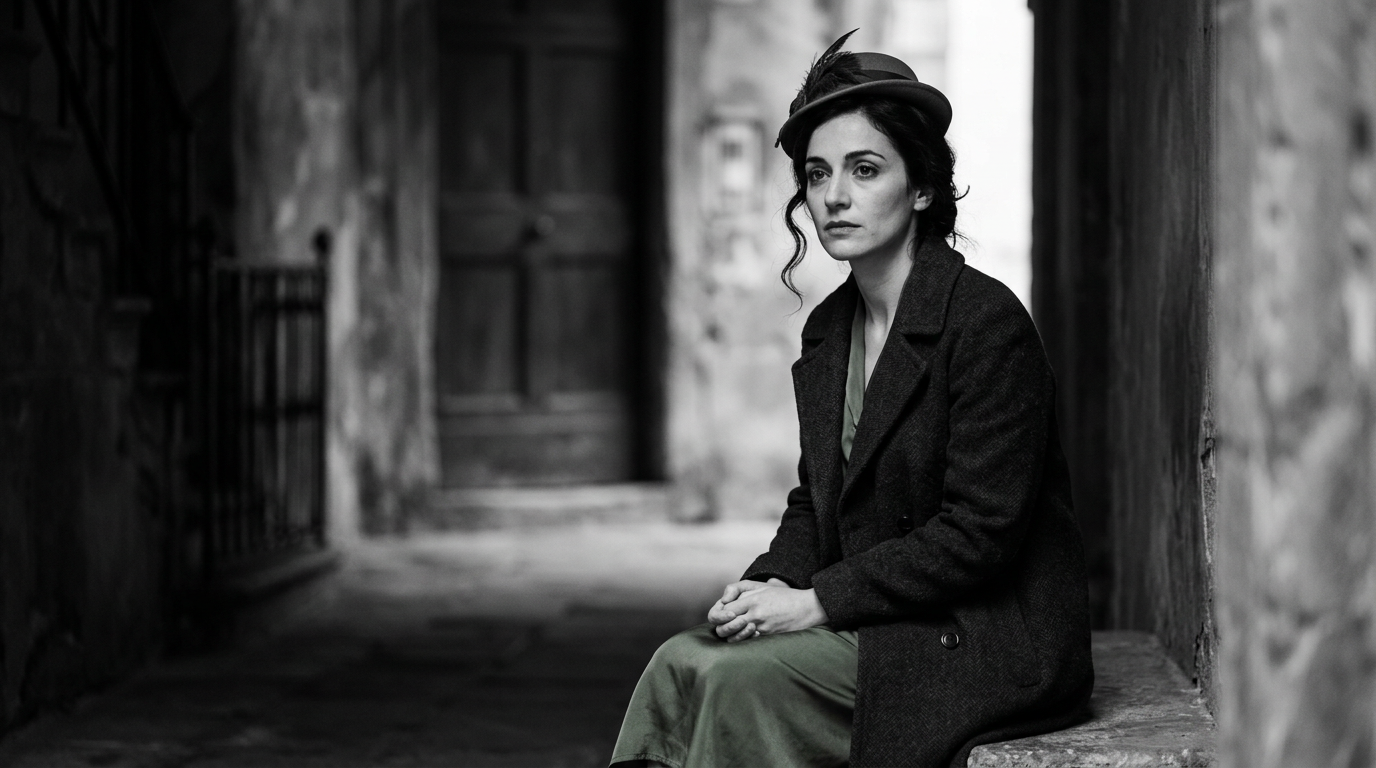
Paris, France – More than a century after her dramatic execution, the name Mata Hari continues to conjure images of seductive espionage, a femme fatale whose allure allegedly masked a dangerous double life as a World War I spy. Born Margaretha Geertruida Zelle in the quiet Dutch town of Leeuwarden, her reinvention as the enigmatic "Mata Hari" captivated European high society, but it was the desperate climate of wartime that ultimately transformed her into a symbol of betrayal and a casualty of a nation's anxieties. While her legend paints a clear picture of a master spy, newly unveiled historical documents and modern analysis increasingly suggest a far more complex reality: a woman caught in a web of her own making, whose perceived guilt may have been a convenient narrative for a struggling wartime power.
The Making of Mata Hari: From Margaretha Zelle to Exotic Dancer
Margaretha Geertruida Zelle's early life offered little hint of the global notoriety she would later achieve. Born on August 7, 1876, into a prosperous family, her world began to unravel in her teenage years with her father's bankruptcy, the death of her mother, and a series of disruptive living arrangements. At 18, she married Rudolf MacLeod, a Dutch colonial army officer two decades her senior, a union that proved to be abusive and ended in divorce in 1906. Their time in the Dutch East Indies (present-day Indonesia) was marked by personal tragedy, including the suspicious death of their son and the subsequent loss of custody of her daughter. It was in this exotic setting, however, that Zelle was exposed to the dances and cultural elements that would later form the foundation of her stage persona.
Seeking a new beginning and an escape from her past, Margaretha arrived in Paris around 1903. She shed her former identity and meticulously crafted a new one: Mata Hari, meaning "eye of the dawn" or "eye of the day" in Malay. She spun elaborate tales of her origins, claiming to be an Indian princess or a sacred temple dancer from Java, schooled in ancient, erotic rituals. Her debut as an exotic dancer in 1905 at the Guimet Museum in Paris was an instant sensation. Performing what amounted to an artistic striptease, often culminating in minimal attire such as a jeweled bra and headpiece, Mata Hari rapidly became a sensation.
Europe's Dazzling Courtesan and the Shadow of War
Mata Hari's rise was meteoric. Her performances, characterized by their sensual nature and the exotic mystique she cultivated, packed dance halls and opera houses across Europe, from Paris to Berlin, Vienna, and Madrid. She commanded attention and attracted a powerful circle of admirers and lovers, including high-ranking military officers, politicians, and wealthy industrialists. By the early 1910s, she was arguably Europe's most sought-after courtesan, known more for her sensuality and captivating presence than classical beauty.
However, as the decade progressed, her dance career began to wane, with her last known performance occurring around 1915. She transitioned more fully into the life of a courtesan, relying on her influential connections. The outbreak of World War I in 1914 dramatically altered the European landscape, but Mata Hari's Dutch nationality, stemming from a neutral country, initially allowed her to traverse international borders with relative ease, a privilege unavailable to most. This freedom of movement, combined with her extensive network of high-profile lovers from various nations, inevitably drew the attention of intelligence agencies.
The Tangled Web of Espionage: Allegations and Intercepts
The shift from celebrated dancer to suspected spy began around 1915. While living in The Hague, an honorary German consul reportedly offered her money in exchange for information she might gather on her travels to France. Mata Hari acknowledged accepting funds from German intelligence, totaling 20,000 francs, but insisted she only provided outdated information or inconsequential gossip. She was assigned the code name H-21 by the Germans. Simultaneously, seeking additional income, she approached French intelligence, proposing to spy for them against Germany. She reportedly agreed to act as a French agent in German-occupied Belgium, though she neglected to inform them of her prior arrangement with the Germans.
The critical turning point came with the interception of German radio messages. These communications, often cited as key evidence against her, identified Mata Hari as Agent H-21. However, historical analyses suggest a crucial detail: the code used in these messages was one the Germans knew had been compromised and was routinely broken by the French. Some historians now contend that German intelligence, growing frustrated with Mata Hari's lack of valuable intelligence, deliberately sent these messages to expose her to the French, effectively terminating her employment and neutralizing her as a potential double agent.
The Trial, The Verdict, and The Firing Squad
In February 1917, Mata Hari was arrested in Paris and imprisoned. The charges against her were severe: espionage for Germany, with her alleged actions blamed for the deaths of up to 50,000 French soldiers – an accusation for which no evidence was ever presented. Her trial, held by a closed military court in July 1917, was swift and largely conducted under wartime expediency and secrecy.
During the proceedings, Mata Hari vehemently maintained her innocence of being a German spy, asserting her loyalty to France and her intention to work for French intelligence. However, the prosecution, led by Captain Pierre Bouchardon, presented what they deemed damning evidence, largely resting on the intercepted German messages and her admitted receipt of German funds. Her lawyer's ability to mount a robust defense was severely hampered by military trial rules, preventing cross-examination of prosecution witnesses. With France reeling from significant losses and a desperate need for a scapegoat to boost morale, the verdict was almost inevitable. She was found guilty of espionage.
On October 15, 1917, at the age of 41, Mata Hari faced a French firing squad at Vincennes, near Paris. Accounts suggest she met her fate with remarkable composure, refusing a blindfold and reportedly declaring, "I am ready." The notion that she blew kisses to her executioners has been largely debunked, but her defiance in refusing the blindfold is widely considered true, adding to the dramatic imagery of her final moments.
A Century of Debate: Spy, Scapegoat, or Enduring Legend?
In the years following her execution, Mata Hari's story transcended mere historical fact, evolving into a powerful legend. She became the archetypal "femme fatale," a seductive woman who used her charm for treacherous ends. This narrative was fueled by numerous books, films, and cultural portrayals that cemented her image as the ultimate spy.
However, as more historical documents have come to light, particularly French archives released in 2017, doubts about the true extent of her guilt—or even her effectiveness as a spy—have grown considerably. The German government officially exculpated her in 1930. Many historians now contend that Mata Hari was, at best, an amateur and ineffective operative, providing little to no valuable intelligence to either side. More significantly, she is increasingly seen as a convenient scapegoat for French military and political failures during a brutal period of the war. Her flamboyant lifestyle, foreign origins, and perceived promiscuity made her an easy target, a symbolic figure upon whom a nation's frustrations could be projected.
Mata Hari's legacy is no longer simply that of a spy. It is a cautionary tale about wartime hysteria, the fragility of justice, and the power of myth-making. She remains an enigmatic figure, forever suspended between the reality of Margaretha Zelle, the woman who sought to escape a painful past, and the enduring legend of Mata Hari, the alleged spy whose trial and execution still provoke questions about truth, perception, and the costs of war.
Related Articles


Yayoi Kusama, Visionary Artist Whose Polka Dots and Infinity Rooms Transformed Modern Art, Dies at 97
TOKYO – Yayoi Kusama, the avant-garde Japanese artist whose kaleidoscopic visions of polka dots, immersive "Infinity Mirror Rooms," and profound exploration of mental health captivated global audiences for over six...


Martin Walser: Germany's Acclaimed Author and Enduring Enigma
Martin Walser, a literary titan whose prolific career spanned decades and garnered numerous accolades, carved out a unique and often contentious space within German letters. While celebrated for his keen observations of...