The Enduring Legend of the Amazons: From Mythic Warriors to Historical Realities
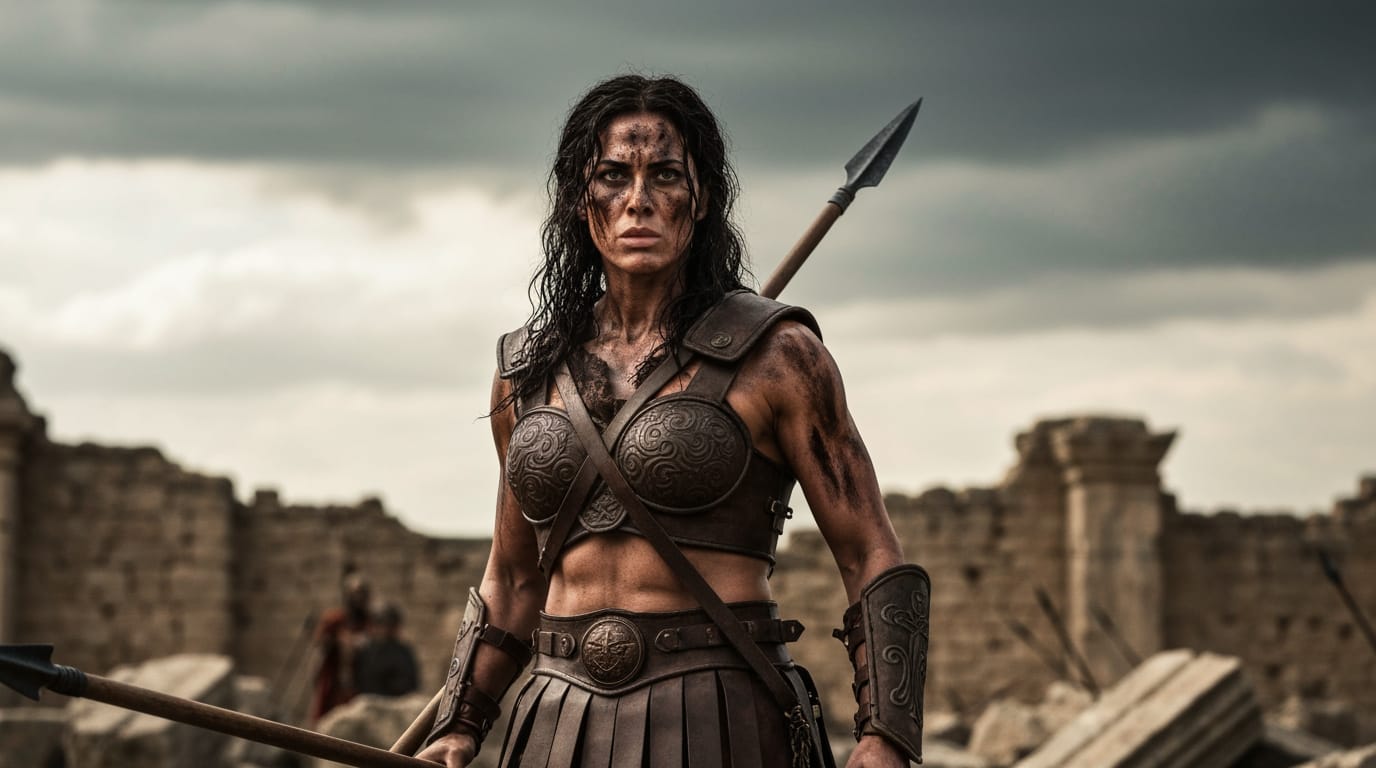
For millennia, the tale of the Amazons, a fierce tribe of warrior women, has captivated imaginations across cultures. Originating in ancient Greek mythology, these legendary figures, skilled in combat and fiercely independent, have long embodied a powerful archetype of female strength and autonomy. While once relegated solely to the realm of myth, modern archaeological discoveries and reinterpretations of ancient texts increasingly suggest a fascinating convergence of legend and historical reality, particularly in the nomadic cultures of the Eurasian steppes.
The earliest documented accounts of Amazons emerge from Greek antiquity, with references appearing in Homer's epic poems, where they are described as "those who fight like men". These formidable women, often depicted in Greek art and pottery battling heroes like Achilles, Heracles, and Theseus, were consistently portrayed as formidable adversaries. Mythological narratives placed their homeland on the fringes of the known world, frequently identifying the city of Themiscyra on the Black Sea as their primary settlement. Within their society, men were reportedly welcomed primarily for procreation, with male infants either killed or sent away, ensuring the perpetuation of their all-female lineage. They were renowned for their prowess in archery, horseback riding, and hand-to-hand combat, commanding respect and fear from their male counterparts. Figures such as Queen Hippolyta, whose girdle was sought by Heracles, and Penthesilea, who fought and was killed by Achilles during the Trojan War, underscore their significant role in Greek heroic cycles. The popular, though likely false, etymology of "Amazon" derived from "a-mazdos," meaning "without a breast" – suggesting they removed a breast to better use a bow – is often contradicted by ancient art, which typically depicts them intact. Other proposed origins include a Persian word for "warrior" or an Armenian term meaning "Moon-goddess".
While the Greeks widely believed in the historical existence of Amazons, modern scholarship long dismissed them as purely mythological constructs. However, a significant shift in understanding has occurred, largely due to archaeological evidence found in the vast Eurasian steppes. The Greek historian Herodotus, writing in the 5th century BCE, provided one of the most compelling early accounts linking the Amazons to a real people. He related a story of Amazons being captured by Greeks, escaping to the Don River, and subsequently intermarrying with Scythian tribesmen, giving rise to the Sarmatians. He noted that the women of this new tribe continued the Amazonian custom of riding, hunting, and fighting alongside their men. This historical narrative finds remarkable corroboration in ongoing archaeological excavations across regions like Ukraine, Kazakhstan, and southern Russia. Burial mounds of the Scythian and Sarmatian cultures have yielded the remains of battle-scarred female skeletons interred with a full array of weaponry, including bows, arrows, spears, and armor, alongside horse trappings. Some of these remains even show signs of injuries from blades and arrowheads, providing tangible proof that these were not ceremonial figures but active participants in warfare, mirroring the martial skills attributed to the mythical Amazons. These discoveries strongly suggest that the Greek legends were not entirely fabrications but were likely inspired by encounters with real-life nomadic warrior women whose societal roles challenged Greek patriarchal norms.
The influence of Amazonian women extended beyond direct mythological battles with Greek heroes, echoing through wider ancient histories and cultures. Accounts from figures like Cyrus of Persia, Alexander the Great, and the Roman general Pompey mention encounters with warrior women that bear striking resemblances to Amazonian narratives. One notable story involves an Amazonian queen named Thalestris, who, according to a first-century BC version of events, sought out Alexander the Great in 330 BC, desiring to bear him heirs to his kingdom. Furthermore, ancient Greek traditions credited Amazons with founding numerous settlements in Asia Minor, including prominent cities like Ephesus, Cyme, Sinope, and Smyrna. Throughout antiquity, the Amazons represented a powerful "radical otherness" to the Greeks, embodying an ideal of female bravery and independence that simultaneously fascinated and unsettled a society structured around male dominance. They often served as a cautionary tale about the perceived dangers of powerful women, yet their strength and defiance ensured their enduring presence in art and literature.
The legend of the Amazons has proven remarkably resilient, traversing centuries and continuing to resonate in contemporary culture. Their image as symbols of female empowerment, defiance, and strength has been continually reinterpreted across various media. From classical art depicting their legendary battles to Renaissance paintings and modern literature, the Amazonian narrative has served as a powerful canvas for exploring themes of gender, power, and heroism. Perhaps the most iconic modern manifestation is the comic book heroine Wonder Woman, directly inspired by the Amazonian myth and serving as a global emblem of female strength and justice. Moreover, the spirit of the Amazon has been invoked for real-world all-female fighting groups, such as the Soviet "Night Witches," an all-female bomber regiment that fought heroically in World War II, demonstrating how the archetype of the woman warrior continues to inspire and empower.
Ultimately, the story of the Amazons is a compelling blend of mythic grandeur and historical plausibility. What began as tales of formidable warrior women in ancient Greek mythology has gained new depth through archaeological findings that reveal the existence of real female warriors in the Scythian and Sarmatian cultures. This fusion of legend and history underscores humanity's enduring fascination with powerful women who defy societal expectations and excel in traditionally male-dominated domains. The Amazons continue to serve as a potent symbol of female strength, independence, and the timeless human desire for freedom and self-determination, ensuring their place as one of history's most enduring and inspiring legends.